
Gutter Guards & Leaf Protection in Sunnyvale, TX
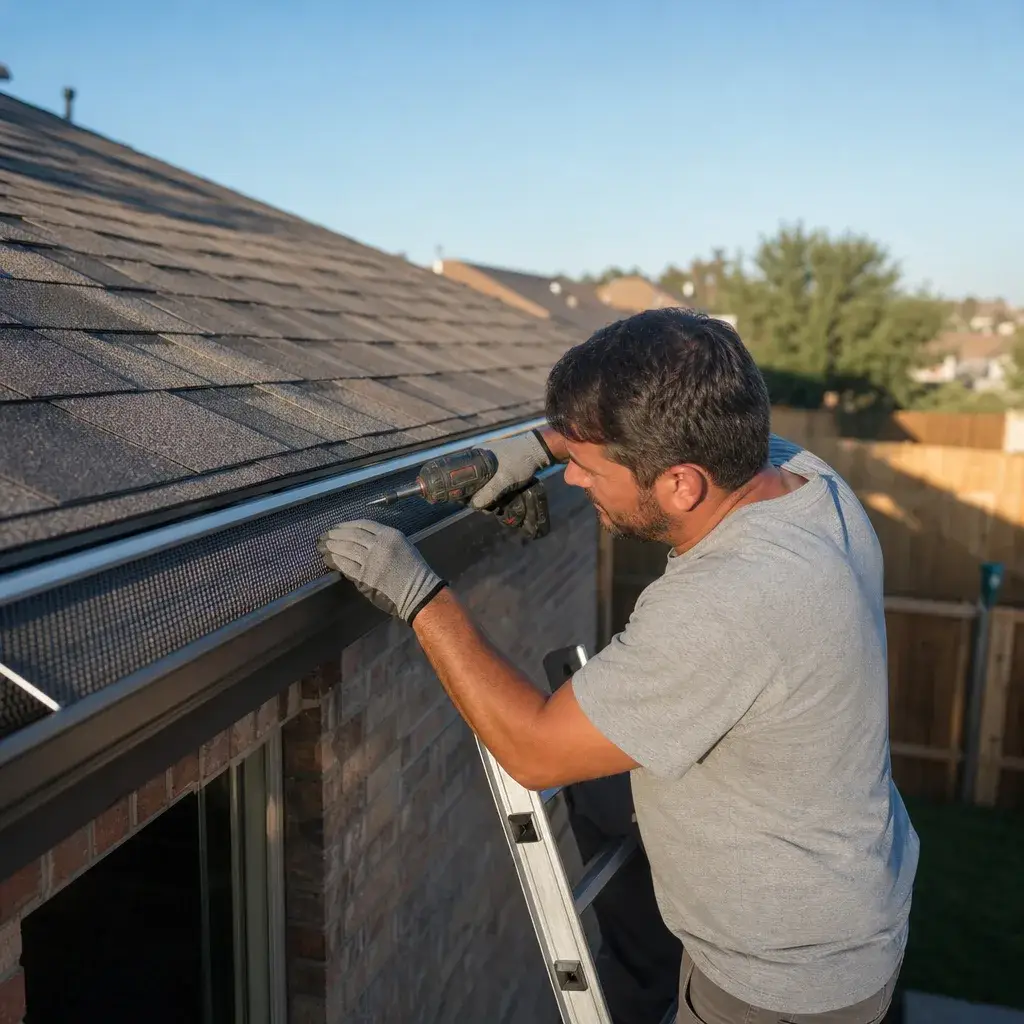
Gutter guards fitted to keep leaves and debris out – with a free inspection that checks whether your gutters need repair first.
What’s Covered on This Page
- What Gutter Guards Do (and Don’t Do)
- Signs Your Gutters Need Guards, Repair, or Both
- When Gutter Repair Should Come Before Guards
- Who May Not Need Guards Yet
- What a Gutter System Inspection Covers
- How often do gutter guards still need to be cleaned?
- Can gutter guards be installed on a roof that’s about to be replaced?
- Do gutter guards work during heavy spring storms in Sunnyvale?
What Gutter Guards Do (and Don’t Do)
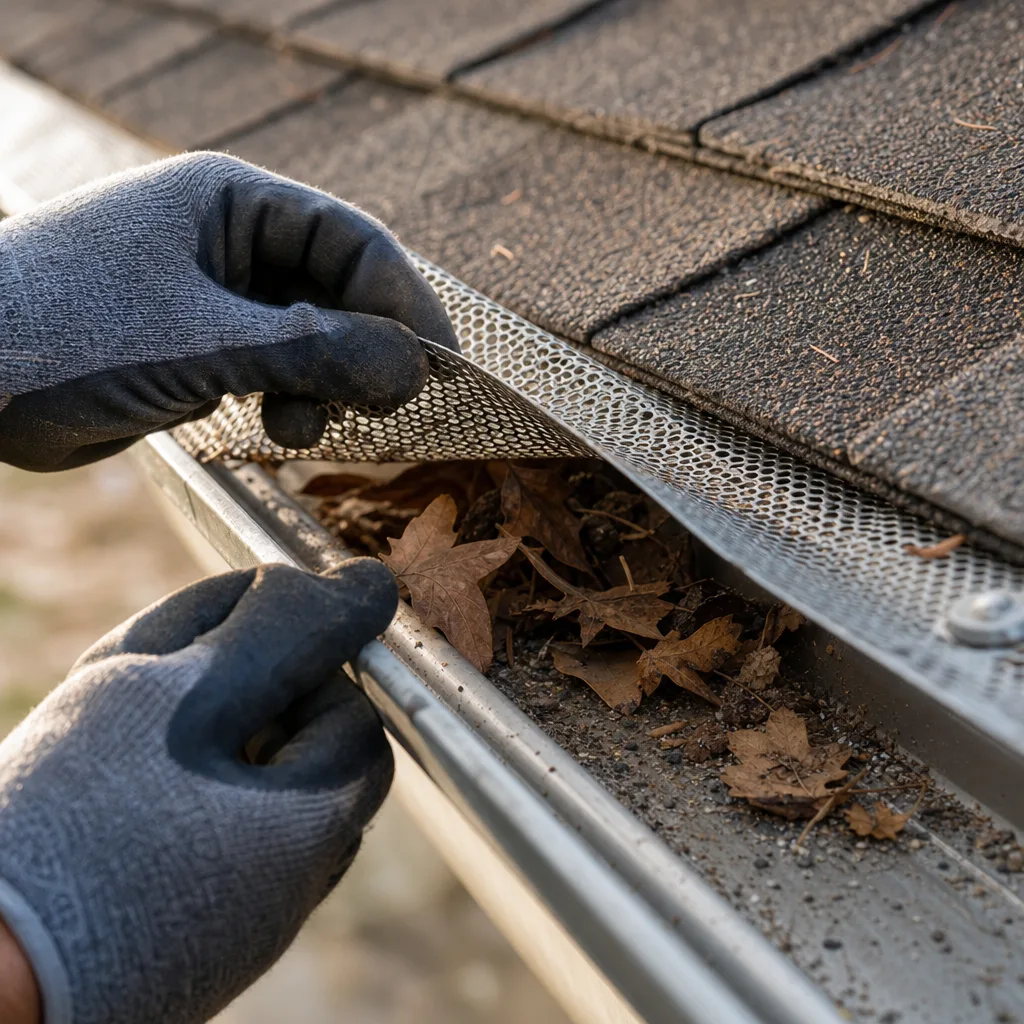
A good guard does one job. It lets rain into the gutter and keeps most of the junk out. When that works, the water reaches your downspouts and moves away from your slab instead of spilling over the edge and soaking the clay soil next to your foundation. That’s the real payoff. You get fewer clogs, less overflow in a spring downpour, and fewer trips up the ladder.
Here’s what a good guard handles well:
- Big leaves and twigs from shade trees, which slide off or sit on top where they dry and blow away.
- Shingle grit, which builds up into a heavy sludge in open gutters.
- Critters and birds that like to nest in an open trough.
- Standing water that sits in clogged gutters and breeds mosquitoes in a Texas summer.
Here’s the honest part. A guard is a lid, not a repair. It won’t fix a gutter that’s pulling away from the fascia, a run that’s sloped wrong so water pools in the middle, or a gutter that’s simply too small for the roof above it. Put a guard on a gutter like that and you’ve covered up the problem. The water still overflows. Now you just can’t see why.
Guards also don’t mean zero upkeep. Fine debris is the tough stuff: oak tassels and pollen in the spring, seed pods, and small leaves. It can mat down on top of a screen or mesh and slow the water. Most guards need a quick brush-off now and then, and the gutter still needs a look every so often. Anyone who tells you a guard means you’ll never touch your gutters again is selling, not explaining.
North Texas weather adds two more limits. In a hard spring thunderstorm, a lot of water comes off the roof very fast. Some guard designs can let part of it shoot past the gutter, especially on steep roofs or long runs. And hail season is rough on thin, light materials. A dented or bent guard can stop sitting flat and start letting debris in at the gaps.
That’s why the right first question isn’t which guard to buy. It’s whether your gutters are ready for one. If they’re sound, a guard matched to your trees and roof pitch can save you real hassle. If they’re loose, rusted through at the seams, or undersized, the smarter move is fixing or replacing the gutters first. Our gutter repairs and seamless gutters pages cover that work. Then a guard can do its job.
Signs Your Gutters Need Guards, Repair, or Both
You can usually tell which camp you’re in from your own yard. The best time to look is during or right after a good, steady rain. Grab an umbrella, walk the outside of the house, and watch where the water goes.
Your gutters are probably sound and just need guards if you notice these signs:
- You clean them out, and a few weeks later they’re full again. That’s a debris problem, not a gutter problem.
- Water spills over the edge in one or two spots, and when you check, there’s a wad of leaves or a clogged downspout opening right there.
- Little plants or grass are sprouting in the gutter. That means dirt and grit have been sitting long enough to grow something.
- You’ve got big shade trees hanging over the roof, and the gutters themselves still hang straight and tight to the house.
Your gutters need repair before any guard goes on if you notice these instead:
- A run sags in the middle, or you can see a gap between the gutter and the board behind it, called the fascia.
- Water drips from the seams or corners, even when the gutter is clean.
- Water sits in the gutter for days after the rain stops. That points to a bad slope, not a clog.
- The fascia board looks dark, soft, or is peeling paint behind the gutter. That’s wood rot from water getting behind it.
- You see dents, bends, or split seams after a spring hailstorm.
Hail deserves a second look here. Sunnyvale’s hail season runs roughly March through June, and a storm that dents your gutters can also bend their hangers and loosen their seams. If your gutters took hits, check them before you add a guard on top. A guard sitting on a dented, twisted gutter won’t sit flat, and it won’t last.
Now look down, not up. Most homes in Sunnyvale sit on a concrete slab over expansive clay soil. That clay swells when it’s soaked and shrinks when it dries out. When gutters dump water in the same spot over and over, you’ll see a washed-out trench in the mulch, bare dirt along the slab, or a puddle that hangs around by the foundation. Those are signs the water isn’t getting where it should. Sometimes the cause is clogs. Sometimes it’s a gutter pitched the wrong way or a downspout that drops water right against the house.
Plenty of homes need both. Here’s a common case. You have an older ranch home with original gutters, a big tree out front, and a corner that overflows every storm. The gutter on that side has started to pull loose because it’s been holding wet leaves for years. Guards alone won’t fix the sag. A repair alone means you’re back on the ladder every fall. The right fix is to repair or replace that run, then put a guard on it.
If you can’t tell which bucket you’re in, that’s fine. That’s exactly what a free inspection is for. You’ll get an honest answer about what your gutters need, even if it’s less than you expected.
When Gutter Repair Should Come Before Guards
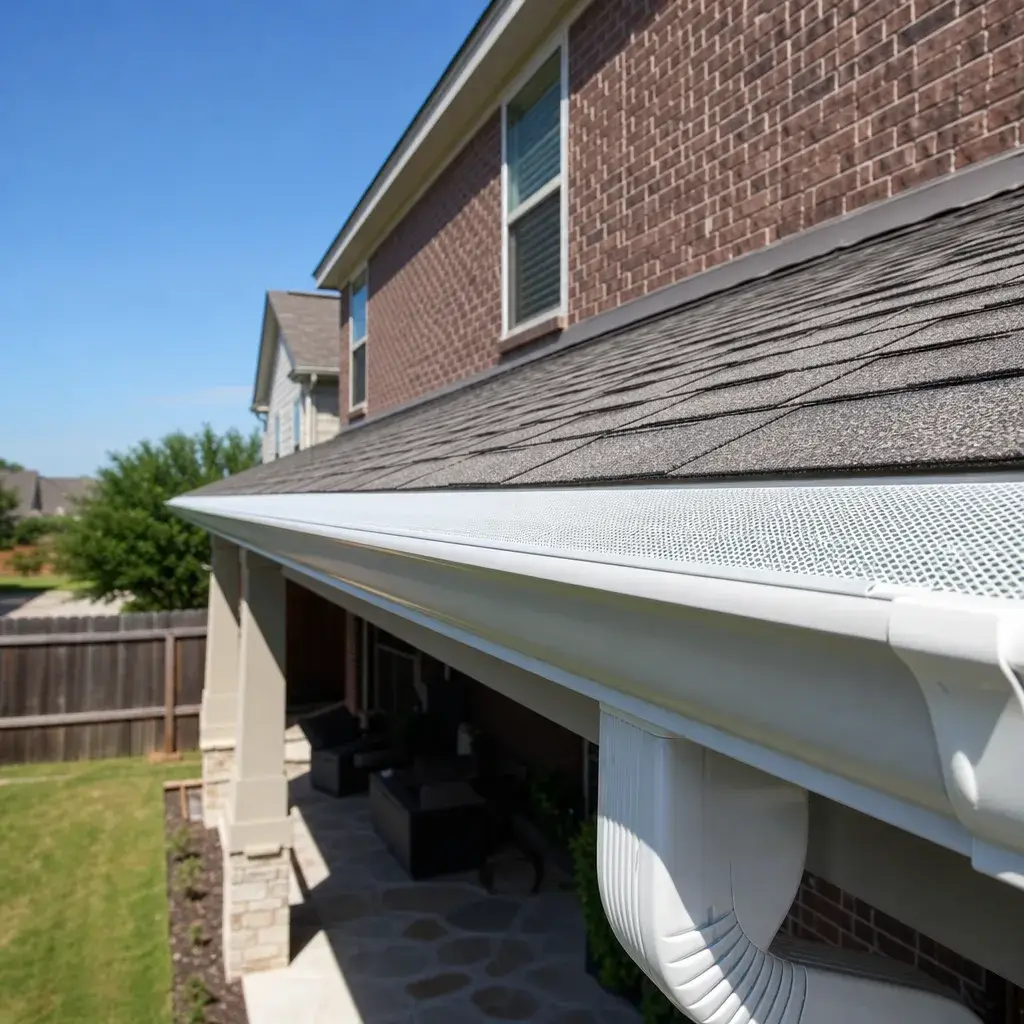
If the gutter itself is failing, fix it first. Order matters because most guards fasten to the gutter’s front lip, and some tuck under the bottom row of shingles. If the gutter needs work later, someone has to pull the guards off, make the repair, and put them back. You end up paying for that labor twice.
These are the cases where the repair has to come first:
- Soft or rotted fascia. The fascia board is what the gutter hangers screw into. New hangers in soft wood won’t hold, and a guard adds weight to a gutter that’s already pulling loose. The bad boards get replaced first, then the gutter is rehung.
- A gutter sloped the wrong way. The gutter has to be taken down and rehung so it runs downhill toward the downspout. A guard can’t fix the slope. It just hides the water sitting in the middle.
- Gutters too small for the roof. Many larger two-story homes in newer subdivisions have big roof sections and valleys that pour a lot of water into one spot. If the gutter can’t carry that much in a hard storm, the fix is a bigger gutter or another downspout, not a cover.
- Hail-damaged gutters. If a spring storm dented your gutters, have the damage looked at and photographed before anything changes, in case it’s part of an insurance claim on your home.
Next comes the bigger question: repair or replace? A few loose hangers, one leaky corner, or a single downspout that’s come apart are repair jobs. That work is usually quick, and your gutters can take a guard right after.
Replacement makes more sense when the problems are spread out. Think leaks at several seams, rust or thin spots along the bottom, sags in more than one run, or gutters that were never sized right for the roof. Older homes often have sectional gutters, meaning short pieces joined with a seam every so often. Each seam is a spot that can leak. Patching seam after seam on an old system and then adding guards on top is money spent on gutters that are near the end anyway.
Seamless gutters run in one piece along each side of the house, so there are fewer joints to fail. When you’re replacing, it’s smart to plan the guards at the same time so the whole system goes on together.
Timing helps too. Getting repairs and guards done before spring storm season, or before the fall leaf drop, means your gutters are ready when they’re working the hardest.
Some homes don’t need guards at all. If there are no trees close to your roof, and cleaning out the gutters once or twice a year is easy, guards may not be worth the money. That’s especially true on a one-story ranch home where the gutters are within easy reach. Sound gutters with little debris can do their job just fine without a cover. Spend that money somewhere it’ll do more good for your home.
Proudly serving Sunnyvale, TX – reach out anytime.
Schedule Your Free Inspection. Exteriors, Roofing & Outdoor Living is ready to help.
Who May Not Need Guards Yet
Besides the homes with no trees nearby that we covered above, a few other homeowners are better off waiting. In these cases guards aren’t a bad idea. It’s just not the right time to buy them yet.
You’re planning a new roof in the next year or two. Many guards tuck under the bottom row of shingles or fasten close to the roof edge. When the roof comes off, the guards usually have to come off too. Some won’t go back on cleanly. If your roof is getting old, or a home inspection flagged it, hold off. Plan the roof, the gutters, and the guards as one job so nothing gets paid for twice.
You have an open hail claim. If a spring storm hit your roof and gutters and the claim isn’t settled yet, don’t add anything new. Let the adjuster see the damage as it is. Once the repair or replacement plan is clear, guards can be part of it.
Your trees are still young. In a newer subdivision, the trees out front may still be small and nowhere near the roofline. Right now you might get a handful of leaves a year. That changes as the trees grow. It’s fine to skip guards today and take another look in a few years, once branches start to reach over the eaves.
The problem tree is coming down. If one big tree causes most of your clogs and you already plan to remove it or cut it back hard, do that first. Your debris load could drop enough that you don’t need guards at all.
You’re selling soon. If you plan to move within a year, put your money into what a buyer’s inspector will notice. That means sagging runs, rotted fascia, leaky seams, and water pooling by the slab. Sound gutters that drain well matter more on an inspection report than a cover on top.
Your budget only stretches so far. If you have to choose, think about where the water ends up before you think about debris. On expansive clay soil, a downspout that dumps water right against your foundation does more harm than a gutter you have to clean twice a year. Here’s the order that makes sense when money is tight:
- First, fix any gutter that leaks, sags, or holds standing water.
- Next, make sure every downspout carries water several feet away from the slab, not into a flower bed against the brick.
- Last, add guards once the system under them works the way it should.
Waiting doesn’t mean ignoring your gutters. Until guards make sense, clean them out after the spring oak tassels drop and again after the fall leaves come down. If you’re comfortable on a ladder, check the downspout openings after a big storm, since that’s where clogs tend to start. If a ladder at the roofline isn’t something you want to do, that’s a fair reason to bring guards back into the conversation, even if your tree count is low.
The point is simple. Guards protect a gutter system that’s already in good shape and catching real debris. If your roof, your trees, or your plans are about to change, it’s smarter to wait and do it once.
Watch Our Video
See How We Handle Gutter Guards & Leaf Protection in Sunnyvale, TX
Exteriors, Roofing & Outdoor Living — Serving Sunnyvale, TX and surrounding areas
What a Gutter System Inspection Covers
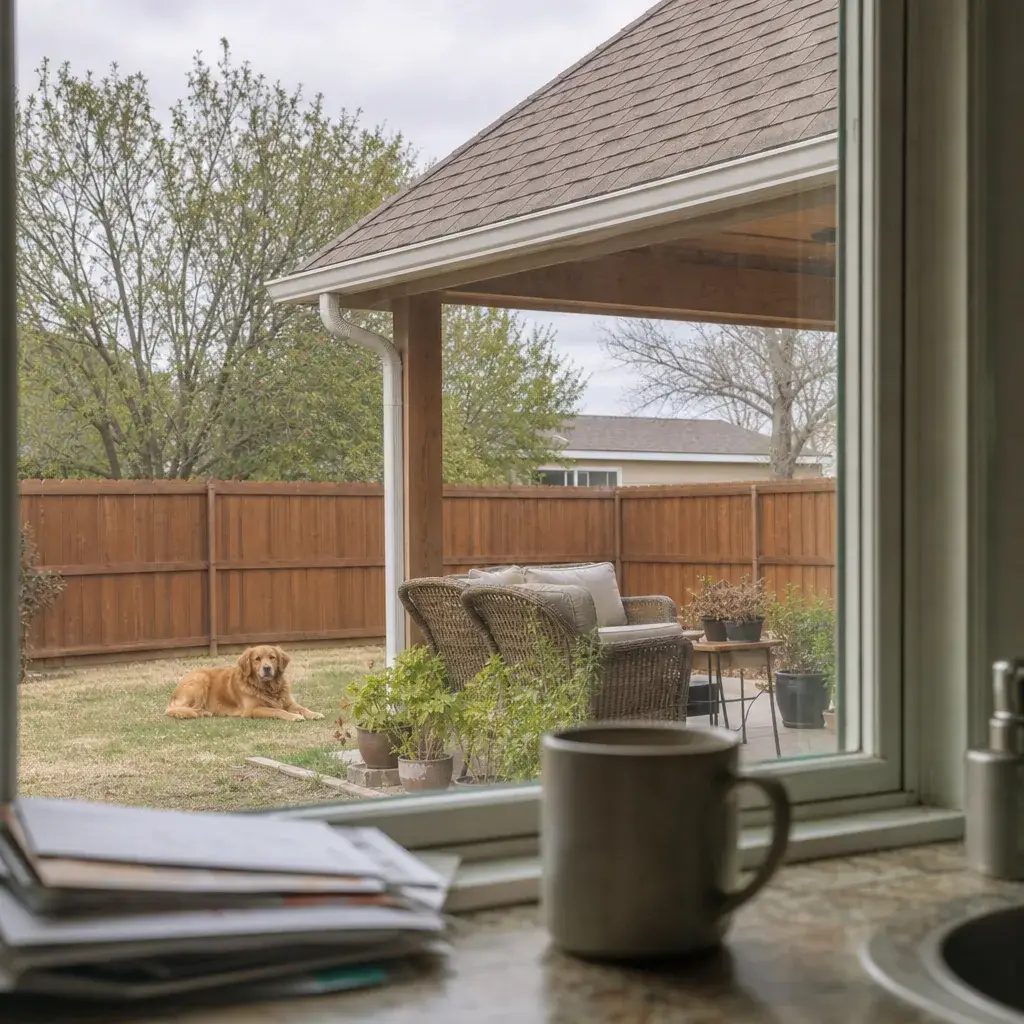
A good gutter inspection answers one question first: are your gutters ready for a guard, or do they need work before one goes on? To answer that, someone has to look at the whole path your rain takes, from the roof edge down to the ground. A quick peek into the trough isn’t enough.
Here’s what a thorough inspection should cover:
- The roof edge. This means the bottom rows of shingles and the drip edge, the thin metal strip that steers water into the gutter. If your roof is near the end of its life, you should hear that now, before guards go on.
- The gutters. Hangers, seams, corners, end caps, and how tight each run sits against the fascia.
- The slope. Whether each run drops toward its downspout, and whether water sits anywhere after a rain.
- The downspouts. How many there are, whether any are clogged or crushed, and where each one lets water out.
- The ground. Washouts, low spots, and puddles along your slab.
- Your trees. What kind they are, how far the branches reach over the roof, and what they drop through the year.
- Roof pitch and height. Steep roofs and second-story runs affect which guards keep water in the gutter during a hard storm, and how the work gets done safely.
The tree check is where the guard choice comes from. Fine mesh stops small stuff like oak tassels and shingle grit, but it needs a brush-off now and then. Screen and perforated covers handle big leaves well, but fine debris can slip through. Hood-style guards, which curve water around a rounded front edge, shed leaves off the side. In a heavy downpour on a steep roof, though, some water can shoot past them. No single style is right for every house. The right one fits your trees and your roof.
After the inspection, you should get a written estimate you can read. It should list repairs separately from guards. It should name the guard type and how it attaches, give the number of linear feet, and note any downspout changes. Guards are usually priced by the linear foot. The cost goes up with finer mesh or heavier materials, second-story work, steep roofs, lots of corners, and any repairs that have to come first. If a bid is one big number with no breakdown, ask for one. A contractor who’s being straight with you won’t mind.
With ERO DFW, the inspection is free, and you get a written estimate before you sign anything. We respond to every inspection request within 24 hours. We’re family-owned since 2019 and headquartered right here in Sunnyvale on the U.S. 80 frontage road. We’re licensed, bonded, and insured, and financing is available. One North Texas team handles the roof, the fascia, the gutters, and the downspouts. So if the inspection turns up more than a guard can fix, you won’t have to juggle three contractors to get it done right.
Frequently Asked Questions
Common questions about gutter guards and leaf protection in Sunnyvale, TX
How often do gutter guards still need to be cleaned?
Even with guards on, you’ll want to brush them off now and then. Fine debris like oak tassels, pollen, and seed pods can mat down on top of mesh or screen guards and slow the water flow. Plan on a quick check after spring tassel drop and again after fall leaves come down, and look at downspout openings after any big storm.
Can gutter guards be installed on a roof that’s about to be replaced?
It’s better to wait if a new roof is coming in the next year or two. Many guards tuck under the bottom row of shingles or fasten close to the roof edge, so when the roof comes off, the guards usually have to come off too, and some won’t go back on cleanly. Planning the roof, gutters, and guards as one job avoids paying for the same work twice.
Do gutter guards work during heavy spring storms in Sunnyvale?
Most of the time, yes, but very heavy rain can overwhelm some guard designs. In a hard spring thunderstorm, a lot of water comes off the roof fast, and some guards can let part of it shoot past the gutter, especially on steep roofs or long runs. Since Sunnyvale’s hail season runs roughly March through June, it’s also worth checking guards for dents or bends after a storm, since damaged guards can stop sitting flat and let debris slip through the gaps.
Ready to Get Started?
Schedule Your Free Inspection. Call (972) 288-9587 today.