
Commercial Roofing in Sunnyvale, TX
Commercial roofs repaired or replaced with a clear plan from inspection to final walkthrough – starting with a free inspection.
What’s Covered on This Page
- Signs Your Commercial Roof Needs Attention Now
- Repair or Full Replacement: How That Call Gets Made
- What Happens From Inspection to Final Walkthrough
- Handling a Storm or Hail Damage Claim on a Commercial Roof
- What Drives Commercial Roofing Cost
- How long does a commercial roof inspection take?
- Can I stay open while my roof is being replaced?
- Who do I call first after storm damage, my insurer or a roofer?
- Do I have to pay my insurance deductible on a roof claim?
Signs Your Commercial Roof Needs Attention Now
Commercial roofing problems rarely announce themselves from the parking lot. On a flat or low-slope roof, you can’t see the surface from the ground, so the first clues usually show up inside your building or in what your tenants and staff tell you. Here’s what to watch for, and what each sign means.
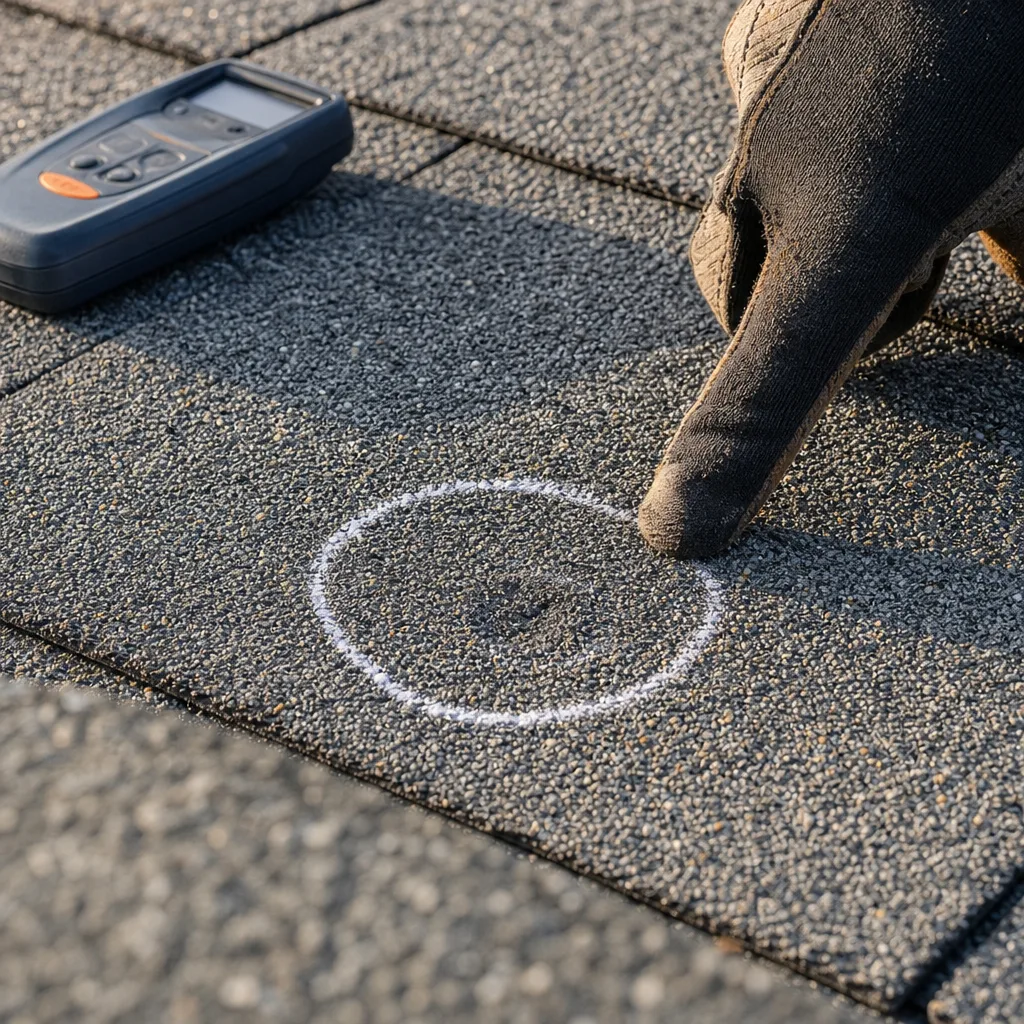
Start inside the building. These signs mean water is already getting in:
- Brown rings or sagging spots on ceiling tiles, especially near walls, skylights, or rooftop equipment.
- Drips over inventory, a dining room, or a work area after a rain, even if they stop once the sky clears.
- A musty smell in one part of the building. It often means water is soaking the insulation under the roof.
- Cooling bills climbing in summer with no other reason. Wet insulation stops doing its job.
- Tenants or employees mentioning leaks, stains, or puddles you haven’t seen yet.
On the roof itself, these are the signs worth taking seriously:
- Ponding water that’s still there two days after a rain. Standing water adds weight and wears down the roof surface faster.
- Blisters, bubbles, or soft spots that give when you step near them.
- Seams that are opening up, or a membrane (the waterproof top layer) with splits and cracks.
- Flashing pulling away. Flashing is the metal or membrane strip that seals the joints where the roof meets walls, curbs, and vents, and it’s where many leaks start.
- Clogged drains or scuppers, the openings at the roof edge that let water run off.
North Texas weather adds its own deadlines. Spring hail season, roughly March through June, can bruise or puncture a membrane without leaving anything you’d notice from the ground. Straight-line winds can lift the roof edge and peel back flashing in a single storm. Hundred-degree summers and constant UV dry out coatings and open small cracks. Then an occasional ice storm pushes water into those cracks and freezes it there. If a big storm just rolled through Sunnyvale, it’s smart to get the roof checked even when nothing looks wrong yet. Damage you find early is easier to fix and easier to document if you file a claim.
Not every sign means an emergency. Coating that looks chalky or faded, a few surface cracks with no leaks inside, or a single shallow puddle that dries within a day can usually wait for a scheduled visit. Active leaks, sagging ceilings, ponding that won’t drain, and fresh storm damage shouldn’t wait. Water under a flat roof spreads sideways through the insulation, so a small leak over one aisle can turn into a much bigger repair across the whole building.
If you’re seeing any of these, ERO DFW inspects for free and responds to every inspection request within 24 hours. You’ll know what you’re dealing with before you decide anything.
Repair or Full Replacement: How That Call Gets Made
The call comes down to one question: how much of your roof is still dry and solid under the surface? Age matters, and so does how it looks on top. But a 20-year-old flat roof with dry insulation can have years left. A 10-year-old roof soaked from a slow leak may not. You really have three choices, not two.
- Repair makes sense when the damage stays in one spot. Think a torn seam, a loose flashing strip, a puncture near a rooftop unit, or one clogged drain. The rest of the roof is dry and doing its job.
- Coating and restoration make sense when the membrane is worn and chalky but still holds together, and the insulation under it is dry. A new coating adds a fresh waterproof layer and reflects summer sun. It can push back a tear-off without the cost and mess of one.
- Full replacement makes sense when wet insulation runs across large parts of the roof, the decking is soft or rusted, or the membrane is failing in many places at once. Patching at that point just moves the leak around.
Here’s the part a lot of owners don’t hear. A coating can’t fix a wet roof. If you seal over soaked insulation, you trap the water inside. It keeps rotting the deck and soaking up your cooling dollars. So before anyone sells you a coating, ask how they know the layers underneath are dry. A good answer is specific. A shrug isn’t.
Picture a strip center off U.S. 80 with a stain over one tenant’s back room after a spring storm. If the leak traces to a split seam and the rest of the roof is dry, that’s a repair. It’s a quick fix that keeps that tenant open. If the same stain turns out to be one sign of water spread under half the roof, the math changes. Then you’re weighing a coating on the dry sections against replacing the wet ones.
Hail adds one more piece. If a North Texas hailstorm bruised or cracked the membrane, your commercial policy may come into play, and the adjuster’s findings can shape what makes sense. We’ll walk you through the claim one step at a time. We won’t promise an outcome, and nobody honest can.
Downtime matters too. On many low-slope roofs, replacement can be staged in sections so your doors stay open. Ask any contractor how they’d sequence the work around your hours, your tenants, or your inventory.
Whatever the recommendation, you should get it in writing, with the reason behind it. ERO DFW inspects for free and gives you an honest written estimate before you sign anything. Before you choose anyone, ask these questions:
- Is the insulation wet, and how much of it?
- Why repair, coating, or replacement instead of the other two?
- What happens to the roof if I wait a year?
- How will the work affect my business while it’s going on?
What Happens From Inspection to Final Walkthrough
You’ll know who’s handling your roof at every stage. One team takes your building from the first look to the last walkthrough, so you’re not chasing a salesperson, a crew, and an office that don’t talk to each other.
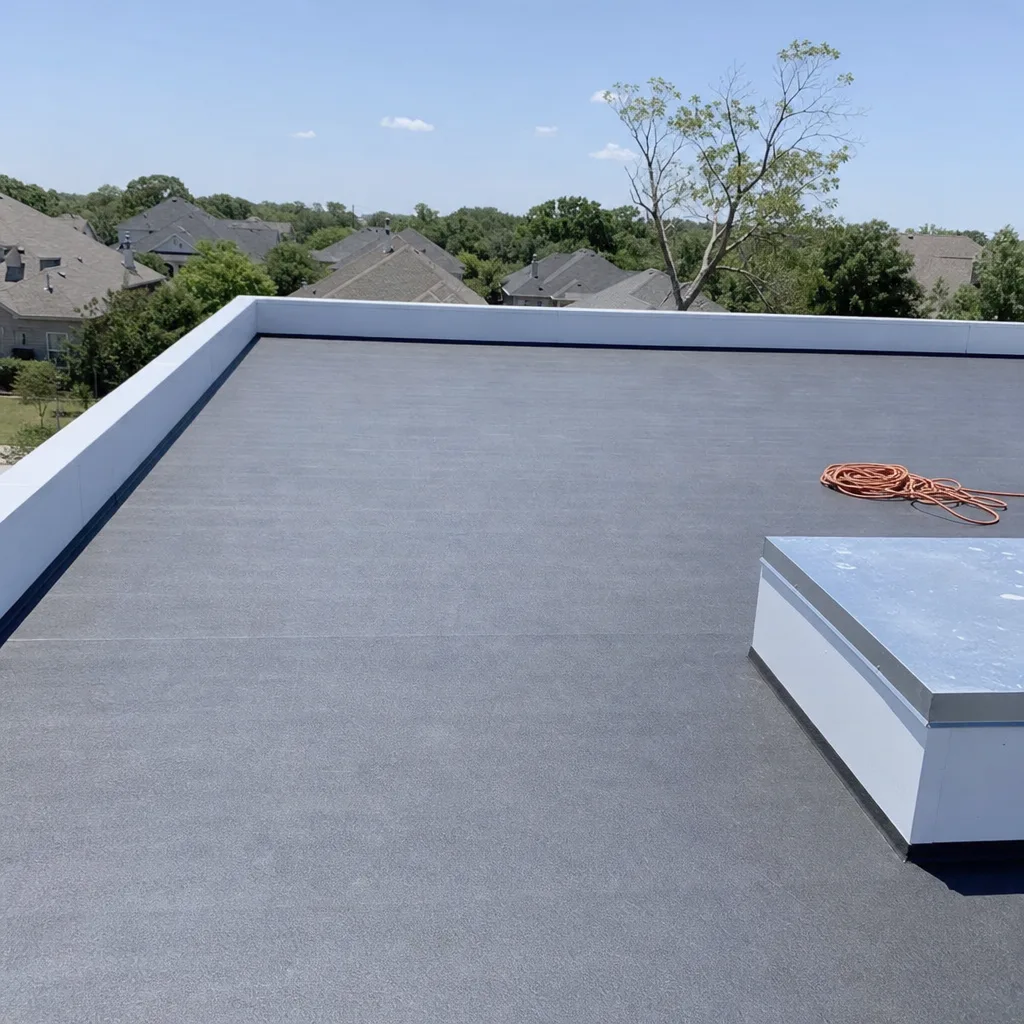
- You call, and we answer within a day. We respond to every inspection request within 24 hours. The inspection is free, and you’re not committing to anything by asking for one.
- A sales manager looks at your roof and tells you what’s going on. They assess the building and walk you through your options in plain English: repair, coating, or replacement. That’s the call we described above, made for your roof specifically. You’ll hear what we found and why it points one way and not another.
- You get a written estimate before you sign anything. It spells out the scope of the work, so you can share it with an owner, a board, or a property manager. You can compare it with other bids and take the time you need. Financing is available if it helps the timing work for your business.
- A project manager takes over once you approve the work. They line up materials and set the schedule. They handle permits, which for a Sunnyvale building go through the Town of Sunnyvale. They keep you updated as things move. If a storm claim is involved, they meet the insurance adjuster at your building, so you don’t have to clear your afternoon to stand on a roof.
- Our crews do the work and look after your property. They protect what’s around the job and keep the site clean. If your tenants, customers, or staff are on site, ask your project manager how the schedule will fit around your hours and your access points. That’s the part of a commercial job that matters most to you, so settle it before work starts.
- Your project manager walks the finished job with you. You’ll see what was done and get your questions answered before anything is marked complete.
The work is backed in writing, with a 100% satisfaction guarantee and a one-year workmanship warranty. You also get the manufacturer’s warranty on the products used.
A written warranty only matters if the company is still around to honor it. ERO DFW has been family-owned since 2019 and is headquartered on the U.S. 80 frontage road in Sunnyvale, with ten local offices across the Metroplex. We’re licensed, bonded, and insured. When you call about a warranty issue, you’re calling a local office, not a phone number that went dead when the storm crews left town.
That’s the honest answer about what happens next. Nobody can tell you whether your roof needs a repair, a coating, or a replacement until someone checks what’s under the surface. The first step is a free look at your building and a straight answer about what we found.
Ready when you are – get in touch today.
Schedule Your Free Inspection. Exteriors, Roofing & Outdoor Living is ready to help.
Handling a Storm or Hail Damage Claim on a Commercial Roof
A hail or wind claim on a commercial roof goes best when you slow down, document everything, and get an honest look at the roof before you sign with anyone. You don’t have to pick between calling your insurer and calling a roofer. Most owners do both in the first few days, in the order that protects them.
- Make the building safe and take pictures. Photograph stains, drips, wet inventory, and anything on the ground, like broken skylight pieces or bent metal. Note the date of the storm. If water is coming in, stop the damage you can, like moving stock or catching drips, and keep your receipts.
- Get the roof inspected. Hail damage on a flat roof is easy to miss from the ground and easy to miss for an untrained eye on top. A free inspection tells you whether there’s real storm damage worth reporting before you open a claim.
- Read your policy and report the claim. Commercial policies have reporting deadlines, so check yours and don’t let weeks slip by. If you lease the space, check your lease too. It often says whether the owner or the tenant handles the roof.
- Meet the adjuster with someone who knows roofs. The adjuster decides what the insurer will pay for. Having your contractor there, as our project manager does, helps make sure damage in the membrane, seams, and flashing isn’t overlooked.
- Compare the insurer’s scope with your written estimate. If they don’t match, ask why, line by line. Small gaps on paper can be big gaps on a roof.
Commercial policies can work differently from a homeowner’s policy, so a few terms are worth knowing before the adjuster shows up. Many commercial policies use a separate wind and hail deductible, often figured as a percentage of the building’s insured value instead of a flat dollar amount. That can be a bigger number than owners expect. Some policies pay actual cash value, which means the roof’s value after its age is subtracted. Others pay replacement cost, which is closer to what a new roof costs. Your agent can tell you which one you have.
After a big storm rolls through Sunnyvale and along U.S. 80, crews from out of town tend to show up fast. Some will ask you to sign a contract or an assignment of your claim on the spot. Don’t sign anything until you’ve seen a written estimate and know who will answer the phone a year from now. If you have questions about your rights in a claim, the Texas Department of Insurance regulates insurers in Texas and has help for policyholders.
Some storms don’t do enough damage to justify a claim. If the inspection shows only minor wear, or a repair that costs less than your deductible, we’ll tell you that straight. Filing a claim isn’t always the right move, and you should hear that before you make the call.
Watch Our Video
See How We Handle Commercial Roofing in Sunnyvale, TX
Exteriors, Roofing & Outdoor Living — Serving Sunnyvale, TX and surrounding areas
What Drives Commercial Roofing Cost
The biggest thing that drives your price is the same thing that drives the repair-or-replace call: what’s under the surface. Two buildings with the same size roof can get very different bids. One has dry insulation and a solid deck. The other has hidden water that has to come out. Everything else on the bid moves the number less.
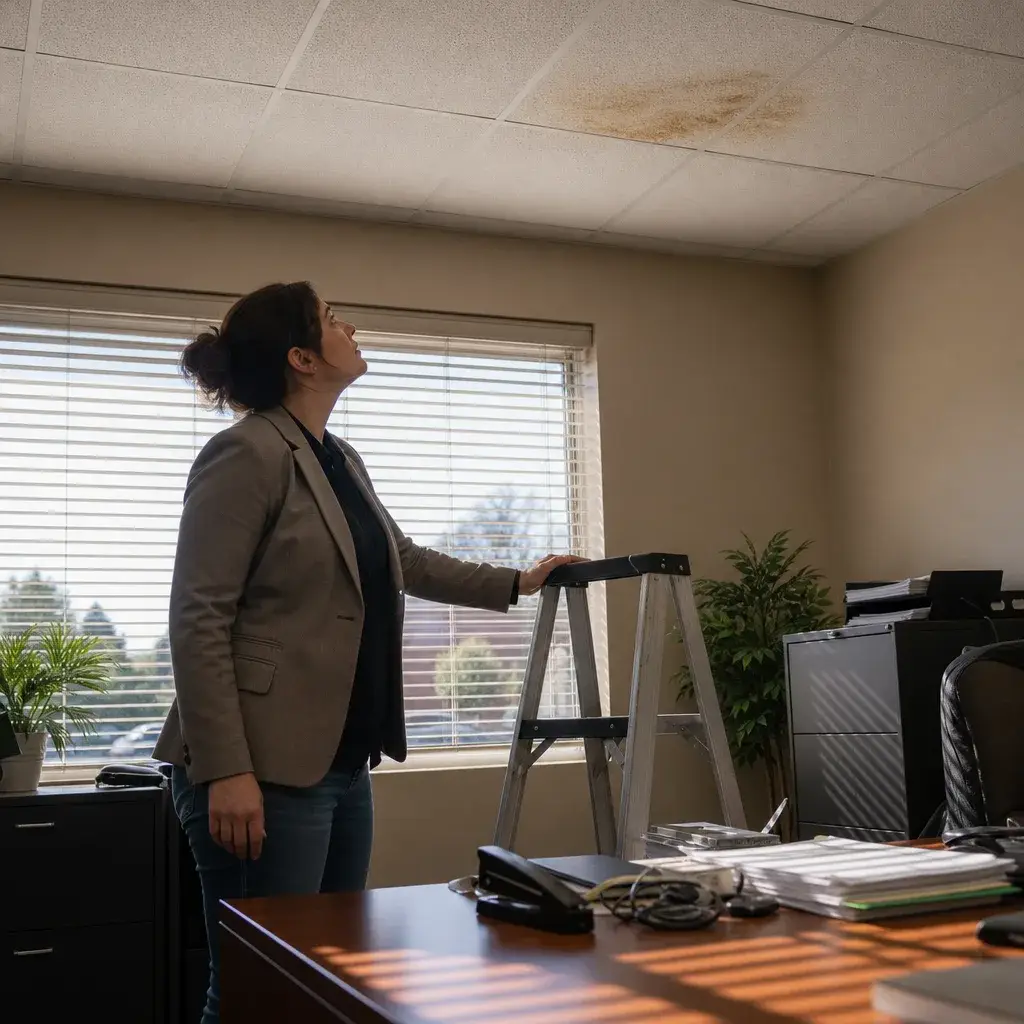
Most commercial roofs are priced by the square, which is a roofer’s term for 100 square feet of roof. Larger replacement jobs are usually quoted as one total price for a stated scope of work. Small repairs are often billed by time and materials. Whichever way the bid is written, you should be able to see what’s included and what isn’t.
These are the factors that move the number most:
- Wet insulation and damaged decking. Everything that’s soaked or rusted has to be torn out and replaced. A full tear-off costs more than going over the top, and building codes limit how many roof layers you can stack before the old ones have to come off.
- The roofing system you choose. A single-ply membrane, a built-up or modified roof, metal, and a coating all cost different amounts to install. They also hold up differently to North Texas hail and summer UV.
- Things that poke through the roof. Rooftop units, vents, pipes, skylights, and curbs all need their own flashing. A busy roof takes more hand work than a clear one.
- Drainage fixes. If water ponds, the fix may mean new drains or tapered insulation, which is foam board cut on a slope so water runs off. It adds cost now and saves the roof later.
- Access and your business hours. A tall building, a tight lot, or a crane lift adds cost. So does working nights or weekends to keep your doors open.
- Edge metal and walls. Replacing the metal trim at the roof edge, or flashing up tall parapet walls, adds labor and material.
- Timing. Right after a big spring hailstorm, crews and materials are in demand across the Metroplex. A planned job in a calmer month is often easier to schedule.
Permits are part of the cost too. For a Sunnyvale building, they go through the Town of Sunnyvale, and your bid should say who pulls the permit.
The line that protects you most on a replacement bid is the one about hidden damage. Nobody can see every wet board before the old roof comes off. A fair bid says up front how that’s handled, usually with a set price per board or per square foot for any decking or insulation that has to be replaced. Without that line, the surprise shows up on your final invoice instead of on the bid.
When you’re comparing bids, ask each contractor:
- Is this a tear-off or a recover, and why?
- How much wet insulation did you find, and how did you check?
- What’s the unit price if you find more damage once the roof is open?
- Are flashing, edge metal, drains, permits, and debris removal included?
- Does the price change if you have to work around my hours?
A low bid that skips these answers isn’t really cheaper. It just hasn’t told you the full cost yet. Every ERO DFW written estimate lays out the scope, so you can compare it line by line and take the time you need.
Frequently Asked Questions
Common questions about commercial roofing in Sunnyvale, TX
How long does a commercial roof inspection take?
It depends on your building’s size and how many rooftop units, drains, and seams there are to check. A strip center off U.S. 80 with a few tenants takes less time than a large warehouse with lots of equipment on the roof. Either way, the inspection is free and you get a straight answer about what we found before you decide anything.
Can I stay open while my roof is being replaced?
Yes, in many cases. On most low-slope roofs, replacement can be staged in sections so your doors stay open during the work. Ask your contractor how they’d sequence the job around your business hours, your tenants, or your inventory before you sign anything.
Who do I call first after storm damage, my insurer or a roofer?
Most owners call both within the first few days, but get the roof inspected before filing. Hail damage on a flat roof is easy to miss from the ground, so a free inspection tells you if there’s real damage worth reporting before you open a claim with your insurer.
Do I have to pay my insurance deductible on a roof claim?
Yes, always. Texas law requires the policyholder to pay the deductible, and a contractor can’t legally waive it, absorb it, or hide it in a rebate. If anyone offers to cover your deductible after a storm near Sunnyvale, that’s a sign to walk away and keep looking.
Ready to Get Started?
Schedule Your Free Inspection. Call (972) 288-9587 today.