
Fascia & Soffit Repair in Sunnyvale, TX: Know If It’s Urgent Before You Call
Rotted fascia and damaged soffit repaired and sealed – with a free inspection that also checks the gutters that often cause the damage.
What’s Covered on This Page
- Signs Your Fascia or Soffit Needs Repair Now
- Why Fascia and Soffit Damage Often Starts With Your Gutters
- How North Texas Storms Cause Hidden Fascia and Soffit Damage
- What to Expect During a Fascia and Soffit Inspection and Repair
- What Drives the Cost of Fascia and Soffit Repair
- Can I repair just a small section of fascia, or does the whole board need to come off?
- Will my homeowners insurance cover fascia and soffit damage?
- How long does a typical fascia or soffit repair take to finish?
- Do I need a permit from the Town of Sunnyvale to replace fascia or soffit?
Signs Your Fascia or Soffit Needs Repair Now
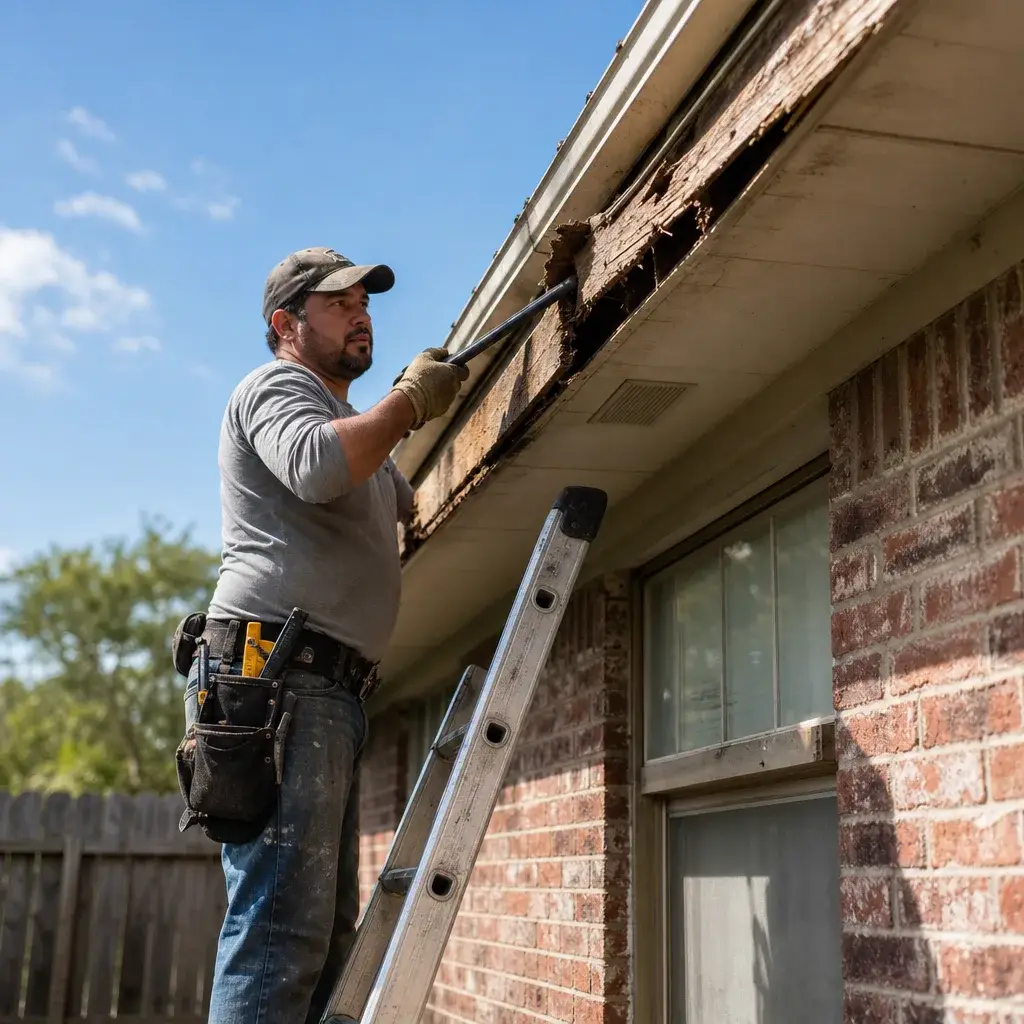
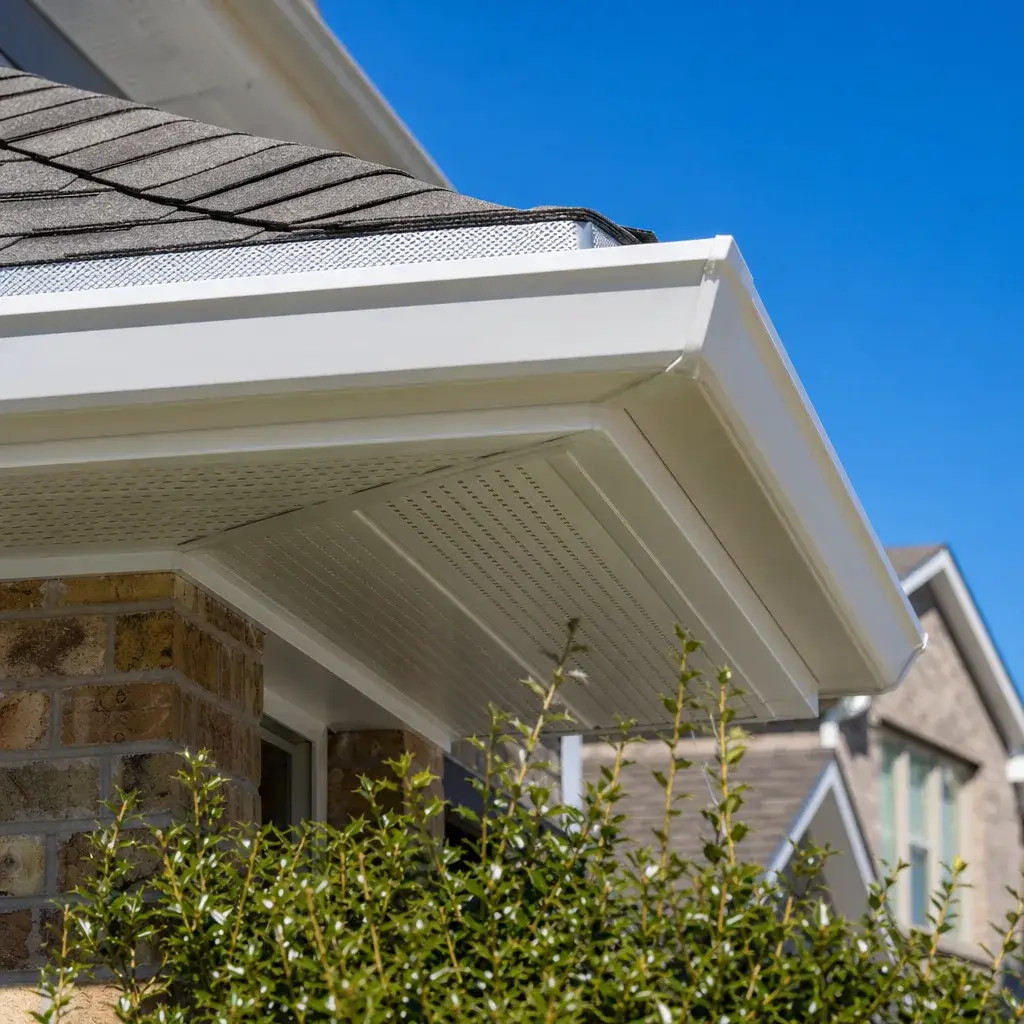
Your fascia is the long board that runs along the edge of your roof, where the gutters hang. Your soffit is the panel underneath, the part you see when you stand under the eaves and look up. Both take a beating in Sunnyvale. Spring hail runs roughly March through June, straight-line winds hit the roof edge first, and summer sun bakes paint off the trim year after year. Here’s what to look for.
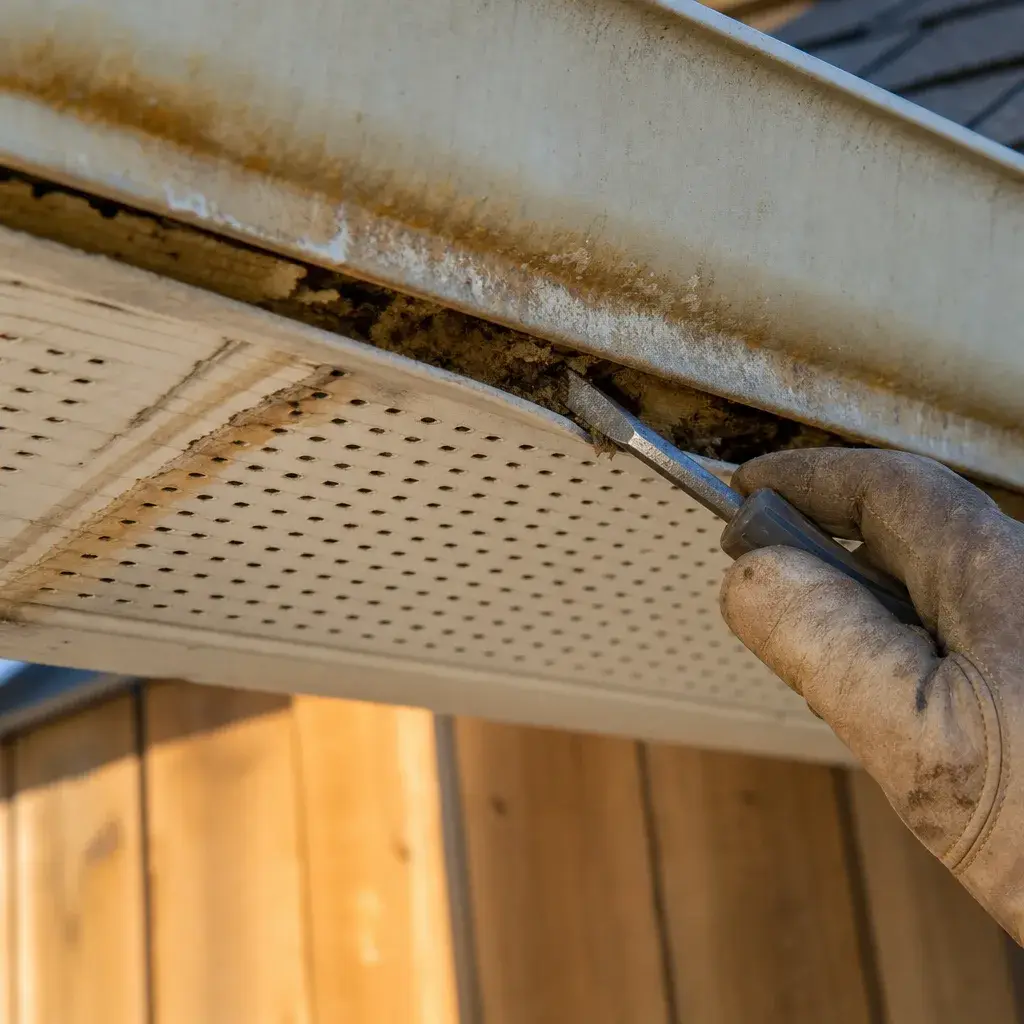
- Soft, spongy, or crumbly wood. Press on the fascia with a screwdriver. If it sinks in, water has been sitting in that board for a while.
- A gutter that’s sagging, leaning out, or pulling away. Gutter screws need solid wood to hold. When the fascia rots, the gutter is often the first thing to give.
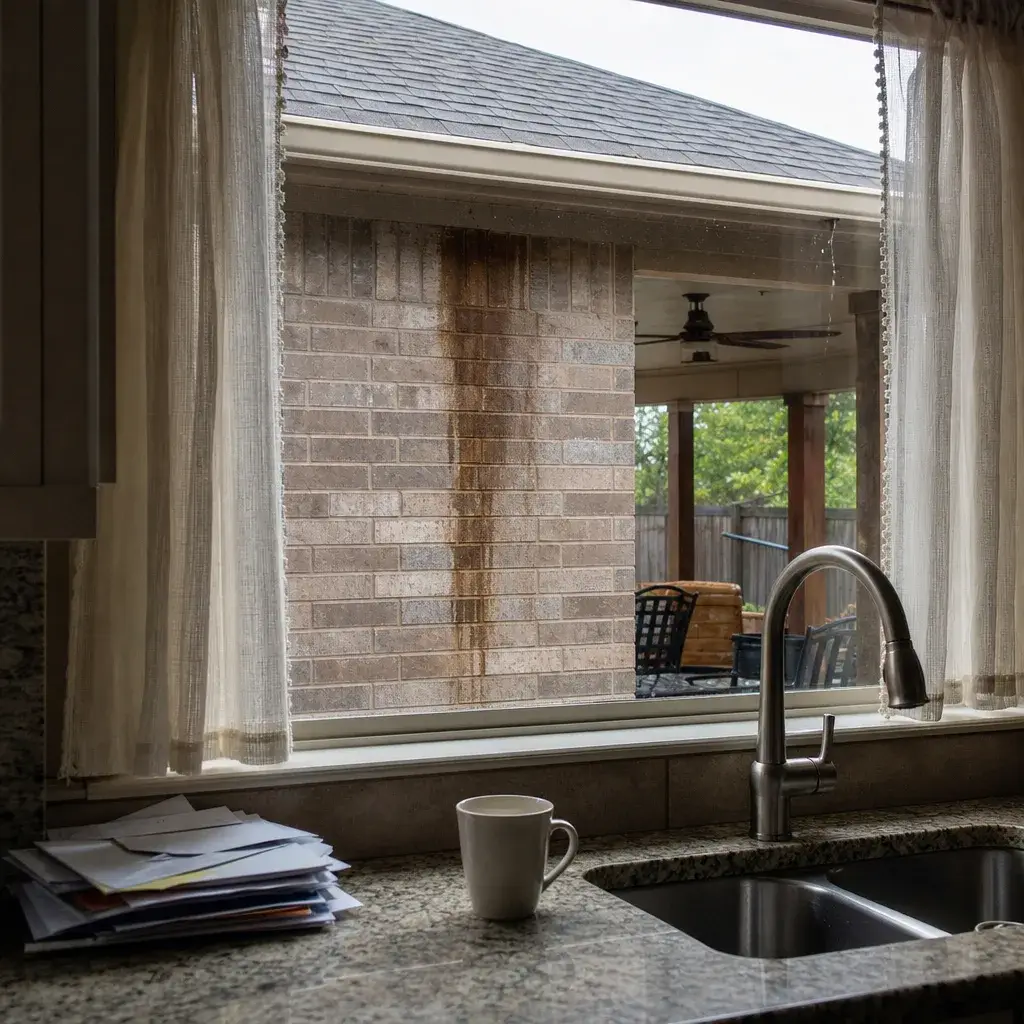
- Dark streaks or stains on the fascia or the underside of the soffit. That usually means water is running behind the gutter or coming off the roof where it shouldn’t.
- Peeling or bubbling paint that comes back fast. Paint that fails in one spot, again and again, often has moisture pushing it off from behind.
- Soffit panels that sag, crack, or are missing. Wind can pop vinyl and aluminum panels loose, and hail can dent or crack them.
- Birds, wasps, squirrels, or other critters going in and out. A gap at the eaves is an open door to your attic.
- Hail dents in metal fascia wrap. Dents can crack the paint finish and let water reach the wood underneath.
Some of these can’t wait. A hole that lets animals into your attic, a gutter that’s coming down, or soft wood that keeps spreading should get attention soon. Rot doesn’t stay put. It can move from the fascia into the roof decking, which is the plywood your shingles are nailed to, and that turns a trim repair into a roof repair.
Other signs are less urgent. Paint that’s faded from the Texas sun, with solid wood underneath, is a cosmetic job you can plan for. A single loose soffit panel with no gap behind it can wait until the next dry stretch of weather.
Where you find the damage matters, too. On a lot of older Sunnyvale ranch homes, the brick walls hold up fine but the wood trim and gable siding don’t. On larger two-story homes, the problem spots tend to be the corners where two roof lines meet and dump water into one gutter. Rot in the same spot almost always has a reason, like a clogged gutter, missing drip edge, or flashing that’s letting water slide behind the board.
That’s why swapping the bad board isn’t the whole job. If nothing changes about how water leaves your roof, the new wood will rot in the same place. A good repair finds out why the board failed and fixes that, too.
Why Fascia and Soffit Damage Often Starts With Your Gutters
Your gutter hangs right on the fascia board. When the gutter works, it carries water away from your house. When it doesn’t, it holds that water against the wood, sometimes for days. That’s why so much fascia rot starts at the gutter line and spreads up into the soffit from there.
Here’s how water usually gets where it shouldn’t:
- Clogged gutters overflow toward the house. Leaves and shingle grit pile up, the gutter fills, and in a hard spring storm the water spills over the back edge and runs down behind the gutter, straight onto the fascia.
- The gutter has the wrong slope. A gutter needs a slight tilt toward the downspout. If it’s level or sags in the middle, water sits in it after every rain and soaks the board it’s screwed into.
- Water sneaks behind the gutter at the roof edge. Without a metal strip called drip edge to steer water into the gutter, rain can roll off the shingles and slip behind it instead.
- Seams and corners leak. Gutters built from short pieces have joints, and every joint can drip. Corners where two roof lines meet carry the most water, so they leak the most.
- Hail leaves low spots. A dented gutter can hold small pools of water that never drain, right up against the wood.
- Ice adds weight. During one of our North Texas ice storms, a gutter full of ice can pull on its screws and loosen them, opening a gap between the gutter and the fascia.
Once the fascia gets soft, it can’t hold the screws anymore. The gutter starts to lean out, more water runs behind it, and the rot speeds up. Water that gets behind the fascia then drips down onto the back of the soffit. That’s why you can have a stained or swollen soffit even when the fascia looks fine from the street.
You can check a lot of this yourself from the ground. Next time it rains, step outside and watch your gutters for a minute. Look for water pouring over the back edge instead of the front. Check whether the downspouts are flowing. After the rain stops, look for a gutter that still drips a day later, which usually means water is sitting in it. Also look along the top of the gutter for screws that have backed out or a gap where the gutter has pulled away from the board.
This is why a real fascia repair almost always means taking the gutter down. The rotted wood has to come off, and the new board needs to be sound before anything gets hung on it. While the gutter is down, it’s the right time to fix what made it fail, like the slope, the drip edge, or a leaking corner. Sometimes your old gutter is still in good shape and can go back up. Sometimes it’s dented, leaking at the seams, or too small for the roof, and putting it back just restarts the clock on the new wood.
ERO DFW also handles gutter repairs, seamless gutters, downspout installation, gutter guards, and flashing repair. That means the gutter and the board under it can be fixed together by one team, without you having to bring in a second contractor and hope the two jobs line up.
Need help with your fascia and soffit repair project?
Schedule Your Free Inspection. Exteriors, Roofing & Outdoor Living is ready to help.
What to Expect During a Fascia and Soffit Inspection and Repair
It starts with a phone call. We respond to every inspection request within 24 hours, and the inspection is free. A sales manager comes out, looks over your roof edge, explains your options in plain English, and gives you a written estimate before you sign anything. You don’t have to decide anything while we’re standing in your driveway.
A thorough look at fascia and soffit goes past the peeling paint. Whoever inspects your home should be checking these things, and you can ask about each one:
- How far the soft wood runs. Rot often spreads farther than the paint damage shows, so the board should be probed along its length.
- What’s behind the soffit. The fascia is nailed to the rafter tails, which are the ends of the roof framing. If those are soft too, the repair gets bigger.
- The edge of the roof decking, the plywood just above the fascia.
- Whatever is sending water to that spot, such as the gutter, drip edge, or flashing.
- Storm marks like hail dents or cracked panels, with photos you can use if you file a claim.
A good estimate should be specific. It should say how many feet of fascia and soffit are being replaced, and what material goes back up, whether that’s primed wood, PVC trim, or aluminum wrap over wood. It should also say whether your gutter comes down and goes back up or gets replaced. The things that move the price most are the length of the damaged run, a second story that needs more ladder or lift work, rot in the rafter tails, a new gutter, and painting.
Here’s the honest part. Nobody can see everything until the old board comes off. Ask how any extra rot found during the job will be handled and priced, and get that answer in writing up front. Then a surprise on repair day stays a conversation, not a shock.
Once you approve the work, a project manager takes it from there. They order materials, set the schedule, keep you updated, and handle any permit from the Town of Sunnyvale or HOA approval the job needs. If a storm is involved, they’ll meet with your insurance adjuster. On repair day, a typical job goes in this order. The gutter comes down, the rotted wood comes off, any damaged framing behind it gets repaired, and new fascia and soffit go up. Then the trim gets painted or wrapped, and the gutter is rehung on solid wood. Our crews protect your property and keep the site clean while they work.
You can make the day easier. Move your cars off the driveway, pull patio furniture and grills away from the eaves, and keep pets inside while the crew works overhead. When the work is done, the project manager walks the job with you so you can see the finished roof edge before anyone calls it complete.
Watch Our Video
See How We Handle Fascia & Soffit Repair in Sunnyvale, TX
Exteriors, Roofing & Outdoor Living — Serving Sunnyvale, TX and surrounding areas
What Drives the Cost of Fascia and Soffit Repair
There’s no single price for fascia and soffit repair, because no two roof edges fail the same way. Once you know how contractors build a price, though, you can read any estimate and tell whether it makes sense. That includes ours.
Most fascia work is priced by the linear foot, which is the length of board being replaced. Soffit is often priced by the square foot, because it’s a flat panel with width as well as length. Small jobs usually carry a minimum charge. Setting up ladders, pulling a gutter, and hauling off old wood takes about the same effort whether the crew replaces three feet or thirty.
On top of the price movers covered earlier, a few choices you make can change the total:
- The material that goes back up. Primed wood costs the least up front, but it needs paint and can rot again if water returns. PVC trim costs more, but it won’t rot. Aluminum wrap over new wood keeps water off the board, though a hard hailstorm can dent it.
- A patch or the whole run. A short patch costs less today. It can also leave a visible seam and one more joint where water can sneak in. Replacing the full board from corner to corner usually looks better and holds up longer.
- Matching what’s already there. Many older Sunnyvale ranch homes have wood soffit or trim sizes you can’t always buy off the shelf. Matching those profiles can take extra time and material.
- Vented or solid soffit. Vented panels let your attic breathe, which matters in a Texas summer. If your attic needs better airflow, that’s worth fixing while the soffit is open, and it adds to the scope.
- Paint color approval. In many newer two-story neighborhoods, the HOA has to approve trim colors. A custom match costs a little more than standard white.
Timing can help you save. If your gutters, roof, or flashing need work too, doing it all in one visit means the gutter comes down and goes back up once instead of twice. ERO DFW handles roof repair, gutter repairs, and roof ventilation, so you can price the whole roof edge together and see one number. If a storm caused the damage, the repair may fall under the claim we talked about earlier.
Before you hire anyone, ask these questions:
- How many feet of fascia and soffit are you replacing, and why that much?
- Are you fixing what caused the rot, or only replacing the board?
- What material goes back up, and is painting included?
- Is the gutter rehung, repaired, or replaced, and is that in this price?
- Who pulls a Town of Sunnyvale permit if one is needed?
A cheap patch that skips the cause usually costs more by the time you pay for it twice. If the right repair is bigger than your budget allows right now, financing is available. You can do the job once and do it right.
Frequently Asked Questions
Common questions about fascia and soffit repair in Sunnyvale, TX
Can I repair just a small section of fascia, or does the whole board need to come off?
You can often patch a small section if the rot hasn’t spread far. But a patch adds a seam, and that seam is one more spot where water can sneak in. Replacing the full board between corners usually holds up longer and looks cleaner, especially if the damaged run is more than a few feet.
Will my homeowners insurance cover fascia and soffit damage?
It depends on what caused the damage. If hail or wind from a storm caused it, your policy may cover the repair, and you’d pay your deductible. If the damage built up slowly from a clogged gutter or old age, that’s usually considered maintenance and isn’t covered. A close inspection with photos helps sort out which one you’re dealing with.
How long does a typical fascia or soffit repair take to finish?
Most jobs follow the same order: the gutter comes down, the rotted wood comes off, any damaged framing gets fixed, new fascia and soffit go up, then the trim is painted or wrapped and the gutter is rehung. A short run with no hidden rot can wrap up quickly, but a job with soft rafter tails or a full gutter replacement takes longer since there’s more to repair before anything new goes back up.
Do I need a permit from the Town of Sunnyvale to replace fascia or soffit?
It depends on the size and scope of the job. Smaller trim repairs often don’t need one, but larger jobs or anything tied to roof work may require a permit through the Town of Sunnyvale. Ask whoever is doing the work to confirm and to pull it for you if it’s needed, so you’re not left chasing paperwork after the fact.
Ready to Get Started?
Schedule Your Free Inspection. Call (972) 288-9587 today.