
Skylight Installation in Sunnyvale, TX, Done as Part of Your Roof
Skylights installed as a roofing job and flashed to handle North Texas storms – starting with a free inspection of the roof around them.
What’s Covered on This Page
- Why Skylight Installation Is a Roofing Job, Not a Window Job
- Signs You Need a New Skylight or a Replacement
- What Happens During a Skylight Installation
- Why DFW’s Storm Exposure Matters for Skylight Flashing
- What Drives Skylight Installation Cost
- Can a skylight be installed on any type of roof?
- How long does a skylight installation take?
- Will cutting a hole in my roof cause problems during a storm?
- Do I need a permit to install a skylight in Sunnyvale?
Why Skylight Installation Is a Roofing Job, Not a Window Job
It’s easy to think of a skylight as a window that happens to face up. The glass part really is the simple piece. It shows up from the factory as a finished, sealed unit. Everything that decides whether you get years of sunlight or a brown stain on your ceiling happens around it, in your roof.
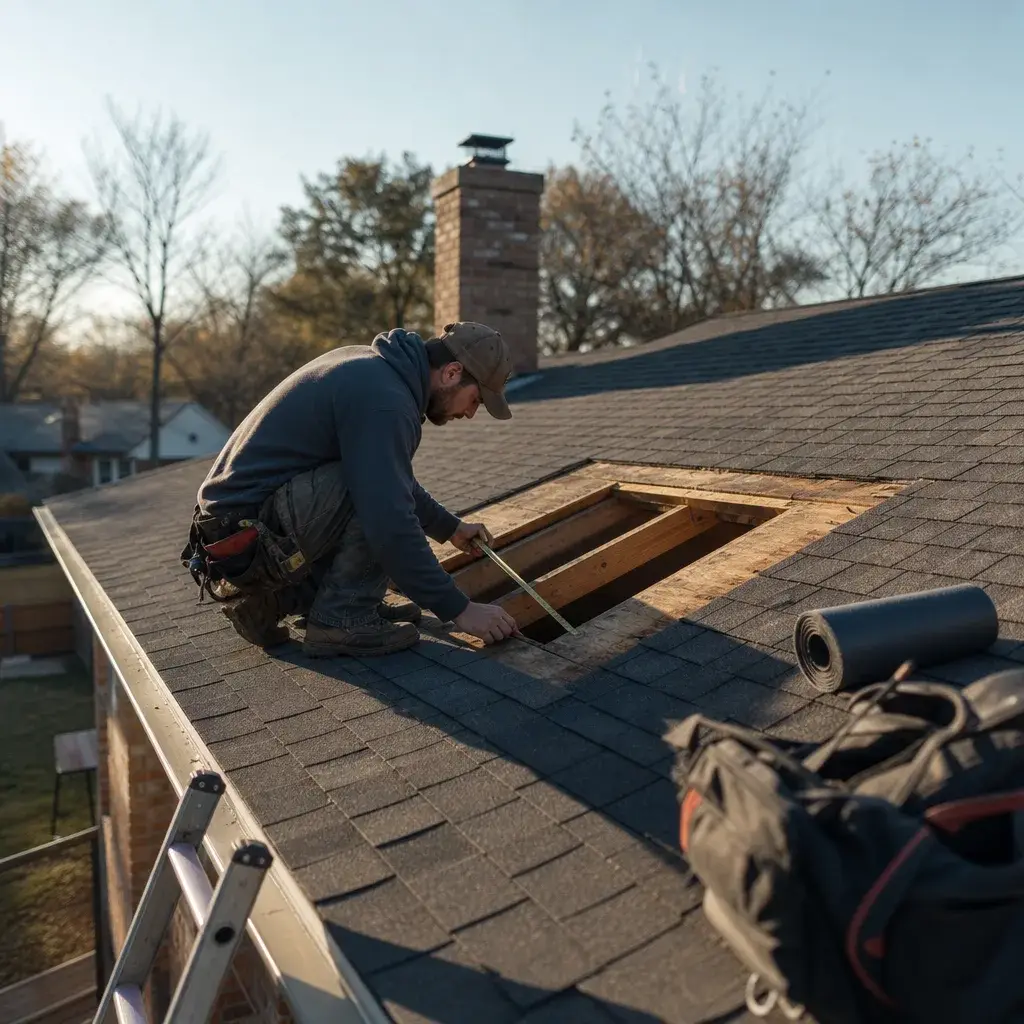
To put a skylight in, someone has to cut through your shingles, the underlayment (the water barrier under the shingles), and the decking (the wood boards the roof sits on). Then they have to deal with the rafters underneath. The opening gets framed so the roof stays strong, and the skylight gets set on top. After that, the roof gets put back together around it, layer by layer, so water runs past the skylight instead of into it.
Those are the spots where skylights leak:
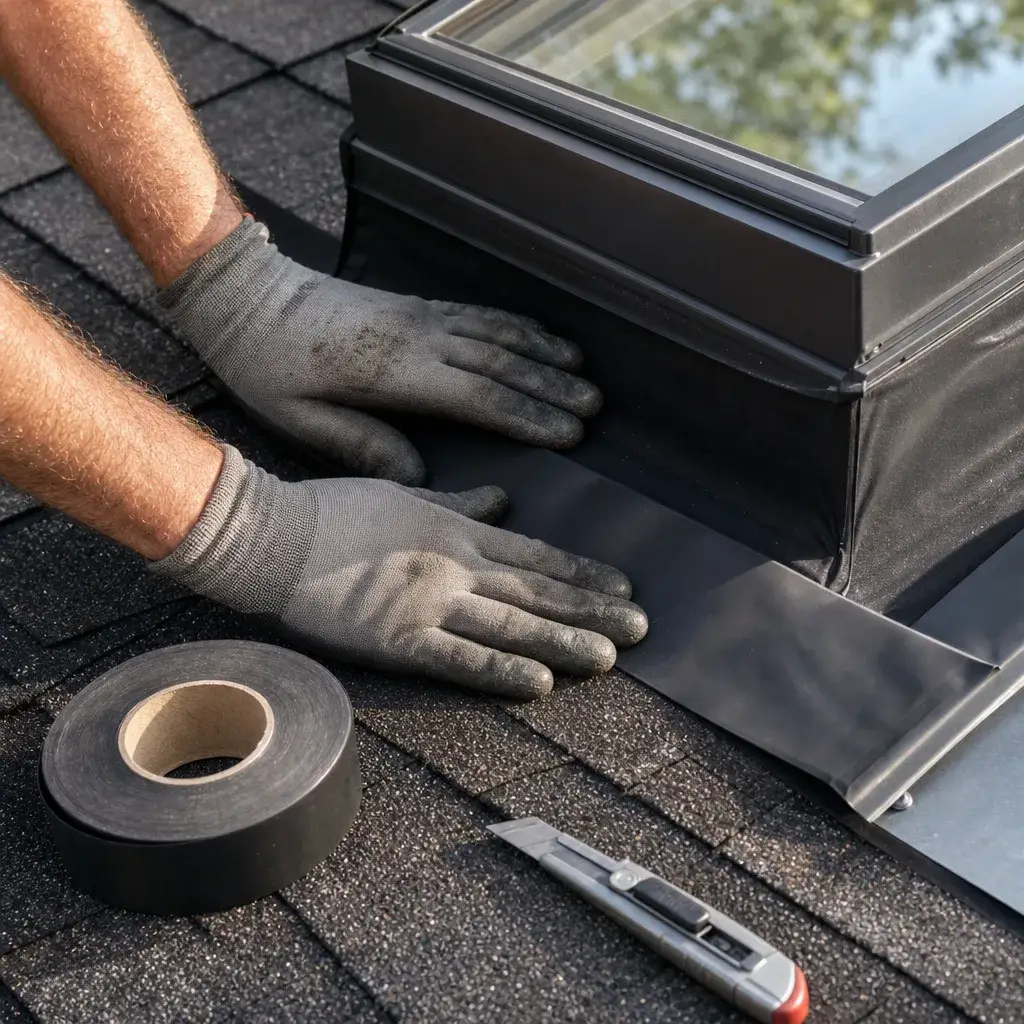
- Flashing. These are the metal pieces that wrap the skylight and steer water around it. If they’re missing, bent, or overlapped the wrong way, rain finds the gap.
- Underlayment. It has to be lapped up and around the opening. Skip that step and a little water that slips past the shingles goes straight into your attic.
- Shingle tie-in. The shingles above and beside the skylight have to be woven back in so water keeps moving downhill.
- Framing. A rafter that’s cut and not properly supported can let the roof sag around the opening, and a sag holds water.
None of that is window work. It’s roofing. A window installer knows glass and wall openings. A roofer knows how water moves across a roof and how to keep it moving the right way.
Our weather makes the details matter more here. Spring hail season in Sunnyvale runs roughly March through June, and hail tests every seam on your roof, including the one around a skylight. Summer heat and strong sun make metal flashing and sealants expand and shrink over and over. A weak seal that might hold for years somewhere milder can open up after a few Texas summers. And when an ice storm comes through, melting ice backs up against the uphill side of the skylight, which is the first place a poor flashing job shows itself.
Your house matters too. Many homes around Sunnyvale are slab-on-grade brick ranch homes from the 1960s through the 1980s, often with low-pitched roofs where water moves slowly. Newer two-story homes in HOA neighborhoods often have taller, steeper roofs and longer light shafts down to the room below. Each one gets framed and flashed differently.
There’s an inside half to the job, too. The light shaft that runs from the roof through your attic to your ceiling needs framing, insulation, drywall, and paint. ERO DFW is a licensed, bonded, and insured roofing contractor that also handles drywall and interior painting, so one accountable team can take your skylight from the shingles down to the finished ceiling. You won’t have a roofer and a remodeler each blaming the other if something doesn’t line up.
Signs You Need a New Skylight or a Replacement
Most people land here for one of two reasons. You either have a room that never gets enough light, or you already have a skylight that’s starting to act up. Here’s how to tell what you’re dealing with.
A new skylight makes sense when a room has no good way to get daylight from a wall. Think of an inside hallway, a bathroom with no window, a walk-in closet, or a kitchen where the cabinets fill every wall. If you flip on lights at noon, a skylight can fix that. It works best on a single-story home or under an attic space, where the light shaft down to the ceiling stays short.
An existing skylight usually tells you it’s tired. Watch for these signs:
- Fog or haze between the panes. The seal between the two layers of glass has failed, and you can’t clean it away from either side.
- A yellow, cloudy, or brittle plastic dome. Years of Texas sun break down older acrylic domes until they crack or let in dim, dirty-looking light.
- Cracks, chips, or dents after a hailstorm. Spring hail can crack a dome or split the frame, even when the roof around it looks fine from the ground.
- Water stains or peeling paint on the drywall around the light shaft, especially after heavy rain.
- A soft, dark, or rotted frame. Wood that stays wet breaks down, and that won’t get better on its own.
- A roof replacement coming up. If your skylight is about as old as your roof, it’s usually smart to replace it while the shingles are already off. The flashing gets redone anyway, so you’re not paying to open that spot twice.
Now for the cases where you don’t need a new skylight.
A leak doesn’t always mean the skylight is bad. Often the glass and frame are fine and the problem is the flashing or the shingle tie-in around it. That’s a repair, not a replacement. If the unit is in good shape, skylight repair can reseal it for far less than a new one costs.
A stain near a skylight may not come from the skylight at all. Water can enter higher up the roof and run along a rafter before it shows up on your ceiling. Someone needs to trace it before you replace anything.
Drips on a cold morning can be condensation, not a leak. Warm, damp air from your shower or kitchen hits cold glass and beads up. A fan or better attic ventilation may be all you need.
Last, be honest about heat. A skylight brings in sun, and in a Sunnyvale July that also means heat. If the room already runs hot, or it sits on the west side of the house, a small skylight or a different spot may serve you better than a big one. Sometimes the right answer is to wait, or to skip it.
If you can’t tell which of these you have, that’s normal. It’s hard to judge from inside the house. A look from the roof and the attic usually settles it, and ERO DFW gives you an honest opinion and a written estimate before you sign anything, even when the answer is a small repair.
What Happens During a Skylight Installation
A skylight job has two halves, outside and inside, and they happen in a set order. Here’s what that looks like from your side of it.
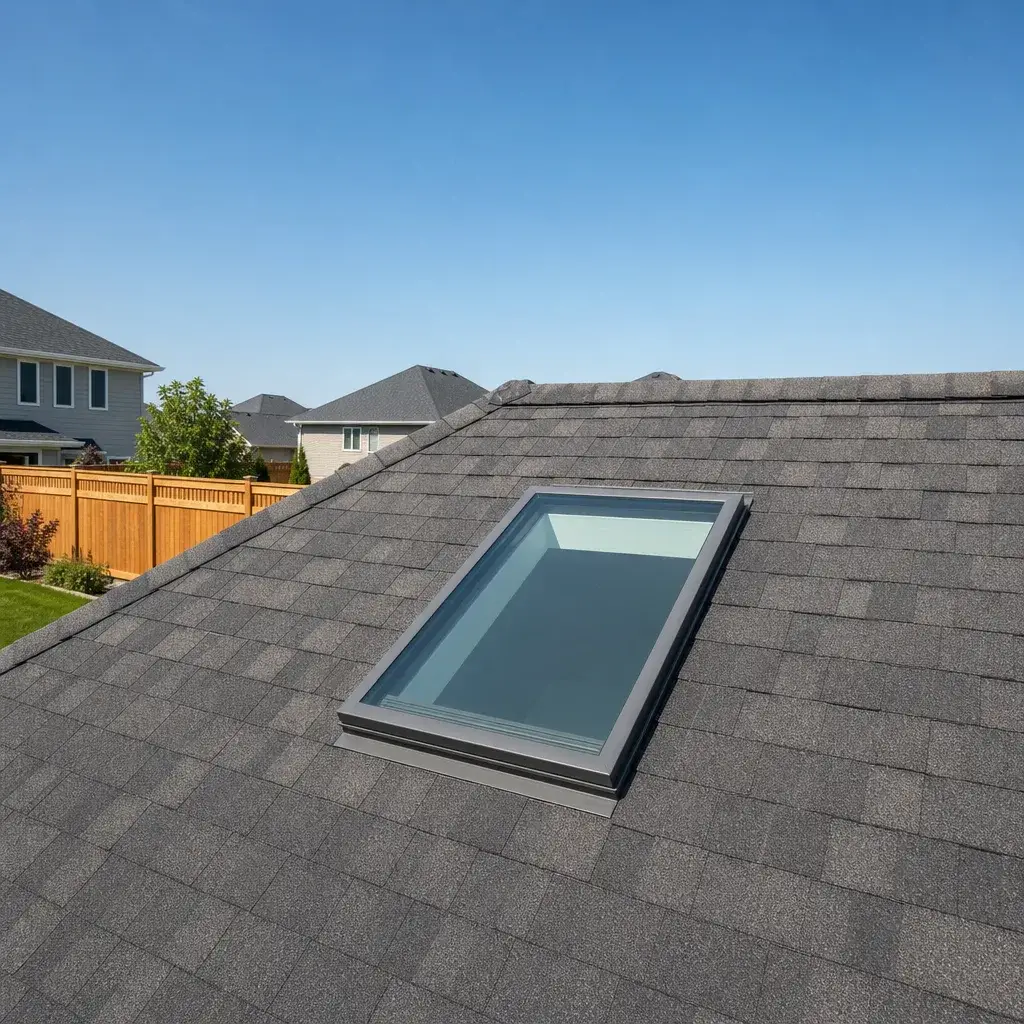
It starts with a look at your roof and your attic. One of our sales managers checks the roof pitch, the shingles, and where the rafters run under the spot you have in mind. Inside, they look at the attic for anything in the path of the light shaft, and they note how far the shaft has to travel to your ceiling. That distance matters. A short shaft on a single-story ranch home is a simpler build than a tall one in a two-story house. You get a written estimate that spells out the work before you sign anything.
Once you approve the work, a project manager takes it from there. They order the skylight and flashing kit, set the schedule, and handle permits or HOA approvals if your home needs them. Sunnyvale permits go through the Town of Sunnyvale, and many newer subdivisions also want to sign off on any change you can see from the street. You get updates along the way, so you’re not left guessing when the crew will show up.
On install day, the work usually goes in this order:
- Protect the room below. Floors and furniture get covered, because cutting a ceiling makes dust.
- Open the roof. The crew marks the opening, removes the shingles around it, and cuts through the decking.
- Frame the opening. If a rafter has to be cut, it gets new framing on both sides so the roof keeps its strength.
- Set the skylight and dry it in. The unit goes on, then the underlayment, flashing, and shingles get built back around it in the order covered above.
- Build the light shaft. The shaft is framed through the attic, insulated, and closed in with drywall down to the ceiling opening.
- Finish the ceiling. The drywall is taped and painted, and trim goes on so the skylight looks like it came with the house.
Timing on the roof side matters most. A good installer plans the cut for a dry day and gets the roof sealed back up before leaving, so your home isn’t sitting open under a tarp. In spring, when storms can roll in by afternoon, that planning is the difference between a smooth day and a wet attic. The inside finish work may take a little longer, since drywall mud and paint need time to dry between coats.
Our crews keep the site clean as they go. That means picking up old shingles, nails, and drywall scraps, not leaving them in your flower beds or your driveway.
The last step is a final walkthrough with your project manager. You’ll look at the finished ceiling together, and you can go over the roof work and ask questions while everyone is still there. It’s your chance to point out anything that doesn’t look right before the job is called done.
Have questions? We’re happy to help.
Schedule Your Free Inspection. Exteriors, Roofing & Outdoor Living is ready to help.
Why DFW’s Storm Exposure Matters for Skylight Flashing
You already know our weather is hard on every seam in your roof. What that means for you is simple. In Sunnyvale, the small choices made during a skylight installation decide whether it’s still dry after its fifth hail season. Here’s what to ask about before anyone cuts your roof.
- A real flashing kit, not a tube of caulk. Some installers set a skylight and lean on roofing cement or caulk to keep water out. Sealant bakes and cracks in Texas sun. A flashing kit made for that skylight uses metal pieces that shed water on their own, so the seal isn’t what’s holding back the rain.
- Enough height on a low-slope roof. Many older ranch homes around Sunnyvale have gently sloped roofs where water moves slowly. A skylight set on a raised curb, a short box built up from the roof, sits higher above that slow water than one set flat.
- Glass that can take a hit. Plastic domes are lighter and cost less, but they’re easier for hail to crack and they cloud up in the sun. A glass skylight with a tempered outer pane is a better match for spring storms.
- Protection against sideways rain. Straight-line winds can push rain sideways and even uphill, under flashing that looks fine on a calm day. The underlayment lapped around the opening is your backup when wind drives water where it shouldn’t go.
These choices aren’t fancy upgrades. They’re the difference between a skylight built for a mild climate and one built for North Texas.
After a storm, your skylight deserves a look along with the rest of your roof. Hail can crack a dome, dent the flashing, or knock granules off the shingles right around the frame. That damage doesn’t always show from the yard. Check the ceiling around the light shaft for fresh stains over the next few rains, too.
If hail damaged your skylight, it may be part of your roof claim. Every policy is different, so we can’t promise what your insurer will cover. What we can do is walk you through the claim one step at a time and meet the adjuster on your roof. You pay your deductible, nobody else.
Watch out for the quick fix after a big storm. A crew that knocks on your door, smears caulk around a cracked skylight, and moves on to the next street hasn’t fixed anything. The leak just waits for the next storm, and so do you. ERO DFW is headquartered right here on the U.S. 80 frontage road in Sunnyvale, with ten local offices across the Metroplex. We’re still here after the storm, and that’s who you want answering the phone when you call about your roof.
Watch Our Video
See How We Handle Skylight Installation in Sunnyvale, TX
Exteriors, Roofing & Outdoor Living — Serving Sunnyvale, TX and surrounding areas
What Drives Skylight Installation Cost
There’s no single price for a skylight, because the skylight itself is only part of what you’re paying for. Most of the cost comes from the roof work and the inside finish around it. Most contractors quote it as one project price that covers the unit, the flashing kit, the labor on the roof and in the attic, and the drywall and paint. Here’s what moves that number up or down.
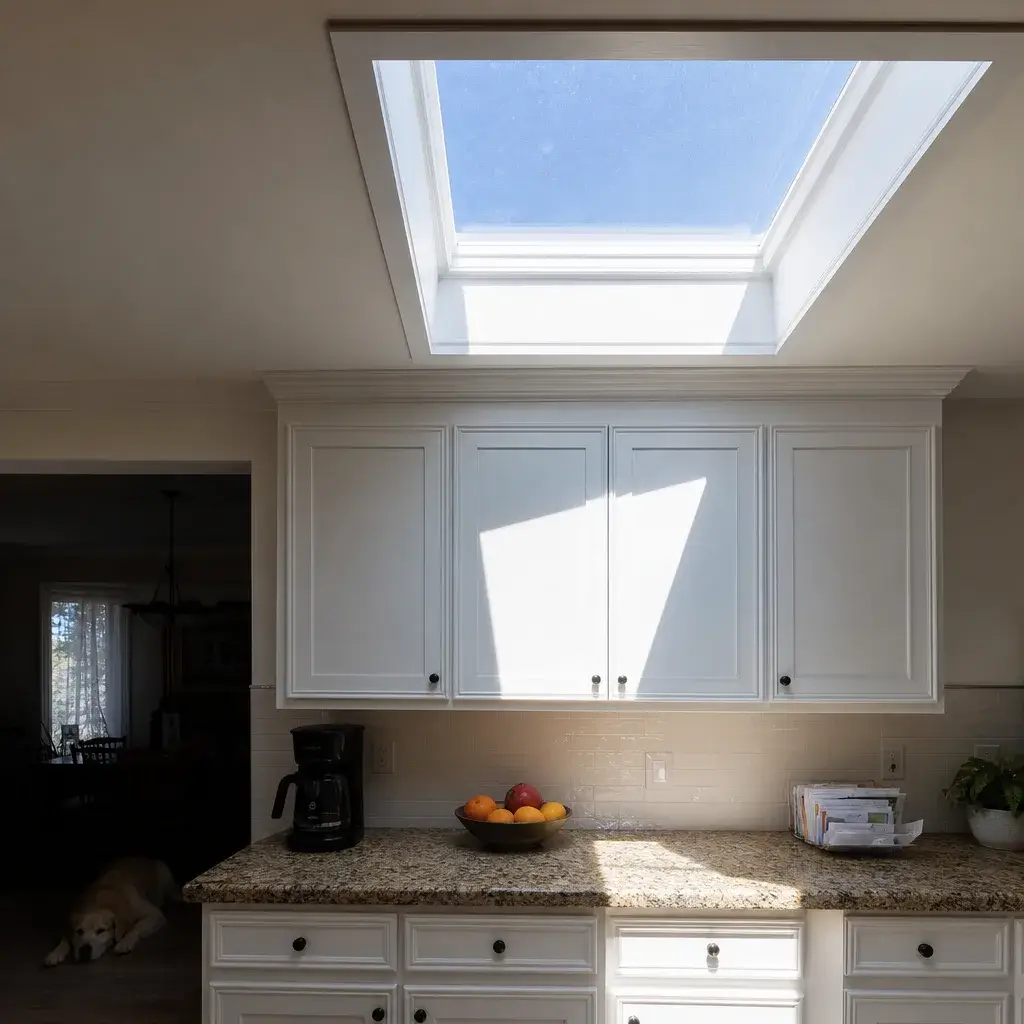
- The type of skylight. A fixed skylight that doesn’t open is usually the simplest. One that vents, by hand or with a motor, costs more. A tubular skylight, a small round tube with a reflective lining, needs no framed shaft, so it’s often the lowest-cost way to light a hallway or closet.
- Size and glass. A bigger opening means more cutting, more framing, and a bigger unit. Glass with a tempered outer pane costs more than a plastic dome, but it holds up better to spring hail and strong sun.
- Your roof material. Asphalt shingles are the most common and the most direct to work with. Tile and metal roofs take more time and care to open and close back up, and that adds labor.
- Pitch and height. A steep roof or a two-story home means more safety setup and slower work than a low ranch roof you can walk.
- Framing. If the skylight fits between your rafters, framing stays simple. If a rafter has to be cut and supported on both sides, as covered earlier, that’s more lumber and more time.
- The light shaft. A short shaft on a single-story home is a small build. A long one through a deep attic needs more framing, insulation, drywall, and paint. Anything in the attic that sits in the path can change the layout, too.
- Permits and HOA approval. Some projects need a permit through the Town of Sunnyvale, and some subdivisions want to review changes you can see from the street. Both can add a little time and paperwork.
Timing can save you money. If your roof is due for replacement, adding or replacing a skylight while the shingles are already off means you aren’t paying to open that part of the roof twice. And if hail cracked an existing skylight, it may be part of your insurance claim. That depends on your policy, so nobody can promise it ahead of time.
When you compare bids, look closely at what each one leaves out. A low number can mean the price stops at the roof line and you’re left to find someone else for the drywall and paint. Ask each contractor these questions:
- Does the price include a flashing kit made for this skylight, or just sealant?
- Does it cover the light shaft, insulation, drywall, paint, and trim?
- Who handles the permit and any HOA approval?
- What happens if there’s rotted decking under the shingles once the roof is open?
- Is everything in a written estimate before I sign?
ERO DFW puts the full scope in a written estimate before you sign anything, from the shingles down to the painted ceiling, so you know what you’re paying for. Financing is available if you’d rather spread out the cost.
Frequently Asked Questions
Common questions about skylight installation in Sunnyvale, TX
Can a skylight be installed on any type of roof?
Most roofs can take a skylight, but the roof material changes how the job is done. Asphalt shingles are the easiest to cut into and seal back up. Tile and metal roofs take more care and time to open and close correctly, since each piece has to be fitted back around the flashing without breaking the surrounding material.
How long does a skylight installation take?
The roof portion is usually finished in one day, since a good crew plans around weather and seals the opening before leaving. The inside finish work, like drywall mud and paint, takes a bit longer because each coat needs time to dry. A short light shaft on a single-story home moves faster than a long one through a deep attic.
Will cutting a hole in my roof cause problems during a storm?
A properly planned installation avoids this by scheduling the roof cut for a dry day and sealing it back up before the crew leaves. In spring, when storms can roll in by afternoon, that timing matters most, since the goal is to never leave your home sitting open under a tarp overnight.
Do I need a permit to install a skylight in Sunnyvale?
Some skylight projects need a permit through the Town of Sunnyvale, and some subdivisions also require approval for anything visible from the street. A contractor familiar with local permitting can handle this paperwork as part of the project, so you don’t have to track it down yourself.
Ready to Get Started?
Schedule Your Free Inspection. Call (972) 288-9587 today.