
Gutter Installation in Sunnyvale, TX
New gutters sized and installed to carry North Texas downpours away from your home – starting with a free inspection that tells you if repair is enough.
What’s Covered on This Page
- Signs Your Gutters Need Replacing, Not Just Cleaning
- When Gutter Cleaning or Repair Is Enough, and Installation Isn’t
- Choosing 5-Inch or 6-Inch Seamless Gutters
- What Happens During a Gutter Installation
- How Storm-Damaged Gutters Connect to Your Insurance Claim
- How long does a gutter installation take?
- Can I install gutters myself to save money?
- Will my homeowners insurance pay for gutter replacement after a storm?
- Do I need a permit to replace my gutters in Sunnyvale?
Signs Your Gutters Need Replacing, Not Just Cleaning
Start with the easy test. Clean the gutters out, or have someone do it, and watch the next good rain. If the water runs where it should, you didn’t need new gutters. You needed a ladder and an afternoon.
If the problems keep showing up after they’re clean, look for these signs:
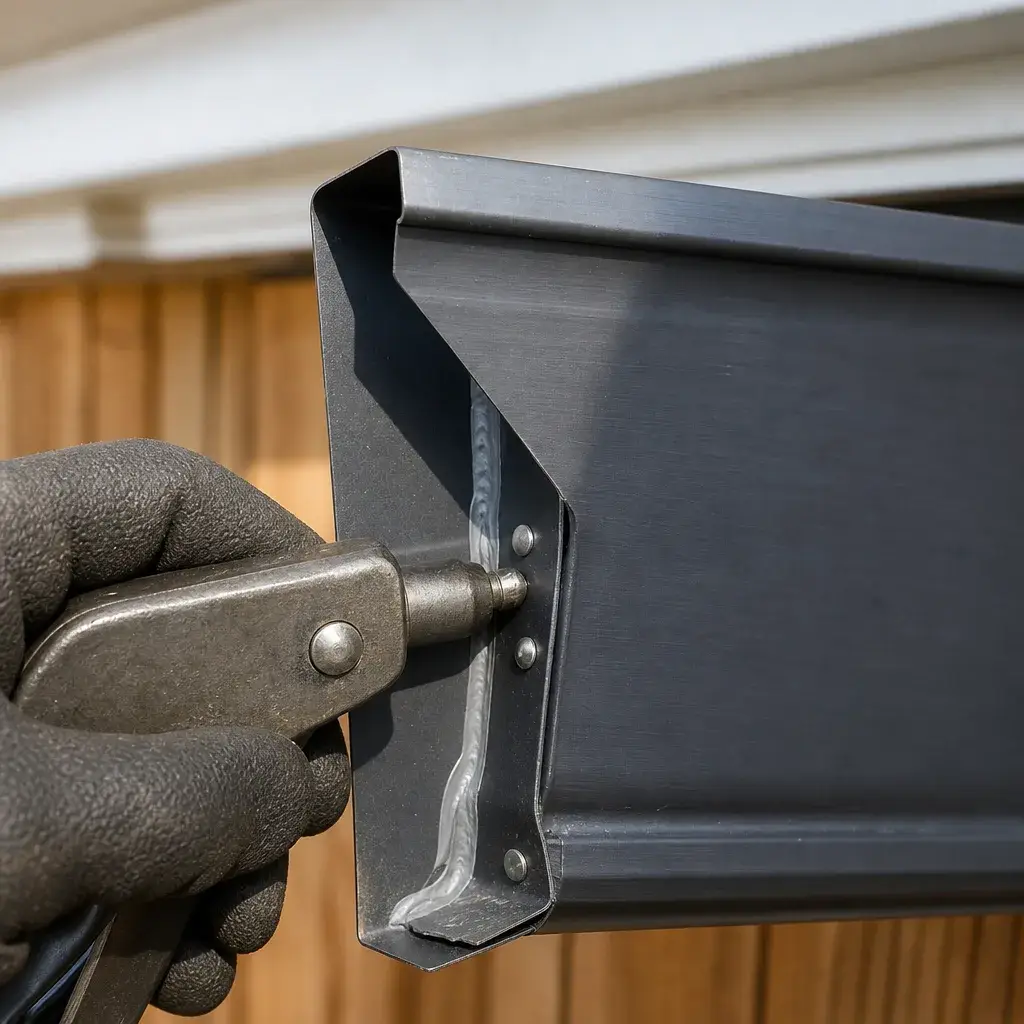
- Drips at the joints. Older gutters are often built from short sections pinned together. Every joint can leak, and once several drip, patching one at a time stops making sense.
- Sagging or pulling away from the house. A gutter full of water is heavy. When the hangers loosen or the wood behind them softens, the gutter tips forward and dumps water right next to your wall.
- Soft or dark fascia boards. The fascia is the flat board along your roof edge that the gutter hangs from. If it’s stained, spongy, or peeling, water has been getting behind the gutter for a while.
- Water pooling in the gutter a day after the rain. That means the slope is off and water can’t reach the downspout. Standing water speeds up rust and adds weight.
- Overflow in a heavy storm even when the gutter is clean. The gutter or the downspouts may be too small for the amount of roof draining into them.
- Rust spots, holes, or splits you can see from the ground.
Then walk around your house and look down. Most homes in Sunnyvale sit on a concrete slab over expansive clay soil, the kind that swells when it’s wet and shrinks when it dries out. When a gutter spills the same corner of roof onto the same patch of ground storm after storm, that soil gets soaked and then bakes dry in the summer heat. Watch for washed-out mulch, a muddy trench under the drip line, or bare dirt where grass used to grow. Those are signs the gutter isn’t doing its main job of moving water away from your foundation.
Hail is its own question. After a spring storm, you might spot dents in aluminum gutters. Small dents alone don’t always mean the gutter has failed. If the dents have bent the gutter out of shape, cracked a seam, or changed how water flows, that’s a different story. Either way, it’s worth having someone look at it before you assume the worst or ignore it.
Here’s the honest part. You don’t need new gutters if the trouble is one loose hanger, one leaky corner, or a downspout that came apart at the elbow. Those are gutter repairs, and they cost far less than a new system. If your gutters are in good shape but keep clogging under a big tree, gutter guards may solve the real problem. Replacement makes sense when the problems are spread along the whole run, when the fascia behind it is rotting, or when the gutter was never sized right for your roof in the first place.
When Gutter Cleaning or Repair Is Enough, and Installation Isn’t
If your gutters are sound and the trouble sits in one or two spots, you don’t need a new system. You need the right small fix. Here’s how common problems usually line up with the smaller job.
- One dripping corner or end cap. Once the gutter is clean and dry, the joint can be resealed with gutter sealant. That’s often all it takes.
- One section sagging. If the wood behind it is still solid, new hangers can pull the gutter back up tight to the house.
- A downspout that came loose or dumps water right at your slab. Reconnecting it, or adding an extension or splash block, moves that water out into the yard instead of next to your foundation.
- Gutters that clog every fall under a big tree. Gutter guards keep leaves out so the gutter can do its job between cleanings.
- A short low spot that holds water. That one section can often be re-pitched so water runs toward the downspout again.
- Rotted fascia in one small area. The bad board can be repaired, and a gutter that’s still in good shape can go right back up on it.
Sometimes the right answer is to wait. If your roof is near the end of its life, hold off on new gutters. A roof replacement means working along the roof edge, right where the gutters hang. It makes more sense to hang new gutters after that work is done, so they’re fastened to a fresh roof edge and you’re not paying to take new gutters down and put them back up.
Hail dents are another place to slow down. If a spring storm left small dents but water still flows and the seams don’t leak, you can live with them. They’re a looks problem, not a water problem. If you’ve already opened an insurance claim, let the adjuster see the gutters before you change anything.
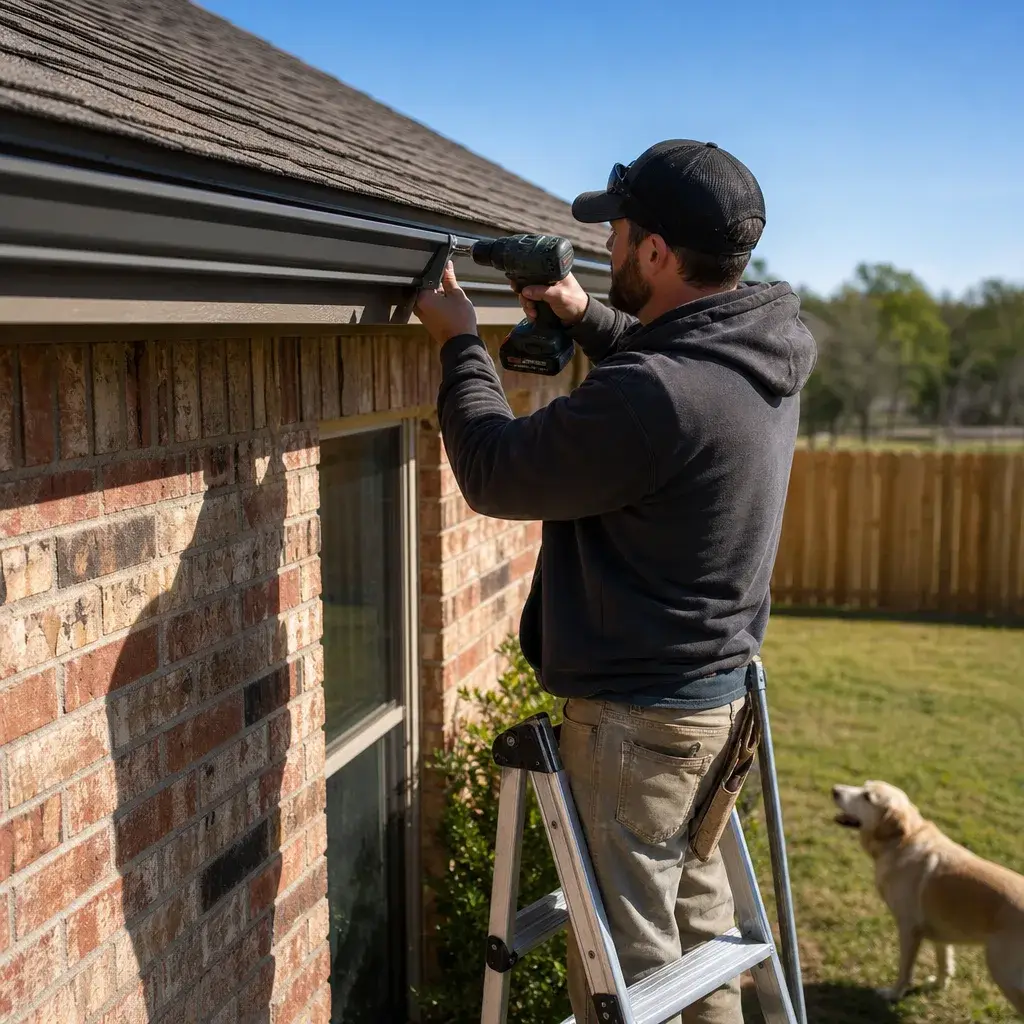
Some of this you can handle yourself. Scooping out leaves, snapping a downspout elbow back together, or setting out a splash block are easy jobs on a one-story home if you’re steady on a ladder. Many of the newer two-story homes around Sunnyvale put the gutter line much higher off the ground. That’s where a lot of homeowners decide the climb isn’t worth the risk, and that’s a fair call to make.
Here’s a simple rule you can use. If you can count the problems on one hand and they’re all in one spot, repair them. If they keep coming back along every side of the house, or the fascia is soft in more than one place, patching will cost you more over time than starting fresh.
Choosing 5-Inch or 6-Inch Seamless Gutters
Most homes do fine with 5-inch seamless gutters. A 6-inch gutter makes sense when a lot of roof drains into one run, when the roof is steep, or when big trees drop leaves into it every fall. The right size depends on how much water your roof sends to each gutter in a hard storm, not on what the house down the street has.
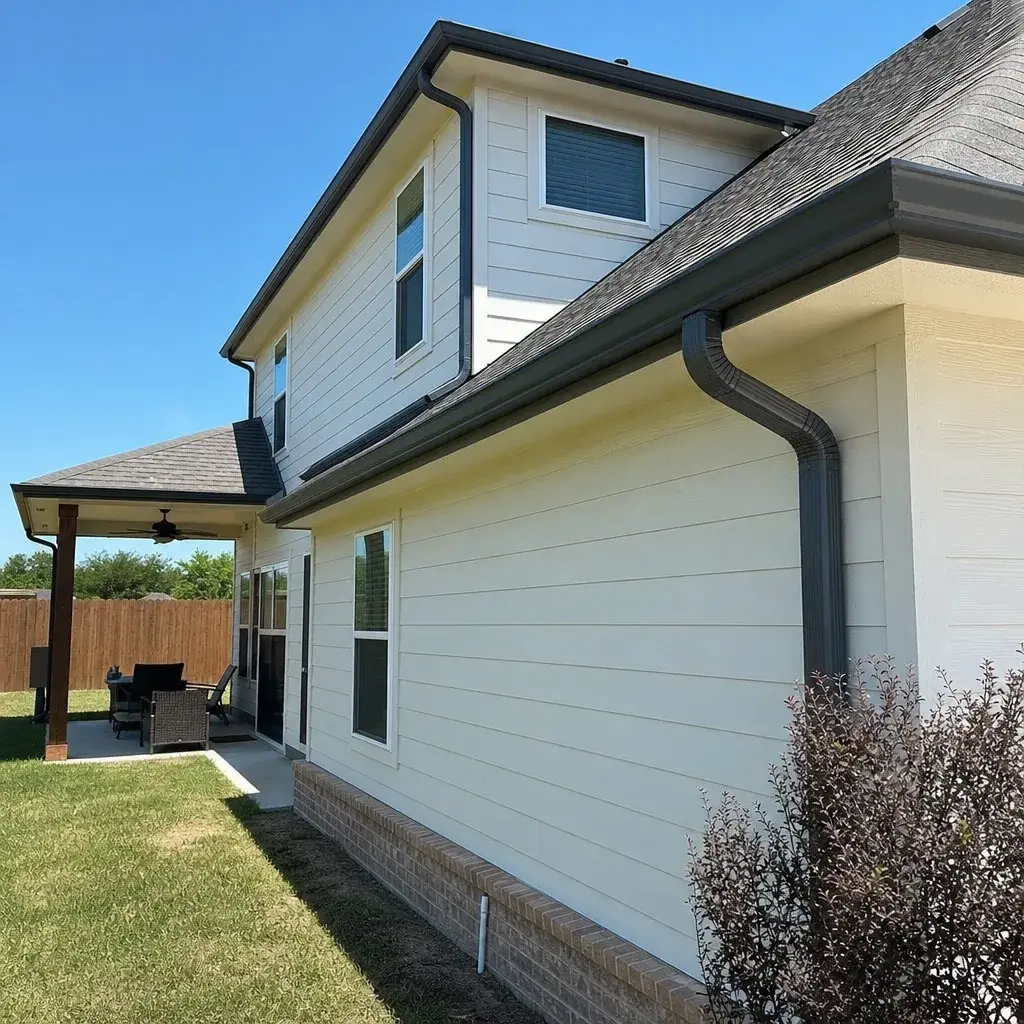
First, a quick word on “seamless.” A seamless gutter is formed from one long piece of metal cut to fit each side of your house. It has no joints every few feet. The only seams are at the corners and where the downspouts drop. Fewer seams means fewer of the drips you read about above.
The number in the name is how wide the gutter is across the top. That inch sounds small, but a 6-inch gutter holds a lot more water than a 5-inch one. It also usually pairs with a bigger downspout, and that’s where much of the real gain comes from. A wider downspout drains faster and is harder for leaves to plug.
Here’s when 5-inch is usually enough:
- A one-story ranch home with a fairly low, simple roof, like many of the brick homes built in older North Texas suburbs.
- Roof sections that are short from ridge to edge, so each gutter only catches a modest amount of water.
- Plenty of downspouts spaced along each run, so water doesn’t have to travel far to get out.
Here’s when 6-inch is worth a hard look:
- Larger two-story homes, where a big, tall roof sends a lot of water to the same gutter.
- Steep roofs. Water comes off a steep roof faster and can shoot right over a smaller gutter.
- Valleys. Where two roof slopes meet, they funnel water into one spot. A 5-inch gutter under a valley is often the first place you’ll see overflow.
- Mature oaks or other trees overhead, where more room in the gutter and a wider downspout help it keep flowing between cleanings.
Weather matters too. North Texas rain often comes fast and hard, with spring thunderstorms that drop a lot of water in a short burst. A gutter that handles a slow drizzle just fine can spill over in a heavy spring storm. That overflow lands right where you don’t want it, next to the slab.
There’s a looks side to this too. A 6-inch gutter is a bit bulkier. On a large two-story home, you’ll hardly notice. On a small, low ranch home, it can look heavy along the roofline, and it may not be needed anyway. It also costs more, since it uses more material and the bigger downspouts add to the job.
Size is only half of it. A 6-inch gutter with too few downspouts can still overflow, and a well-placed 5-inch system with enough downspouts can work great. Downspout location and where each one empties matter just as much as gutter width.
When you compare bids, ask each contractor these questions:
- Why did you pick this size for my roof?
- Does any part of the house, like a valley or a steep back slope, need the larger size even if the rest doesn’t?
- How many downspouts are included, and where will each one drain?
A contractor who looked closely at your roof can answer all three clearly. If you get a shrug, or the answer is “6-inch is just better,” you’re likely being sold a size, not having one chosen for your home.
Need help with your gutter project?
Schedule Your Free Inspection. Exteriors, Roofing & Outdoor Living is ready to help.
What Happens During a Gutter Installation
A gutter installation is a short job with a few steps that really matter. On most single-family homes, the work on site takes about a day if the weather holds. Most of the thinking happens before anyone climbs a ladder.
It starts with someone walking your roofline. They measure each run, note where water comes off the roof, and decide where each downspout should drop. At ERO DFW, you get a written estimate before you sign anything. You’ll also pick a gutter color. If you live in a newer subdivision around Sunnyvale, your neighborhood may have rules about exterior colors. Once you approve the work, a project manager coordinates the materials, the schedule, and any permits the job needs.
On install day, a good job usually follows this order:
- The old gutters come down. This is the one chance to see the fascia board without anything covering it. Any soft or rotted spots should be fixed now, because a new gutter is only as solid as the wood it’s fastened to.
- The gutters are made to fit. Seamless gutters are often rolled out from a coil of metal right in your driveway. Each piece is cut to the exact length of that side of the house.
- The slope gets set. Each run tilts slightly toward its downspout. You won’t see the tilt from the yard, but it’s what keeps water from sitting in the gutter after a storm.
- Hangers go in. These are the brackets that hold the gutter to the house. They need to be fastened firmly into solid wood and spaced closely enough to carry a gutter full of rainwater without sagging.
- Corners and end caps are sealed. These are the only seams left, so they get careful attention.
- Downspouts go on. Each one gets an elbow and an extension or splash block at the bottom, so water lands out in the yard and not against your slab.
There isn’t much you need to do to get ready. Move your cars out of the driveway so there’s room to work. Keep pets inside, since there will be ladders, noise, and people walking around the house. If you have patio furniture or potted plants right against the walls, slide them out a few feet.
Before the crew packs up, the new gutters should be tested with water from a hose. You want to see it run toward the downspouts, drain out completely, and leave the extensions well away from the house. Watch for drips at the corners and water left standing anywhere along a run. Those are much easier to fix that afternoon than after the first spring storm rolls through.
With ERO DFW, our crews protect your property while they work and clean up the site when they’re done. Old gutters, metal scraps, and loose fasteners shouldn’t be left in your yard or flowerbeds. The job ends with a final walkthrough. You see the finished work with your project manager and ask anything you want before you call it done.
Watch Our Video
See How We Handle Gutter Installation in Sunnyvale, TX
Exteriors, Roofing & Outdoor Living — Serving Sunnyvale, TX and surrounding areas
How Storm-Damaged Gutters Connect to Your Insurance Claim
If a storm dented or tore down your gutters, they may be part of your homeowners insurance claim. Gutter damage rarely happens alone. Hail that dents aluminum gutters has usually hit the roof above them too. That’s why adjusters often look at your gutters and downspouts first. Soft metal shows hail marks clearly, and those marks help show how hard the storm hit your home.
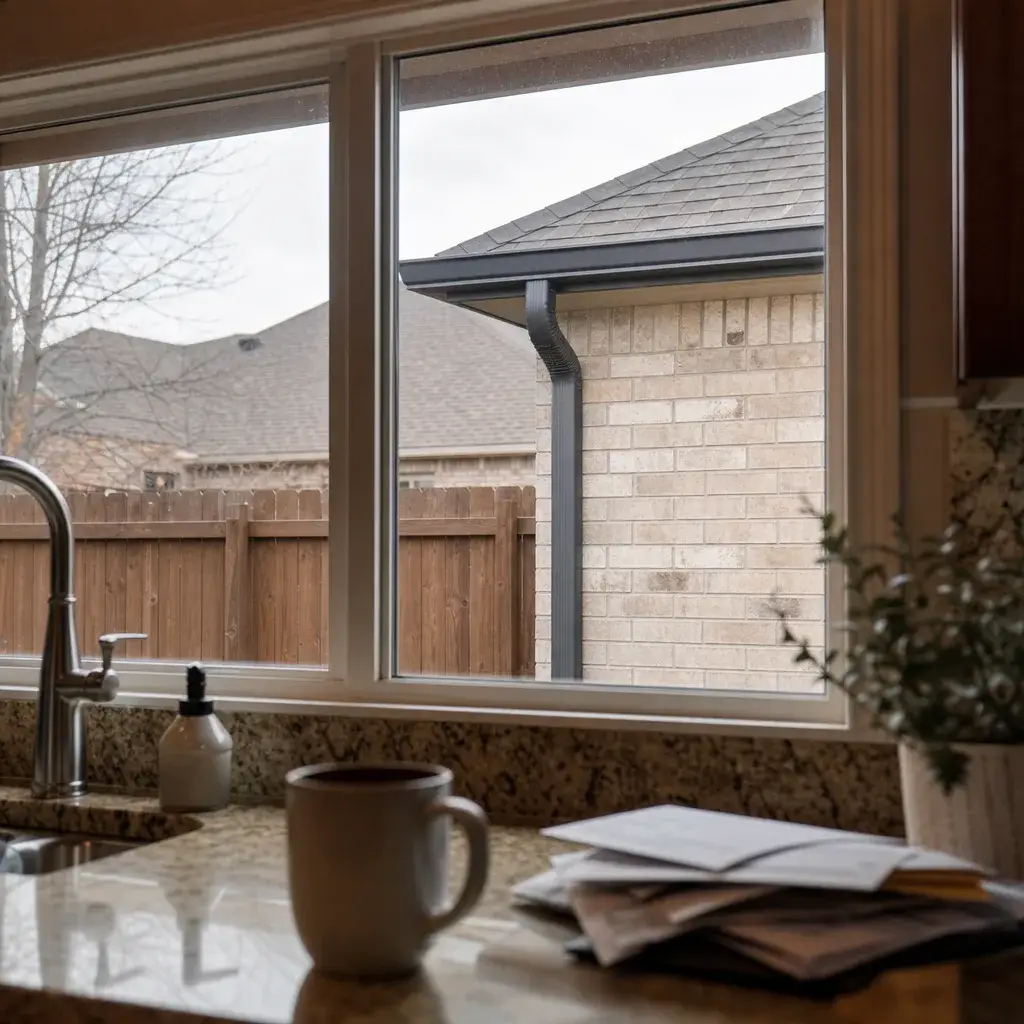
Whether your policy pays for new gutters depends on your policy and on what the damage did. Some policies treat dents that only change how gutters look differently from damage that cracks seams, bends the shape, or stops water from flowing. Nobody can tell you ahead of time what your insurer will approve, and you should be wary of anyone who says they can. Your agent or your policy is the place to check your coverage.
In North Texas, hail season runs roughly March through June. After a big storm, the door knocking starts fast. Here’s a calmer way to handle it, one step at a time:
- Take photos as soon as it’s safe. Get dents in the gutters and downspouts, any section hanging loose, and hail on the ground if it’s still there. Your phone saves the date for you.
- Leave the damaged gutters in place for now. As noted above, the adjuster should see them before anything comes down. Only clear what you need to for safety.
- Get a free inspection from a contractor you chose, not one who chose you. They should check the roof, the gutters, the fascia, and the downspouts together, since a storm rarely hits just one.
- File the claim with your insurance company. You can call them yourself. You’re in charge of your claim.
- Meet the adjuster. ERO DFW’s project manager can be there when the adjuster comes out, so the damage gets pointed out and nothing gets missed.
- Review a written estimate before you sign anything. It should list what’s being replaced, gutter size, and how many downspouts are included.
Now the money part, said plainly. You pay your deductible, nobody else. Texas law doesn’t let a contractor waive it, cover it, or hide it inside a padded bill. If someone offers to “take care of” your deductible, that’s a red flag, not a favor. It can put your claim at risk.
Timing matters too. If the same storm damaged your roof, the roof work should come first and the new gutters should go up after, for the reasons covered earlier. Handling both under one claim, with one team, keeps the order right and keeps you from coordinating two contractors and two schedules. ERO DFW handles roof replacement and gutter installation as one North Texas team. We’ll walk you through the claim without promising what your insurer will decide.
It also matters who you hire. ERO DFW is headquartered right here in Sunnyvale, off U.S. 80, with ten local offices across the Metroplex. We’ve been family-owned since 2019, and we’re licensed, bonded, and insured. When the storm crews have moved on to the next town, we’re still here.
Frequently Asked Questions
Common questions about gutter installation in Sunnyvale, TX
How long does a gutter installation take?
Most single-family homes in Sunnyvale take about a day if the weather cooperates. The crew removes the old gutters, checks the fascia board, forms the new seamless gutters on site, sets the slope, and hangs everything before testing it with a hose.
Can I install gutters myself to save money?
You can handle small jobs like clearing leaves or snapping a downspout elbow back together, especially on a one-story home. A full gutter installation is a different job, since it involves cutting seamless gutter to fit, setting the correct slope, and fastening hangers into solid wood, which is harder to get right from a ladder, especially on the taller two-story homes common around Sunnyvale.
Will my homeowners insurance pay for gutter replacement after a storm?
It depends on your policy and how bad the damage is. Insurers often treat gutters that are only dented differently from gutters with cracked seams or a shape that stops water from flowing right, so you’ll want to check with your agent or insurer rather than assume either way.
Do I need a permit to replace my gutters in Sunnyvale?
Check with the Town of Sunnyvale before you start, since permit rules can depend on the scope of the work. You can look up requirements at townofsunnyvale.org or through the permit portal at sunnyvalepermits.portal.iworq.net.
Ready to Get Started?
Schedule Your Free Inspection. Call (972) 288-9587 today.