
Roof Maintenance in Sunnyvale, TX: Know What It Covers Before You Book
Routine roof maintenance timed around North Texas storm season – with a free inspection that separates what can wait from what needs attention now.
What’s Covered on This Page
- Roof Maintenance Covers Specific Tasks, Not Repairs
- North Texas Storm Season Sets the Maintenance Schedule
- Signs You Can Wait vs. Signs to Act Now
- Tasks Homeowners Can Handle vs. What Needs a Professional
- What Happens During a Maintenance Visit and What It Costs
- How long does a roof maintenance visit usually take?
- Can I just clean my own gutters instead of scheduling a maintenance visit?
- Should I worry about roofers who show up after a hailstorm and say my roof needs work right away?
Roof Maintenance Covers Specific Tasks, Not Repairs
Roof maintenance is what you do while your roof still works. You catch the small stuff that North Texas weather wears down every year, before it turns into a ceiling stain. It’s a routine, not a rescue.

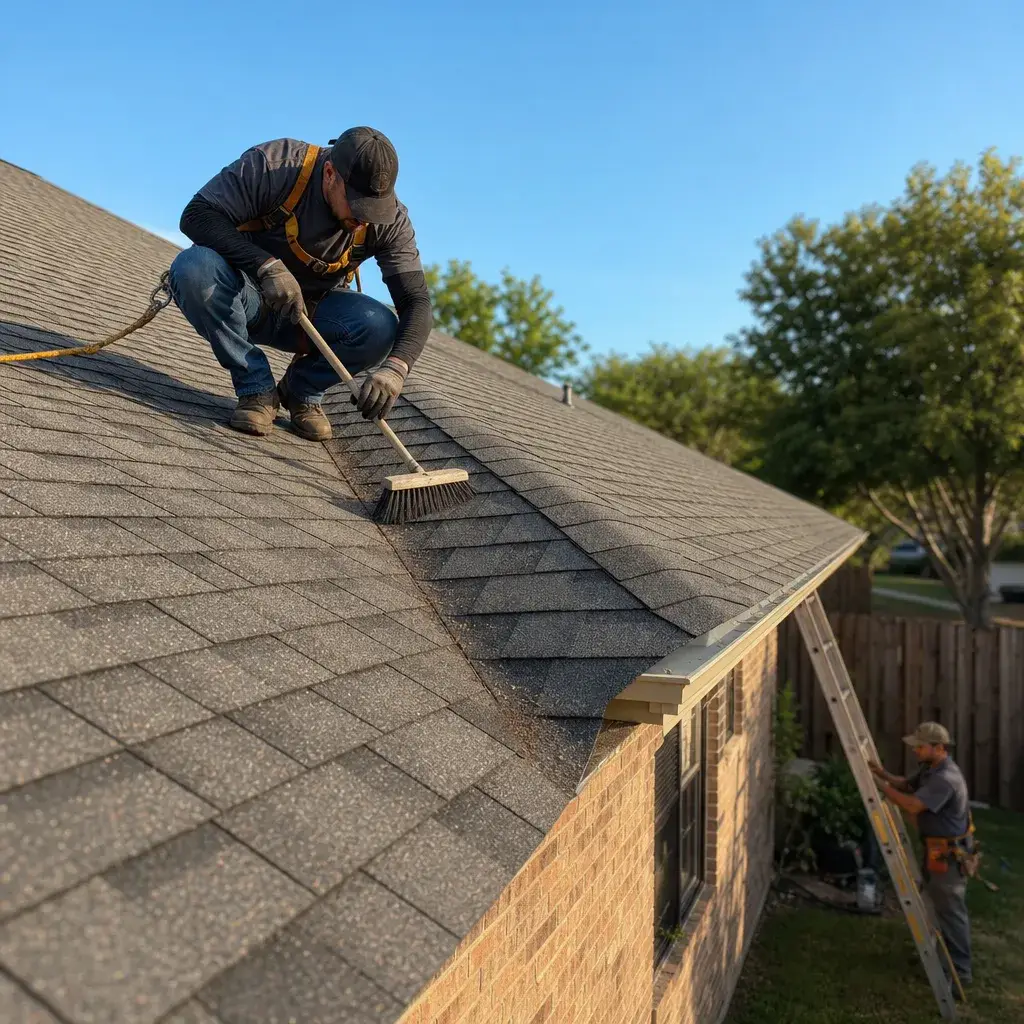
Here’s what a solid maintenance visit usually covers:
- Clearing leaves, twigs, and grit out of roof valleys, the low channels where two slopes meet. Debris there holds water against the shingles.
- Cleaning gutters and checking downspouts, so storm water leaves the roof edge and moves away from your foundation.
- Looking for shingle granules in the gutters. Those sand-like bits protect shingles from the sun, and a heavy pile can mean the roof is aging faster than it should.
- Checking flashing, the thin metal that seals joints around chimneys, walls, and skylights, for gaps or lifted edges.
- Checking the rubber boots around plumbing vent pipes. Texas sun dries them out until they crack, and a cracked boot is a common way small leaks start.
- Resealing exposed nail heads and small sealant gaps that have baked loose.
- Checking roof vents and soffit vents to make sure your attic can breathe. Trapped summer heat cooks shingles from underneath.
- Noting overhanging tree limbs that scrape the roof in a straight-line wind.
That’s the job. It’s mostly looking, cleaning, and sealing small things. On a slab-on-grade brick home in Sunnyvale, a lot of that attention goes to the spots where the roof meets something else, like the chimney, the siding at the gables, and the pipes coming up through the shingles. Those joints move with the heat and take the hit when a storm blows through.
Here’s where maintenance stops and repair begins. Missing or creased shingles after a wind event, hail bruises, soft spots in the decking (the plywood under your shingles), rotted fascia, or water already getting into the attic aren’t maintenance items. They’re repairs. Some may also be part of an insurance claim if a storm caused them. A good maintenance visit finds these problems and tells you about them. It shouldn’t quietly fix them and send you a bigger bill.
That’s why the line matters. If someone checks your roof and finds damage, you should get a clear explanation, photos if you want them, and a written estimate before you sign anything. ERO DFW works that way. You decide what happens next, with the facts in front of you.
Timing matters here too. Spring hail season runs roughly March through June. Then come the hundred-degree summers, and every so often an ice storm. A roof in Sunnyvale gets tested from several directions in a single year. Checking it after the spring storms pass, and again before winter, lines up with when the wear happens. If the check turns up a real problem, roof repair, flashing repair, and roof ventilation each have their own page with the details.
North Texas Storm Season Sets the Maintenance Schedule
There’s no magic number of roof checkups per year. In Sunnyvale, the weather sets the calendar for you. Your roof takes most of its wear in a few predictable stretches, so the smart move is to time your maintenance around them instead of picking a random date.
Here’s how the year breaks down for a roof in Sunnyvale:
- Late winter, before hail season starts. Get the valleys and gutters clear and the pipe boots and sealant checked while the weather is calm. You want your roof heading into spring tight, not already leaking at the edges. This is also a good time to take a few photos of your roof’s condition, so you have a record of how it looked before the storms.
- During spring storm season. After any storm with hail or strong straight-line wind, take a look from the ground. Watch for shingle pieces in the yard, granules piled at the bottom of downspouts, dents in gutters or roof vents, and dings on your car, mailbox, or patio furniture. Those signs point to a repair or insurance conversation, not routine upkeep.
- Through the hundred-degree summer. You don’t need someone on your roof every month. Just pay attention if your upstairs rooms feel much hotter than they used to, or if the attic feels like an oven. That can mean your attic isn’t venting heat the way it should.
- Fall, before winter. Clear out the leaves that dropped since spring, and trim limbs that hang over the roof. When an ice storm hits, clogged gutters let meltwater back up under the roof edge, and branches loaded with ice can snap and land on your shingles.
For most homes, that adds up to two planned visits a year, plus a quick look from the ground after big storms. The age of your roof and the shape of your house can change that. A roof that’s fifteen to twenty years old has less margin left, so it’s worth a closer look after every serious storm. A two-story house in a newer subdivision is also hard to judge from the driveway. You often can’t see the back slopes or the upper valleys from the ground, so don’t take a clean-looking front side as proof the whole roof is fine.
Please don’t climb up there yourself after a storm. Wet shingles, a steep pitch, and hidden soft spots are a bad mix. Looking from the yard, a window, or a pair of binoculars tells you plenty about whether you need a pro to take a closer look.
A schedule like this pays off in one more way. After every big hailstorm, the door-knockers come through Sunnyvale and the rest of the Metroplex. Some will tell you your roof is ruined before they’ve even set up a ladder. If you already know how your roof looked last month, and you already know who you’d call, it’s a lot easier to say no thanks and get an honest second opinion. ERO DFW is headquartered right here on the U.S. 80 frontage road in Sunnyvale, and we respond to every inspection request within 24 hours. You don’t have to make a decision on your front porch with a stranger.
Signs You Can Wait vs. Signs to Act Now
Not every roof worry needs a roofer this week. Some things can sit until your next planned checkup. Others can’t wait, because water is already getting in or is about to. Here’s how to tell them apart.

These can usually wait for your next maintenance visit:
- Dark streaks running down the shingles. That’s usually algae. It looks bad, but it doesn’t make a roof leak.
- A light sprinkle of granules in the gutters on a roof that’s only a year or two old. New shingles shed extra loose granules at first. A heavy pile on an older roof is the one worth a look.
- One raised nail head or a small sealant gap you spotted from the ground, with no stain inside and nothing damp in the attic.
- Leaves in the valleys or gutters during a dry stretch. Clear them before the next big rain, but they don’t need a special trip.
- A tree limb that’s close to the roof but isn’t touching it yet.
You might not need a maintenance visit at all. If your roof is brand new and the storms have been mild, a look from the ground is enough for this year. If your roof is near the end of its life and you’re already planning to replace it soon, paying for upkeep on it doesn’t make much sense. Put that money toward the new roof and keep the gutters clear in the meantime.
These need a call now:
- A water stain on a ceiling or wall, even a small one. A stain that grows after each rain is even more urgent.
- Dripping water, damp insulation, or a musty smell in the attic.
- Daylight showing through the roof boards when you look up from inside the attic.
- Missing shingles where you can see the dark layer underneath or bare wood.
- A roofline that dips or sags, or a spot that looks soft.
- Shingles that are flapping or lifted after a straight-line wind, even if nothing is leaking yet. The next storm can tear them off.
- Gutters pulled away from the fascia, the board along the roof edge. When that happens, water pours down the wall and toward your foundation.
With these, waiting almost always costs more. Water that gets past the shingles soaks the decking first, then the insulation, then the drywall. A small repair turns into a bigger one. If water is coming in right now, emergency roof repair and tarping can cover the opening until the real fix is done. If a storm caused the damage, it may also be an insurance matter. Take photos before anything gets cleaned up or moved.
If you can’t tell which list you’re on, a free inspection will sort it out. You’ll get a straight answer, even if that answer is “this can wait.”
Have questions? We’re happy to help.
Schedule Your Free Inspection. Exteriors, Roofing & Outdoor Living is ready to help.
Tasks Homeowners Can Handle vs. What Needs a Professional
A lot of roof upkeep happens without anyone on the roof. You can do a good share of it yourself from the yard, the garage, and the attic. The rest belongs to someone with the right footing, the right materials, and a trained eye. Here’s an honest split.
Jobs most homeowners can handle:
- Keep the ground end of your downspouts clear, and make sure splash blocks or extensions send water away from the house. Sunnyvale’s clay soil swells when it’s soaked and shrinks when it dries, so water dumped next to the slab can work on your foundation over time.
- Take a flashlight into the attic after a heavy rain if you can get there safely. Look for dark spots on the wood, damp insulation, or drip marks. You’re just looking, not fixing.
- Keep a simple record: the date, what you saw, and a few photos. It helps whoever inspects your roof, and it helps if a storm ever turns into an insurance claim.
- Watch your cooling bills and upstairs comfort from one summer to the next. A big change is a clue worth mentioning at your next visit.
- Clean gutters on a single-story home, if you’re steady on a ladder and the ground is level and dry.
Jobs to leave to a professional:
- Anything that means walking on the roof. That includes clearing valleys, resealing nail heads, and checking pipe boots and flashing up close.
- Gutters on a two-story house. The height, the roof pitch above you, and the reach involved make this a different job.
- Cutting large limbs that hang over the roof. A heavy branch can swing or drop onto the shingles as it comes down.
- Any sealing or patching around chimneys, walls, or skylights.
Some well-meant DIY moves end up hurting the roof. In a hundred-degree Texas summer, asphalt shingles get soft. Walking on them can scuff off the granules that protect them from the sun, and every footprint takes a little life out of the roof. Pressure washing a shingle roof can do the same thing, only faster. If streaks bother you, ask about a gentler cleaning method instead.
Smearing roofing tar over a joint you think might leak is another common mistake. It looks like a fix, but it can trap water underneath, crack again by the next summer, and hide the real problem from the next person who looks. Flashing that’s lifting or rusting needs to be reset or replaced. A layer of goop on top doesn’t do that.
The good news is that the homeowner jobs are the ones that catch trouble early. You’re the one who notices the stain, the hot upstairs bedroom, or the downspout that dumps water by the porch. A pro handles the parts that need hands on the shingles, and you stay in charge of what gets done. If your gutters keep clogging no matter how often you clean them, gutter guards and gutter repairs each have their own page.
If you’d rather have the up-on-the-roof part handled by a local team, call ERO DFW and schedule your free inspection. You’ll get an honest opinion and a written estimate before you sign anything.
Watch Our Video
See How We Handle Roof Maintenance in Sunnyvale, TX
Exteriors, Roofing & Outdoor Living — Serving Sunnyvale, TX and surrounding areas
What Happens During a Maintenance Visit and What It Costs
A maintenance visit is usually short and fairly quiet. Here’s what a good one generally looks like, so you know what to expect from any roofer you hire.

- A walk around the house first. The roofer looks at the roofline, gutters, and downspouts from the yard. A good one also asks what you’ve noticed, like stains, hot upstairs rooms, or storms since the last check.
- A look in the attic, if it’s easy to reach. Stains on the roof boards and damp insulation show up there before they show up on your ceiling.
- Time on the roof. This is when the cleaning, checking, and small sealing described above get done.
- A plain report at the end. You should hear what was done, what looks fine, and what needs repair. Ask for photos so you can see it for yourself.
That last step is the one to watch. A maintenance visit should end with information, not a surprise bill. If the roofer finds hail bruises, a soft spot, or flashing that’s pulling loose, that’s a separate repair with its own price. You should get it in writing and have time to think it over.
No honest roofer can give you a firm price over the phone without seeing your roof. Most roof maintenance is priced one of three ways. Some roofers charge a flat fee per visit, some charge by the hour, and some sell a yearly plan with set visits. Ask which one you’re getting and exactly what it covers.
These things can push the cost up or down:
- Size and steepness. A steep roof takes more safety gear and slower, more careful work.
- Height. A two-story home in a newer subdivision takes longer to work on safely than a single-story brick ranch.
- What sticks up through the roof. Every chimney, skylight, and vent pipe is another joint to check and possibly reseal.
- How much debris has piled up. A roof under big shade trees often needs more cleanup, especially in fall.
- Whether gutter cleaning is included or billed as an extra.
- Parts and materials. A cracked pipe boot is a small fix, but it’s still a part and labor added to the visit.
Before you hire anyone, ask these questions:
- What’s included, and what costs extra?
- Will you check with me before doing any work beyond what we agreed on?
- Will I get photos and a written summary?
- Are you insured, and can I see proof?
- Where’s your office, and will you be around next year if something goes wrong?
That last question matters most after a hailstorm, when crews from out of town show up on every street. You want someone you can still reach when you call back.
Frequently Asked Questions
Common questions about roof maintenance in Sunnyvale, TX
How long does a roof maintenance visit usually take?
Most maintenance visits are short, usually wrapped up in one trip to your home. A roofer walks the yard first, checks the attic if it’s easy to reach, then spends time on the roof clearing valleys, checking flashing and pipe boots, and resealing small spots. You should get a plain report before they leave, covering what was done and what, if anything, needs a closer look.
Can I just clean my own gutters instead of scheduling a maintenance visit?
Yes, if you have a single-story home and feel steady on a ladder, keeping gutters clear is a job you can do yourself. The harder parts, like clearing roof valleys, checking flashing, and inspecting pipe boots up close, need someone walking the roof itself. Two-story homes are also a different job, since the height and pitch make it riskier to handle alone.
Should I worry about roofers who show up after a hailstorm and say my roof needs work right away?
Be cautious, but don’t assume they’re wrong without checking. After big hailstorms, crews from out of town often go door to door across Sunnyvale and the rest of the Metroplex, and some will claim damage before even getting on a ladder. If you already have photos of your roof’s condition and know who you’d call for a second opinion, it’s much easier to slow down and get an honest inspection first.
Ready to Get Started?
Schedule Your Free Inspection. Call (972) 288-9587 today.