
Flat Roofing in Sunnyvale, TX: Know When It’s Failing, Not Just Wet
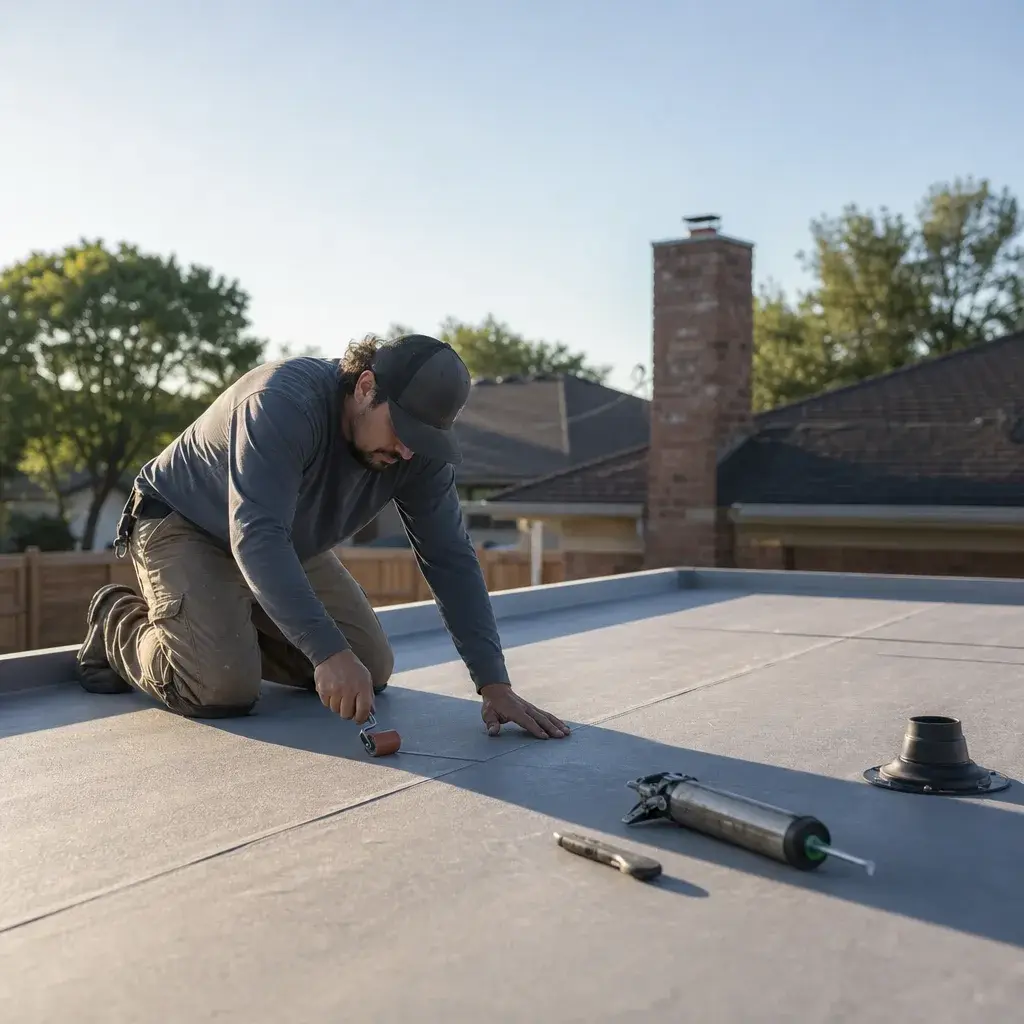
Flat roofs on additions, garage conversions and patio covers repaired or replaced – starting with a free inspection that tells you if it is failing or just wet.
What’s Covered on This Page
- Flat Roofing Shows Up on Additions, Garage Conversions, and Patio Covers
- Ponding Water That Lasts Beyond 48 Hours Signals a Problem
- Spring Hail Hits Flat Sections Harder Than Pitched Roofs
- Repair or Full Replacement Depends on Membrane Age and Damage Extent
- When Your Roof Doesn’t Need Flat Roofing Service
- How long does a flat roof coating or repair last before it needs attention again?
- Can I walk on my flat roof to check it myself, or should I always call someone?
- Does homeowners insurance cover flat roof repairs the same way it covers a regular shingle roof?
Flat Roofing Shows Up on Additions, Garage Conversions, and Patio Covers
When people hear “flat roof,” they picture a strip mall or a warehouse. Walk around a lot of homes in Sunnyvale and across Dallas County, though, and you’ll find one tucked somewhere on the house. It’s often hard to see from the street. You usually notice it from a second-story window or when a stain shows up on a ceiling that’s only a few years old.
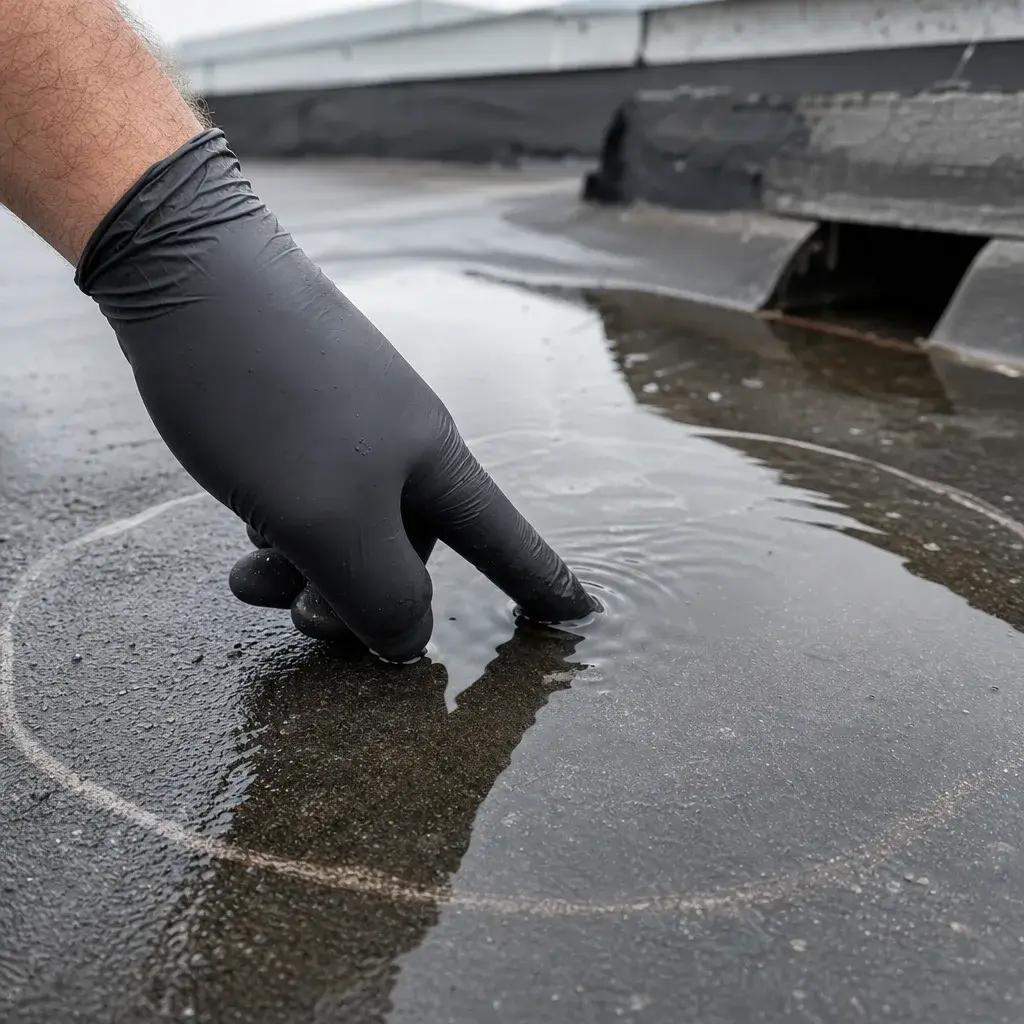
Here’s where these sections usually hide:
- Room additions on 1960s to 1980s ranch homes. A den or bedroom added off the back often got a nearly flat roof so it could tuck under the eaves of the original house.
- Garage conversions. When a garage becomes living space, the old roof over it sometimes stays as it was, even though there’s now a bedroom or office under it instead of a car.
- Attached patio covers and porches. A cover that ties into the back wall of a brick home often can’t get much pitch without blocking windows, so it ends up low-slope.
- Carports and breezeways that connect the house to a detached garage or workshop.
The flat part itself isn’t usually the weak spot. The trouble starts at the seams between the old house and the new piece. Water runs fast off a pitched shingle roof, then slows way down when it hits the flat section. If the joint between the two isn’t sealed and flashed right, water sits there and finds its way in. Flashing is the metal or membrane strip that covers that joint so water can’t slip behind it. The same goes for the line where a patio cover meets your brick wall.
Another common mistake is using standard shingles on a roof that’s too flat for them. Shingles work because they overlap and gravity pulls water down and off. On a very low slope, water moves slowly enough to back up under the edges, especially during a hard spring rain or when ice melts after a winter storm. A low-slope section needs a roofing material made to shed water at that angle.
North Texas weather is hard on these spots. Summer heat and UV dry out sealants and membranes over time. Hail hits a flat surface square on instead of glancing off. Clay soil that shifts under a slab can also move an addition slightly away from the main house, which stresses the joint where the two roofs meet.
That’s why the roof should be part of the plan from day one if you’re thinking about an addition, a garage conversion, or a covered patio. ERO DFW builds all three. Because we started as one accountable team for the whole project, the roof over a new room isn’t something we hand off to someone else. Let’s say you already have a low-slope section from a past owner’s project and you’re not sure how it was built. Have it looked at before the next storm season, not after the ceiling stain shows up.
Ponding Water That Lasts Beyond 48 Hours Signals a Problem
A flat roof isn’t perfectly flat. It’s built with a gentle tilt so water drains toward an edge, a gutter, or a drain. A little water left behind after a hard rain is normal. It should be gone within a day or two as it drains off and the Texas sun dries the rest.
Roofers use a simple rule of thumb. If water is still sitting there 48 hours after the rain stops, that’s ponding, and it tells you something about the roof. The tilt isn’t doing its job somewhere.
You can usually check this without going up there. Look from a second-story window, or from a ladder set at the edge, the day after a storm and again the day after that. Signs that water has been sitting for a while, even when the roof is dry, include:
- Dark rings or dirt lines on the surface, like a dried-up puddle on a driveway
- Leaves, grit, or loose granules collecting in one low spot
- Green or black growth, or even small weeds, in the same area
- A soft, sunken feel or a visible dip in that part of the roof
- A ceiling stain inside that lines up with the low spot above
Why does it matter if water just sits there? Standing water is heavy, and the weight keeps pushing down on the same spot. That deepens the dip, so the next rain leaves even more water behind. In a North Texas summer, that puddle also acts like a magnifying glass for heat and UV, which breaks down the roof surface faster in that one area. When an ice storm rolls through, water frozen in a low spot can work open small cracks. And once the surface wears thin, it only takes one weak seam for water to get into the room below.
Ponding usually comes from one of a few causes:
- A clogged drain, scupper, or gutter. A scupper is the opening at the roof edge that lets water spill out. Leaves and debris block these all the time.
- Sagging decking. The decking is the wood layer under the roofing. If it’s gotten wet before and gone soft, it can sag and form a bowl.
- Not enough slope from the start. Some older additions and patio covers were built nearly dead flat.
- Movement over time. As mentioned above, shifting clay soil can tilt an addition just enough to change which way the water runs.
The fix depends on the cause. Sometimes it’s as simple as clearing a drain or fixing a gutter that’s pulling away. That’s the best case, and you shouldn’t let anyone talk you into more than that if it solves the problem. Other times the roof needs the low spot built back up, extra drainage added, or soft decking replaced before new roofing goes on. A small raised ridge called a cricket can also be added to steer water away from a wall or chimney.
If you’ve spotted water that hangs around past two days, take a photo and note the date. It gives whoever inspects the roof a clear picture of where the water collects and how long it stays.
Spring Hail Hits Flat Sections Harder Than Pitched Roofs
North Texas hail season runs roughly March through June. That’s the stretch when a flat section takes the worst beating on your house. Hail lands square on a low-slope roof, as mentioned above. The roofing there is also often a thinner, softer layer than the shingles next to it, so it bruises more easily.
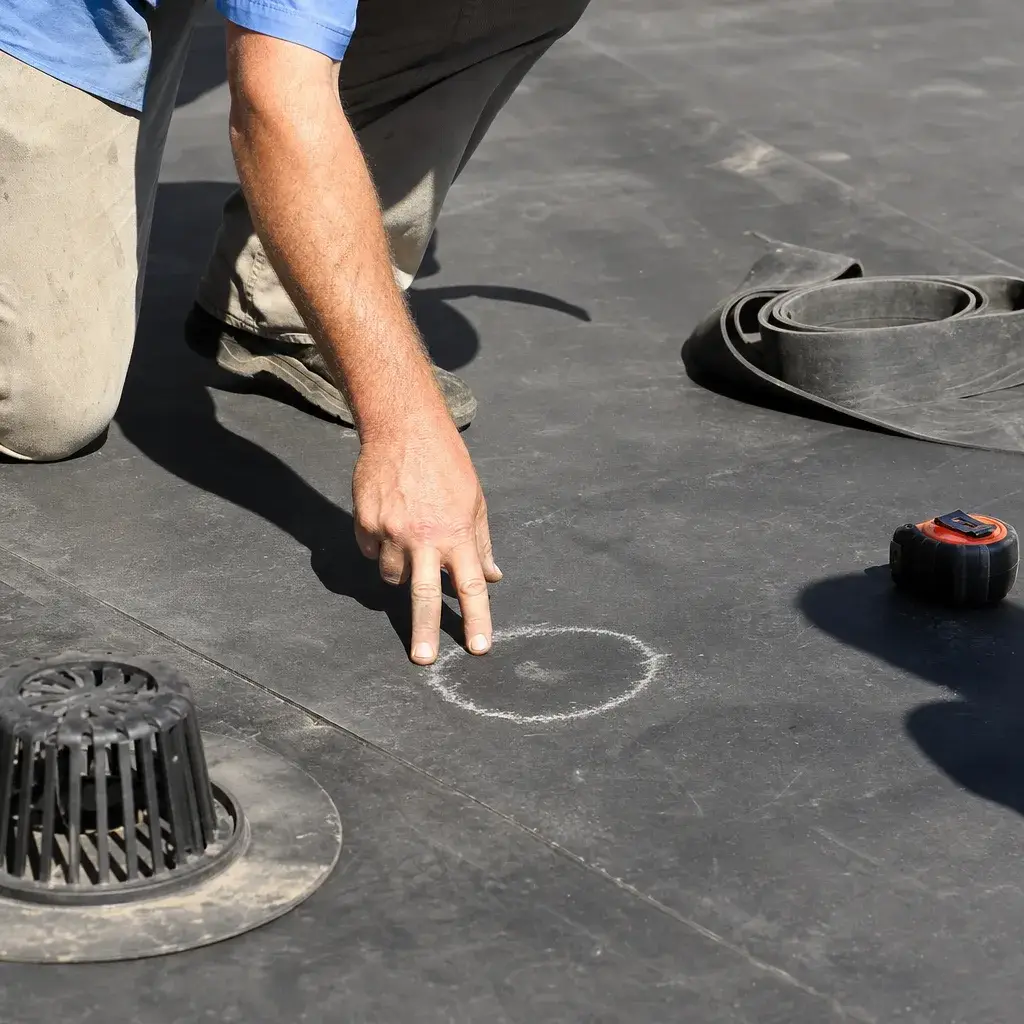
Most low-slope sections on homes are covered with a rolled membrane, a coating, or a gravel-topped built-up roof. Hail damages each one a little differently:
- Rolled membranes can get bruised. That means a hit cracks the layer underneath even when the top still looks whole. It feels soft or spongy when you press on it.
- Coatings can chip or crack in small round spots, and bare roofing shows through.
- Seams can split open where two pieces of membrane overlap. That’s where water gets in first.
- Gravel roofs can have stones knocked loose, which leaves the layer below open to sun and the next storm.
- Metal flashing, drip edges, and scuppers can dent or bend, which can break the seal at the edges.
The hard part is that you usually can’t see any of this. A flat section over a den or patio cover doesn’t show from the street. Hail damage on a membrane often looks like nothing more than a few faint marks. Many homeowners don’t learn the roof was hit until a ceiling stain shows up weeks later, after a few more rains have worked water through a cracked spot. By then the storm date is fuzzy, and the wet decking underneath has started to sag. That leads right back to the ponding problem.
You can find clues without climbing up. After a hailstorm, walk around your house and look for:
- Dents in the gutters or downspouts below the flat section
- Dings in the metal trim or the edge of a patio cover
- Granules, gravel, or bits of coating washed out at the base of a downspout
- Fresh dents in a nearby mailbox, fence cap, or outdoor furniture, which tell you hail hit hard enough to matter
If you spot any of those, write down the storm date and take photos. That record helps whether the fix turns out to be small or turns into an insurance claim.
Flat sections also get handled badly after big storms. A storm crew at your door might look only at the pitched shingle roof and skip the low-slope part completely. Or they might call a few scuffs on old membrane hail damage when it isn’t. Neither one helps you. You want someone who checks the flat section up close, presses on suspicious spots, looks at the seams and edges, and tells you plainly whether it’s storm damage or normal wear.
That’s how ERO DFW handles it: free inspection, honest opinion, and an answer within 24 hours of your request. If the damage is real and you decide to file, we’ll walk you through the claim and meet the adjuster when needed. You pay your deductible, nobody else. If the hail missed your flat roof, we’ll tell you that too.
Have questions? We’re happy to help.
Schedule Your Free Inspection. Exteriors, Roofing & Outdoor Living is ready to help.
Repair or Full Replacement Depends on Membrane Age and Damage Extent
Most flat roof problems on a home don’t need a whole new roof. Two questions decide it. Does the membrane, the top waterproof layer, still have life left? And has the water stayed on top of it, or has it gotten underneath?
A repair usually makes sense when:
- The damage is in one spot, like a single split seam, a small puncture, or a few hail bruises in one corner.
- The leak traces back to the flashing where the flat section meets the shingle roof or the brick wall.
- The ponding comes from a clogged scupper or drain, not from sagging decking.
- The membrane still bends without cracking and stays stuck down when you press on it.
- The decking under the leak is dry and firm.
There’s also a middle option. If the membrane is worn across the surface but is still sound and dry underneath, a roof coating may buy you real time. A coating is a liquid layer that’s rolled or sprayed on. It cures into one seamless skin and reflects some of that summer sun. It can stretch the life of a roof that’s aging but not failing. It won’t fix wet decking, though. A coating sealed over soaked wood traps the moisture, and the rot keeps spreading where you can’t see it.
Replacement is usually the honest answer when:
- The membrane is brittle, cracked in a pattern like dried mud, or blistered across large areas.
- Patches are piled on top of patches, and new leaks keep showing up in new places.
- The decking is soft or sagging, so the low spot will come back no matter what goes on top.
- The section was covered with regular shingles that were never made for that slope.
- Hail damage runs across the whole surface, not just one edge.
Age matters, but it doesn’t decide things on its own. Picture a flat section over a 1970s den addition that’s been patched for years. That’s a very different roof from one put on not long ago that took one bad hailstorm. A low-slope surface also sits in full sun all day with no pitch to shade any of it. So two roofs of the same age can be in very different shape. Someone has to put hands on the membrane and check the decking to know which one you have.
Watch out for anyone who jumps straight to a full tear-off over one split seam. Be just as careful with anyone who offers to coat over a roof that’s wet underneath. Either one costs you money. If a storm is involved, your policy and your adjuster decide what’s covered, not the roofer. A good contractor shows you the damage in photos and explains why they’re recommending repair or replacement.
With ERO DFW, you get a free inspection, an honest opinion, and a written estimate before you sign anything. If a repair is enough to keep your flat section dry, that’s what you’ll hear from us.
Watch Our Video
See How We Handle Flat Roofing in Sunnyvale, TX
Exteriors, Roofing & Outdoor Living — Serving Sunnyvale, TX and surrounding areas
When Your Roof Doesn’t Need Flat Roofing Service
Plenty of flat sections look worse than they are. Before you call anyone, us included, it helps to know when the honest answer is “leave it alone” or “that’s not a roof problem.”
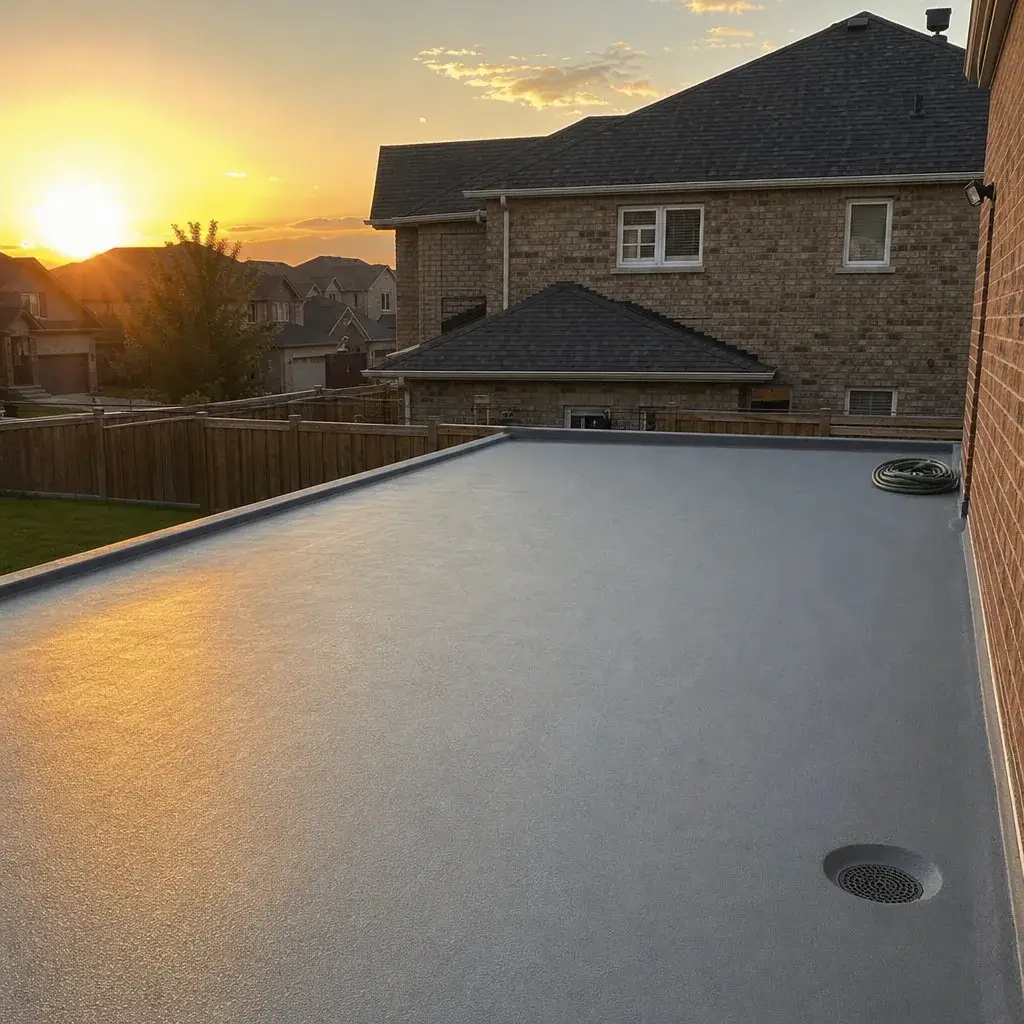
You probably don’t need flat roofing service if:
- The water clears within two days. Puddles that dry up inside the 48-hour window are the roof doing its job, even if they look alarming the morning after a big spring rain.
- The surface is faded, dusty, or has fine surface lines but stays stuck down and feels firm. Sun-bleached coating and dirt streaks from the Texas summer are cosmetic. They don’t let water in by themselves.
- A few pieces of gravel have shifted. Some scattered stone on a gravel-topped roof is normal after wind. Large bare patches are a different story.
- The ceiling stain is old and dry. Many stains come from a leak someone already fixed. Lightly trace the edge of the stain in pencil. If it hasn’t grown past the line after the next few rains, the leak is likely gone. A dab of stain-blocking primer and some paint may be all you need.
- The only problem is leaves in a scupper or gutter. If clearing the debris lets the water drain and the puddle stops coming back, you’ve fixed it. Having us out for that wouldn’t be worth your time or money.
Sometimes the leak shows up under the flat section but starts somewhere else. Water can travel a long way inside a wall or ceiling before it drips. A few common culprits on North Texas homes:
- A window or patio door next to the addition that’s letting wind-driven rain in around the frame. That’s a window or door job, not a roofing one.
- Cracked mortar or gaps in the brick wall above a patio cover. Rain soaks into the brick and runs down to where the cover meets the house.
- The pitched shingle roof uphill from the flat part. A lifted shingle or a bad pipe boot up top can send water down into the addition. Then you need a shingle roof repair, and the flat section may be fine.
- A skylight on the flat section itself. Its seal can fail while the membrane around it stays in good shape.
Also hold off if your flat section was put on recently and is still under the installer’s workmanship warranty. Call that contractor first. A new roof that leaks is their job to come back and fix, and having someone else touch it can make that harder.
If you’re selling and a home inspector wrote “flat roof near end of life” in the report, that line alone doesn’t mean you need a new one. Ask the inspector what they saw. Was it soft decking, cracking, or just age? A buyer’s report sometimes flags a roof that still has years left.
And if a storm rolled through but you found no dents on the gutters, trim, or patio furniture, there’s usually no rush to have anyone up there that week. Watch for new stains over the next few rains and go from there. Sometimes the smartest move is to wait and keep an eye on it.
Frequently Asked Questions
Common questions about flat roofing in Sunnyvale, TX
How long does a flat roof coating or repair last before it needs attention again?
It depends on how much sun and hail exposure that section gets, since a low-slope roof sits in full Texas sun all day with no pitch to shade it. A coating can buy real time on a roof that’s aging but still sound underneath, but it won’t fix wet decking. Regular checks after hail season and heavy rains help you catch wear before it turns into a leak.
Can I walk on my flat roof to check it myself, or should I always call someone?
You can usually spot trouble from a ladder or a second-story window without walking on the roof at all. Look for ponding that lasts past 48 hours, dark rings, soft spots, or gravel loss. If you see those signs, or you’re not comfortable getting close to the edge, have it looked at rather than walking the membrane yourself, since pressing on a weak spot can make a soft area worse.
Does homeowners insurance cover flat roof repairs the same way it covers a regular shingle roof?
Your policy and your adjuster decide what’s covered, not the roofer, and that applies to flat sections just like the rest of your roof. If a storm caused the damage, document the date and take photos of dents on gutters, trim, or a patio cover right after the storm. That record helps whether the claim covers a small repair or a larger fix.
Ready to Get Started?
Schedule Your Free Inspection. Call (972) 288-9587 today.