
Tile Roofing in Sunnyvale, TX: Repair or Replace the Right Way
Cracked and slipped tiles repaired without causing new damage, or a section replaced when it has to be – starting with a free inspection.
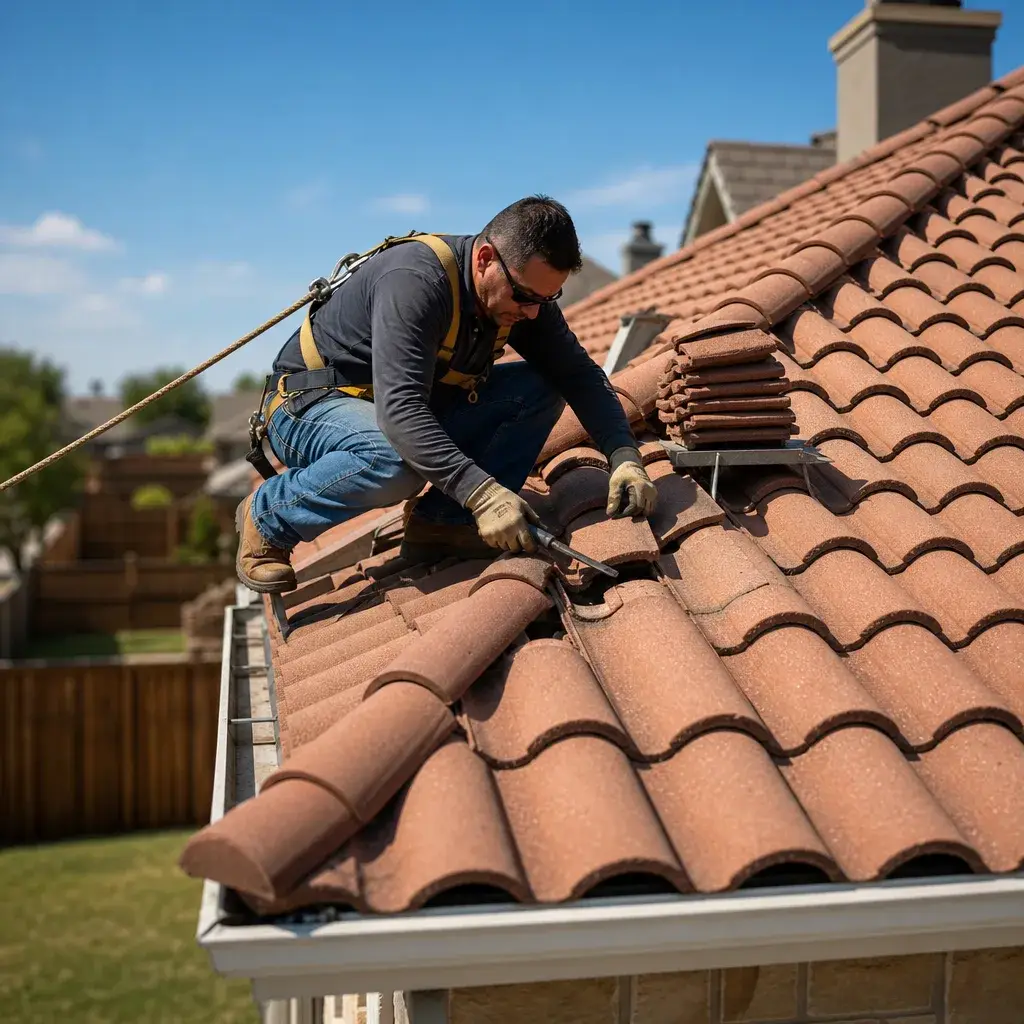
What’s Covered on This Page
- Signs Your Tile Roof Needs a Repair, Not a Replacement
- When a Tile Roof Does Not Need Professional Repair
- Why Walking on a Tile Roof Wrong Causes New Damage
- What Happens During a Tile Roof Inspection and Estimate
- Handling Insurance Claims for Storm-Damaged Tile Roofs
- Can you repair just a few tiles or do you have to replace a whole section?
- How long does a tile roof repair or underlayment reset usually take?
- What if my roof tiles are an old style that isn’t made anymore?
- Does normal foot traffic from service people damage tile roofs?
Signs Your Tile Roof Needs a Repair, Not a Replacement
Here’s the thing most people don’t know about a tile roof. The tile you see isn’t what keeps the water out on its own. It’s the shield. Under it sits a waterproof layer called underlayment, and that layer does the quiet work. The tile itself can last for decades. So when something goes wrong, the question isn’t “Is my roof old?” It’s “Is this one spot, or is it everywhere?”
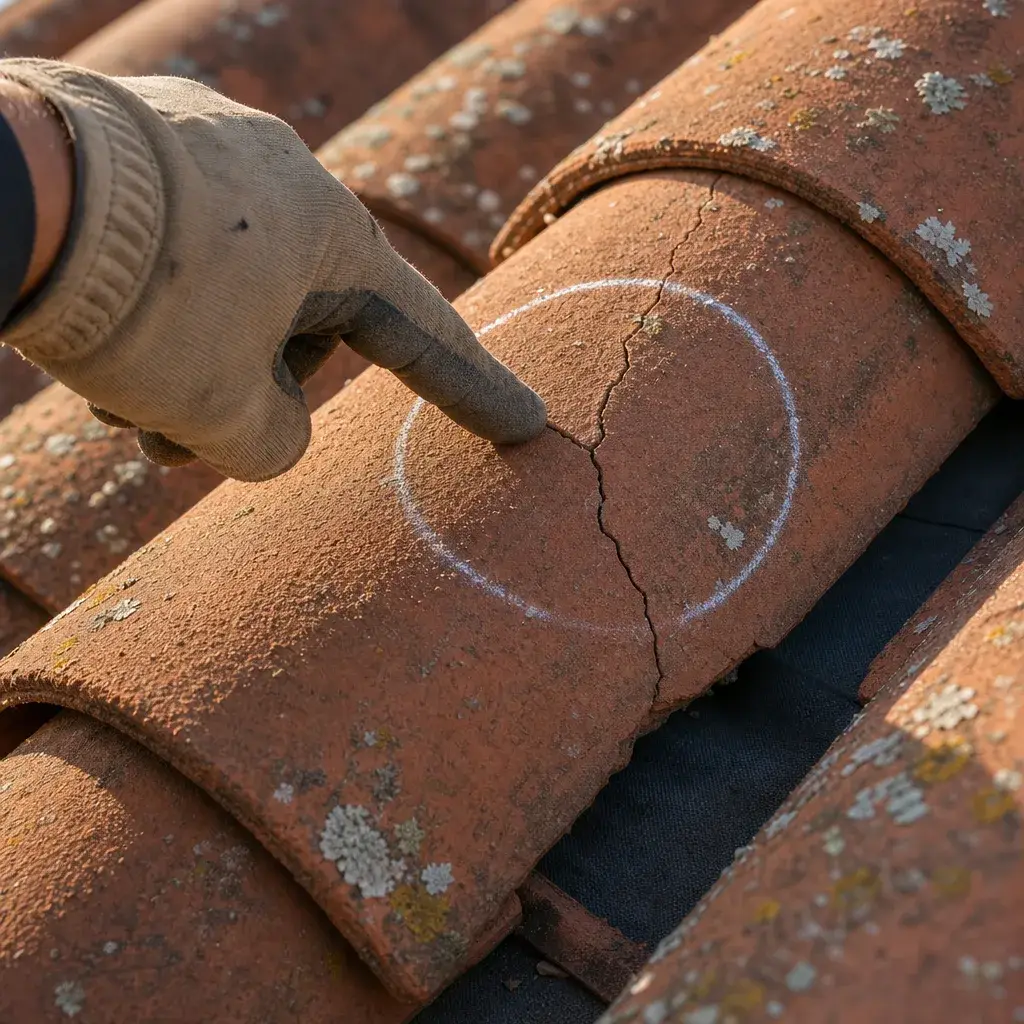
If it’s one spot, you’re most likely looking at a repair. These are the signs that point that way:
- A handful of cracked or chipped tiles after a spring hailstorm. Sunnyvale’s hail season runs roughly March through June, and a hard storm can crack a few tiles without hurting the rest.
- Tiles that slipped out of place, often after straight-line wind or after someone walked on the roof to fix a satellite dish or string lights.
- Broken or loose tiles along the ridge or the hips, the peaks where two roof slopes meet. The mortar or fasteners there can loosen over years of North Texas heat and cold.
- One leak that shows up near a chimney, vent pipe, skylight, or wall. That usually means the flashing, the metal that seals those joints, needs attention, not the tile.
- A single ceiling stain in one room, with no water showing up anywhere else in the house.
In each of these cases, the fix is to pull the damaged tiles, check and patch what’s underneath, and set good tiles back in place. The rest of your roof stays put.
Matching is the one catch. If your tiles are an older shape or color that’s no longer made, finding exact replacements can take some looking. Salvaged tiles or tiles pulled from a less visible part of the roof can often fill the gap. A hard-to-match tile is a reason to plan the repair carefully. It isn’t, by itself, a reason to replace the roof.
So when does a bigger job make sense? When the trouble isn’t in one place. Leaks in several rooms, soft or sagging spots you can see from the yard, or underlayment that’s brittle and cracking wherever tiles are lifted all point to a worn-out layer under a roof that still has good tile. Many homeowners in that case don’t need new tile at all. The tiles can come up, new underlayment goes down, and the same tiles go back on. A full tear-off with new tile is usually saved for roofs where large numbers of tiles are broken or the deck below has rotted.
If someone looks at three cracked tiles and tells you the whole roof has to go, ask them to show you why. A tile roof that’s worth keeping usually just needs someone careful enough to keep it.
When a Tile Roof Does Not Need Professional Repair
A lot of what people worry about on a tile roof isn’t a repair at all. If your roof isn’t letting water in and the tiles are still sitting where they belong, you may not need anyone up there. Here’s when you can save the call.
Start by looking from the ground. Stand in the yard, or use a pair of binoculars, and walk around the house. Tile is strong against weather but can crack under a person’s weight. A roof that was fine before somebody climbed on it to look isn’t always fine after.
- Faded color on concrete tile. Years of North Texas sun will lighten concrete tile. It looks older, but faded tile still sheds water the same way. That’s a looks problem, not a leak problem.
- White, chalky streaks on concrete tile. This is mineral residue that works its way out of the concrete over time. It’s common and doesn’t hurt the tile.
- Dark streaks or a little moss on the shady side. Staining from algae or moss is mostly cosmetic. It’s worth keeping an eye on if it gets thick, but it isn’t an emergency.
- A small chip on the edge of a tile with nothing showing underneath and no water inside the house. A chipped corner that still overlaps the tile below it can usually wait until a routine check.
- Leaves and twigs in the gutters. That’s a gutter cleaning job, not a roof repair. Clogged gutters are worth clearing, but no tile needs to be touched.
You also don’t always need an inspection after every storm. Pea-size hail that rattles the windows often bounces off tile without breaking it. Your roof is probably fine if you look from the yard and see no broken or shifted tiles, no pieces of tile on the ground or in the gutters, and no new stains on your ceilings. Make a note of the storm date, check your ceilings over the next few rains, and go on with your week.
Some sounds and smells don’t come from the roof at all. A tick or pop in the attic on a hot afternoon is often just wood and tile moving as they heat up and cool down. A musty smell in one room can come from a plumbing drip or a window leak. Before you assume the roof is the problem, check whether the spot lines up with a bathroom, a window, or a pipe.
And if someone shows up at your door right after a storm saying your tile roof is ruined, you don’t have to decide anything that day. Look for yourself first. If you can’t see broken tile from the ground and nothing is wet inside, waiting a few days to get a second opinion costs you nothing.
The line is simple. Water inside the house, tiles that have slid or fallen, or broken pieces you can see from the yard mean it’s time for a roofer. Fading, stains, mineral streaks, and a clean gutter job don’t.
Why Walking on a Tile Roof Wrong Causes New Damage
Tile handles hail, wind, and Texas sun well. It doesn’t handle a person stepping in the wrong place. A clay or concrete tile is built to carry weight spread across its surface, like rain and wind. A boot puts a lot of weight on one small spot. Put that spot in the wrong place and the tile cracks, even if it survived every storm before it.
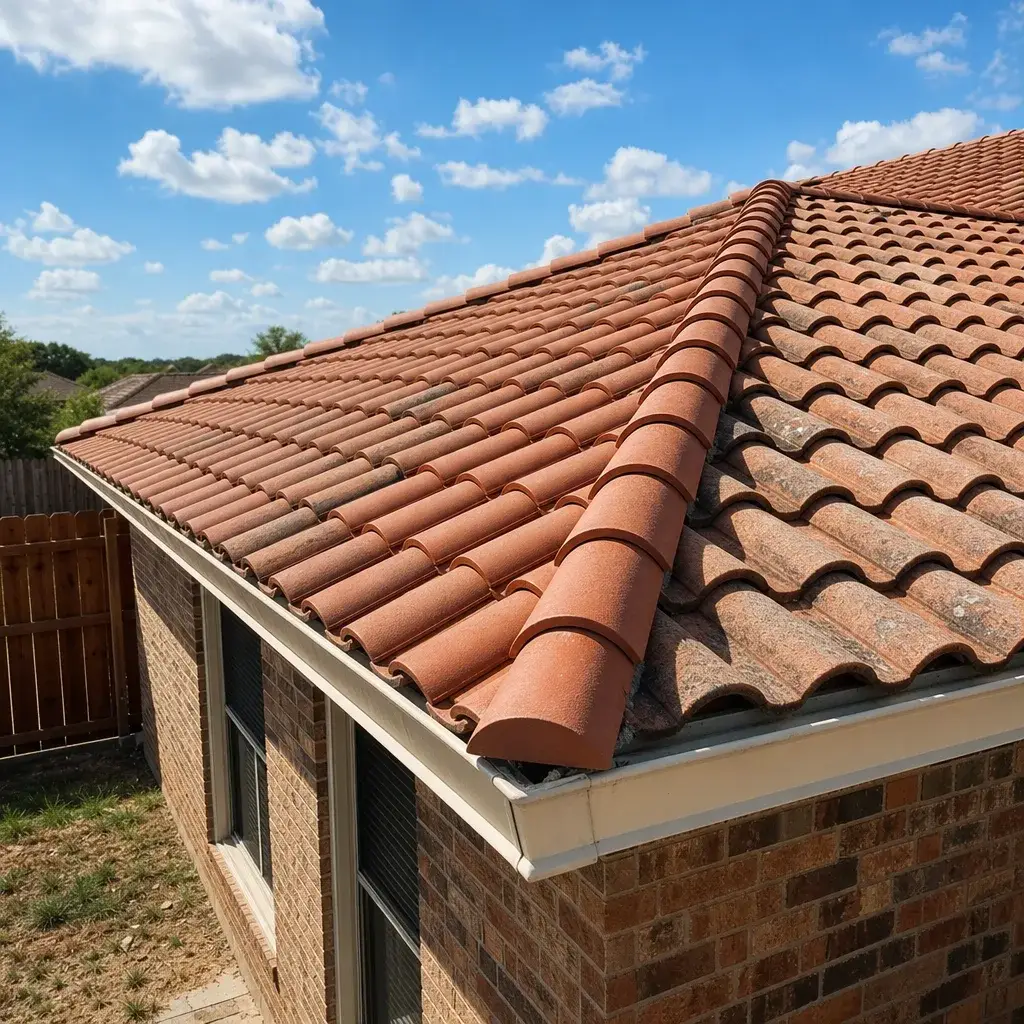
Most of the risk comes down to where a foot lands. Many tiles have a curve or a raised hump, like the S-shaped and barrel tiles you see on a lot of North Texas homes. That high point has empty air under it. Step on it, and there’s nothing below to hold you up, so the tile snaps. A careful roofer steps where tiles overlap near the lower edge, where the tile rests on the one below it and on the wood strips that hold it in place.
The trouble is that a lot of this damage hides. A tile can crack in a thin line you can’t see from the yard. It still looks whole. Then the next hard rain finds the crack, and water runs onto the underlayment, the waterproof layer under the tile. You may not see a ceiling stain for months, and by then nobody remembers who was on the roof.
Weather makes it worse. On a summer afternoon, roof tile gets hot enough to burn your hands, and people move fast and step carelessly when it’s that hot. After rain or during one of our winter ice storms, tile gets slick. A slip doesn’t just risk a fall. It can crack several tiles at once as someone catches themselves. Older tiles that have been through many years of heat and cold can also be more brittle than new ones.
Here’s who usually ends up on a tile roof without thinking about any of this:
- A crew hanging holiday lights or mounting a satellite dish or antenna
- Someone painting the trim or cleaning gutters from the roof instead of a ladder
- A homeowner chasing a leak or checking for hail after a storm
- A stranger who knocks after a storm and offers to look at your roof for you
That last one matters. Cracks from foot traffic can look a lot like hail damage. If someone climbs your roof without care and then shows you broken tiles, you can’t be sure what caused them. That can muddy an insurance claim and push you toward work you didn’t need.
You don’t have to keep everyone off your roof forever. Just ask a few plain questions before anyone goes up:
- Do you need to walk the roof at all, or can you see what you need from a ladder or the ground?
- Where will you step, and do you know how to walk on tile?
- Will you take photos of the roof before you start and after you finish?
And please don’t climb up there yourself to look. A fall is a real risk, and the tile you crack checking for damage can turn a roof that needed nothing into one that needs a repair. Look from the yard, check your ceilings, and let someone who knows tile do the walking.
Proudly serving Sunnyvale, TX – reach out anytime.
Schedule Your Free Inspection. Exteriors, Roofing & Outdoor Living is ready to help.
What Happens During a Tile Roof Inspection and Estimate
You call, and we respond to every inspection request within 24 hours. The inspection is free. One of our sales managers comes out to look at your roof, tells you what they find in plain English, and explains your options. Then you get a written estimate before you sign anything. Nobody asks you to decide on the spot.
A careful tile inspection starts on the ground and inside the house, not on the roof. Your ceilings, your attic, and the yard can tell a roofer a lot before anyone steps on a tile. When someone does go up, they should walk the way the last section described, because a careless inspection can crack the very tiles it’s checking.
Here’s what a good tile inspection should cover:
- Cracked, chipped, or slipped tiles, and whether the damage sits in one area or runs across the whole roof
- The ridge and hip tiles along the peaks, and whether the mortar or fasteners holding them have loosened
- Flashing at chimneys, vents, skylights, and walls, since those joints cause many single leaks
- The underlayment wherever a tile can be lifted safely, to see if it’s still flexible or turning brittle
- Ceiling stains or attic moisture, matched to the spot on the roof above them
- Your tile’s shape and color, so any repair comes with a plan for matching it
Your estimate should answer the question this whole page is about: repair, underlayment reset, or replacement. It should say which one and why. If it’s a repair, it should name the area and roughly how many tiles are involved. If it calls for new underlayment, it should say whether your existing tiles go back on. If anyone recommends new tile across the whole roof, the estimate should show the reason, such as widespread breakage or rotted decking, the wood boards under everything.
Cost on a tile roof comes down to a few things. Clay and concrete tile are priced differently. A steep roof or a two-story home takes more time and safety setup. Hard-to-match tile can mean extra searching or pulling salvaged pieces. A reset costs more than a spot repair because every tile is lifted, stacked, and set back. Rotted decking adds to any job. A clear estimate breaks these out so you can see where the money goes.
If a spring hailstorm caused the damage, we’ll walk you through the claim. When the job moves forward, your project manager can meet the insurance adjuster with you, so the person who knows your roof is there to point out the damage. We can’t promise what your insurer will approve. You pay your deductible, nobody else. Your project manager also handles any town permit or HOA approval the work needs, plus materials and scheduling.
ERO DFW is headquartered right here on the U.S. 80 frontage road in Sunnyvale. We’re family-owned since 2019 and licensed, bonded, and insured, with ten offices across the Metroplex. That means we’re still here after the storm and here for the warranty call.
Watch Our Video
See How We Handle Tile Roofing in Sunnyvale, TX
Exteriors, Roofing & Outdoor Living — Serving Sunnyvale, TX and surrounding areas
Handling Insurance Claims for Storm-Damaged Tile Roofs
A claim on a tile roof usually comes down to two plain questions. Did this storm break the tile? And can the broken tiles be fixed with tiles that match? Since tile tends to outlast the layer under it, many hail claims on tile end up paying for a repair, not a whole new roof. That’s not bad news. It means your roof did its job.
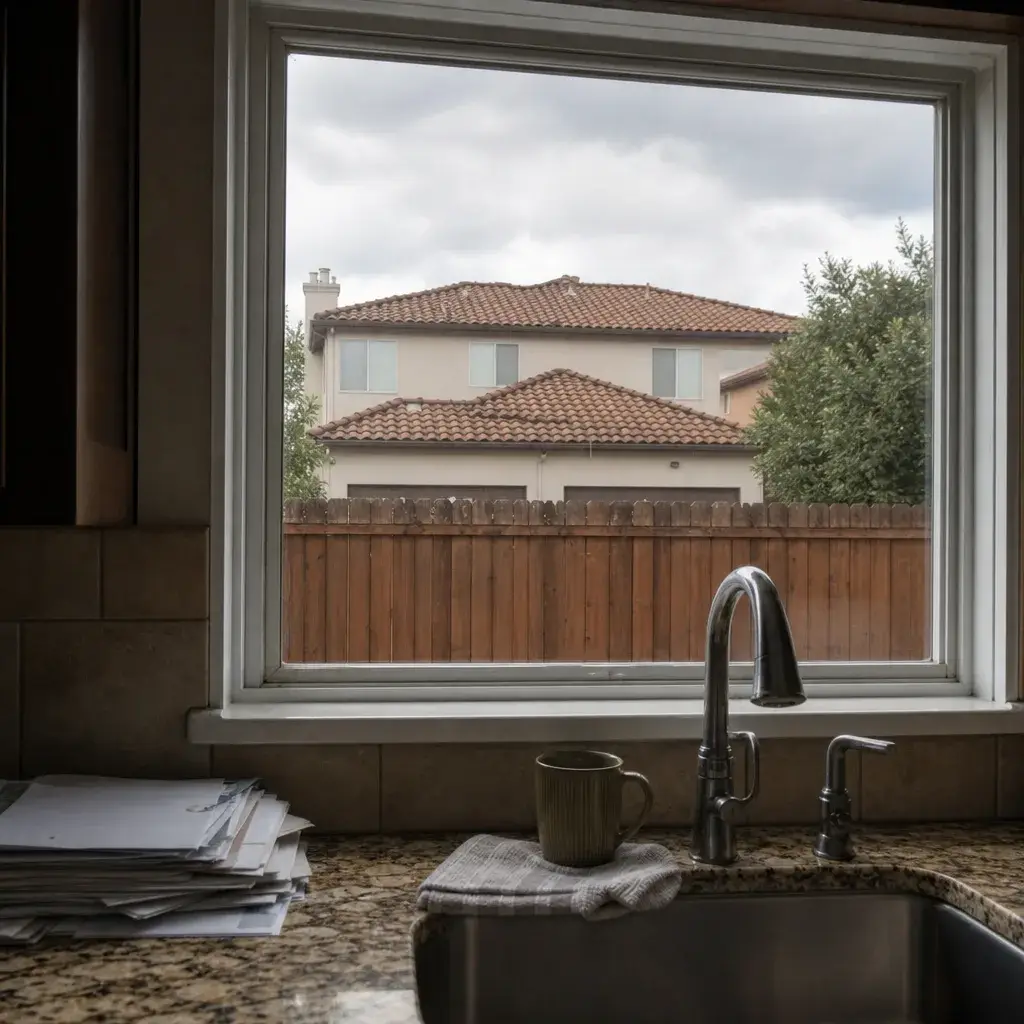
Here’s a calm order of steps after a spring storm rolls through Sunnyvale:
- Write down the storm date. Insurers ask for it, and North Texas can get two or three hailstorms in one season.
- Take photos from the ground. Get broken tile pieces in the yard or gutters, shifted tiles you can see, and any new ceiling stains inside.
- Read your policy, or call your agent, to learn your deadline for reporting damage and what your deductible is.
- Get a free inspection before or alongside filing. Then you’ll know whether the damage is real and whether it’s likely to cost more than your deductible.
- File the claim if it makes sense. If the damage is small, you may decide it’s not worth a claim at all.
Tile claims raise questions that shingle claims don’t. An adjuster will want to know if a crack is fresh hail damage or an old crack from age or foot traffic, which is why careless walking, covered above, can muddy things. They may also look at the underlayment under broken tiles, since water can get in there before you ever see a stain. And if your tile style isn’t made anymore, matching becomes part of the conversation. Ask your agent how your policy treats matching, since coverage differs from one policy to the next.
Two policy terms matter a lot here. Replacement cost pays what it takes to fix or replace the damage with new material. Actual cash value, or ACV, pays what your damaged roof was worth that day, after taking off for age. Some policies also leave out cosmetic damage, like a dent or chip that doesn’t let water in. Knowing which kind you have before you file saves you a surprise later.
Our part is to give you honest facts to work with. We’ll walk you through the claim, photograph what we find, and write a scope that separates storm damage from normal wear. If the damage is minor or below your deductible, we’ll tell you so. A claim built on what’s really on your roof holds up better than one built on what someone hoped to find.
Frequently Asked Questions
Common questions about tile roofing in Sunnyvale, TX
Can you repair just a few tiles or do you have to replace a whole section?
You can almost always repair just the tiles that are damaged. Clay and concrete tile is durable, so a few cracked or slipped tiles after a storm usually get pulled, checked, and swapped out without touching the rest of the roof. Only widespread damage across the whole roof calls for more than a spot repair.
How long does a tile roof repair or underlayment reset usually take?
A small repair, like fixing a few cracked tiles near a chimney or vent, can often be done in a single visit once the damage is confirmed. A full underlayment reset takes longer because every tile has to be lifted, stacked, and set back after new underlayment goes down. Your written estimate will spell out which job you need and what it involves before any work starts.
What if my roof tiles are an old style that isn’t made anymore?
Matching older tile styles can take extra searching, but it rarely means you need a full replacement. Salvaged tiles or ones pulled from a less visible part of your roof can often fill the gap. A hard-to-match tile just means your repair takes a bit more planning, not a bigger job.
Does normal foot traffic from service people damage tile roofs?
Yes, walking on tile the wrong way can crack it even if the roof was fine before. A boot puts all its weight on one small spot, and tiles with a curved or raised shape have empty air underneath that point. Crews hanging holiday lights, cleaning gutters, or checking for hail damage are common culprits, and the cracks can hide until the next hard rain finds them.
Ready to Get Started?
Schedule Your Free Inspection. Call (972) 288-9587 today.