
Half-Round Gutters in Sunnyvale, TX
Half-round gutters in aluminum or copper, sized and hung to match your home – starting with a free inspection of your current gutters.
What’s Covered on This Page
- How Half-Round Gutters Differ From Standard Seamless Gutters
- Signs It Is Time To Replace Your Gutters With a Half-Round Profile
- When Half-Round Gutters Are Not the Right Call
- What To Expect From Inspection Through Installation
- Choosing Between Aluminum and Copper Half-Round Gutters
- Can gutter guards be added to half-round gutters?
- Will copper half-round gutters stain my brick or driveway?
- Do half-round gutters need more maintenance than standard gutters?
How Half-Round Gutters Differ From Standard Seamless Gutters
Walk outside and look at your gutters. On most homes around Sunnyvale and the rest of the Metroplex, you’ll see a K-style gutter. It sits flat against the board behind it, called the fascia. The front has a curved edge that looks a bit like crown molding. Half-round gutters are just what the name says: a smooth half-circle that hangs below the roof edge. That one change in shape affects how much water they carry, how they mount, and how your house looks from the street.
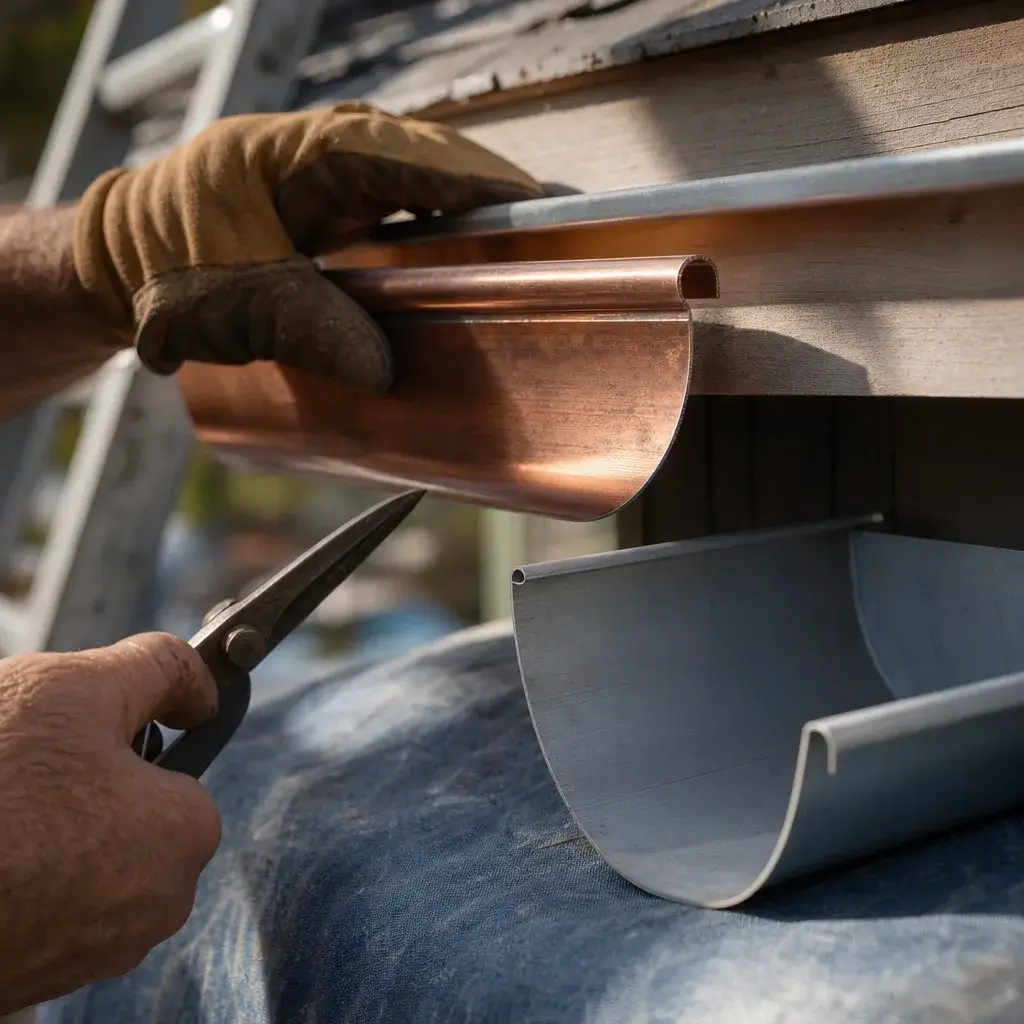
Here’s how they compare where it counts:
- Water capacity: A K-style gutter’s flat bottom and squared sides hold more water than a half-round gutter of the same width. That’s why half-round is often installed one size larger, so it can keep up when a spring storm dumps a lot of rain in a short time.
- Drainage: The rounded bottom lets water run out more completely. Less water sits in the trough after the rain stops, and small debris tends to wash toward the downspouts instead of settling in flat corners.
- Mounting: K-style fastens flat to the fascia with hangers hidden inside the gutter. Half-round rides in brackets that are usually visible and can attach to the fascia or to the roof itself. That matters if your fascia is soft or rotted.
- Seams: Standard seamless gutters are commonly formed on site from one long piece, so a run has no joints. Half-round is often put together in sections, which means more joints that need to be sealed right. Seamless half-round does exist, but it’s less common.
- Downspouts: K-style systems usually use rectangular downspouts. Half-round systems usually pair with round downspouts, which finish the look.
- Materials: Both come in aluminum and steel. Half-round is also the shape most people choose for copper, since the curve shows off the metal as it ages.
So which shape fits your home? Think about the house first. A lot of homes in this area are brick with siding up at the gables. Half-round gutters often look right at home on that kind of exterior, and on older ranch homes with simple, clean rooflines. On a big two-story home with long, steep roof slopes, a K-style gutter’s larger capacity may serve you better, unless the half-round is sized up and given enough downspouts. If you live in a neighborhood with an HOA, check whether changing your gutter style needs approval before you commit.
Neither shape is better everywhere. Half-round is the right choice when you want the look and the gutter is sized for the water your roof sheds. If capacity matters more to you than style, a standard seamless gutter is a fine, practical choice. If you’re leaning toward metal with character, copper gutters are worth a look too. We’ll show you both shapes on your house and tell you plainly which one we’d pick for your roof.
Signs It Is Time To Replace Your Gutters With a Half-Round Profile
Most people don’t think about their gutters until something goes wrong. These are the signs that your current system is worn out, and that a switch to half-round is worth a real look.
- Water sheets over the front in a hard rain, even when the gutters are clean. If they’re clear and still overflowing, they’re too small or have too few downspouts for your roof. A new system lets you size the half-round up and add outlets where the water lands.
- The gutter is sagging or pulling away from the house. Loose hangers and gaps behind the gutter mean water is running down the wall instead of into the trough. Once several sections droop, patching one spot at a time stops making sense.
- The fascia behind the gutter is stained, soft, or rotting. Wet wood means water has been getting behind the gutter for a while. That board needs to be fixed before any new gutter goes up, and the bracket options covered above can help where the fascia is in rough shape.
- You see washed-out soil, mulch, or puddles along your slab. The clay soil around Sunnyvale swells when it’s wet and shrinks when it dries. Gutters that dump water right at the foundation make that movement worse, which is the main job a good gutter system is supposed to prevent.
- Joints drip, the metal is rusting, or the paint is peeling. Old steel gutters and sectioned runs with failing seals tend to leak at every seam. Once rust shows up in several places, it will keep spreading.
- Hail or ice left dents and bends that hold water. Spring hail season here runs roughly March through June, and the occasional ice storm can bend gutters away from the roof. A dented trough that collects standing water wears out faster.
Timing matters too. If you’re replacing your roof, that’s the easiest time to change gutter styles. The roof edge is already open, any bad fascia can be swapped out, and the new gutters go up against fresh work instead of being worked around it.
Some homeowners have no problem at all and simply want a different look. Say your brick ranch has plain K-style gutters that never matched the house. That’s a fine reason to switch, as long as the new half-round is sized for the water your roof sheds.
Here’s when you don’t need new gutters. If the trouble is a clog, clean the gutters first and run a hose through them. You may find nothing else is wrong. One loose hanger, one leaky corner, or one downspout that came apart is a repair job, not a replacement. If your gutters are solid, draining well, and the fascia behind them is dry, keep them. Our gutter repairs page covers those smaller fixes.
If you’re seeing two or three of the signs above at once, especially rot behind the gutter or erosion at the foundation, that’s usually the point where a full replacement saves you money compared with chasing one repair after another. When we come out, we’ll tell you straight which side of that line your gutters are on.
When Half-Round Gutters Are Not the Right Call
Half-round gutters look great, but they aren’t the answer for every house. Here are the cases where we’d steer you toward something else, even though half-round is something we install.
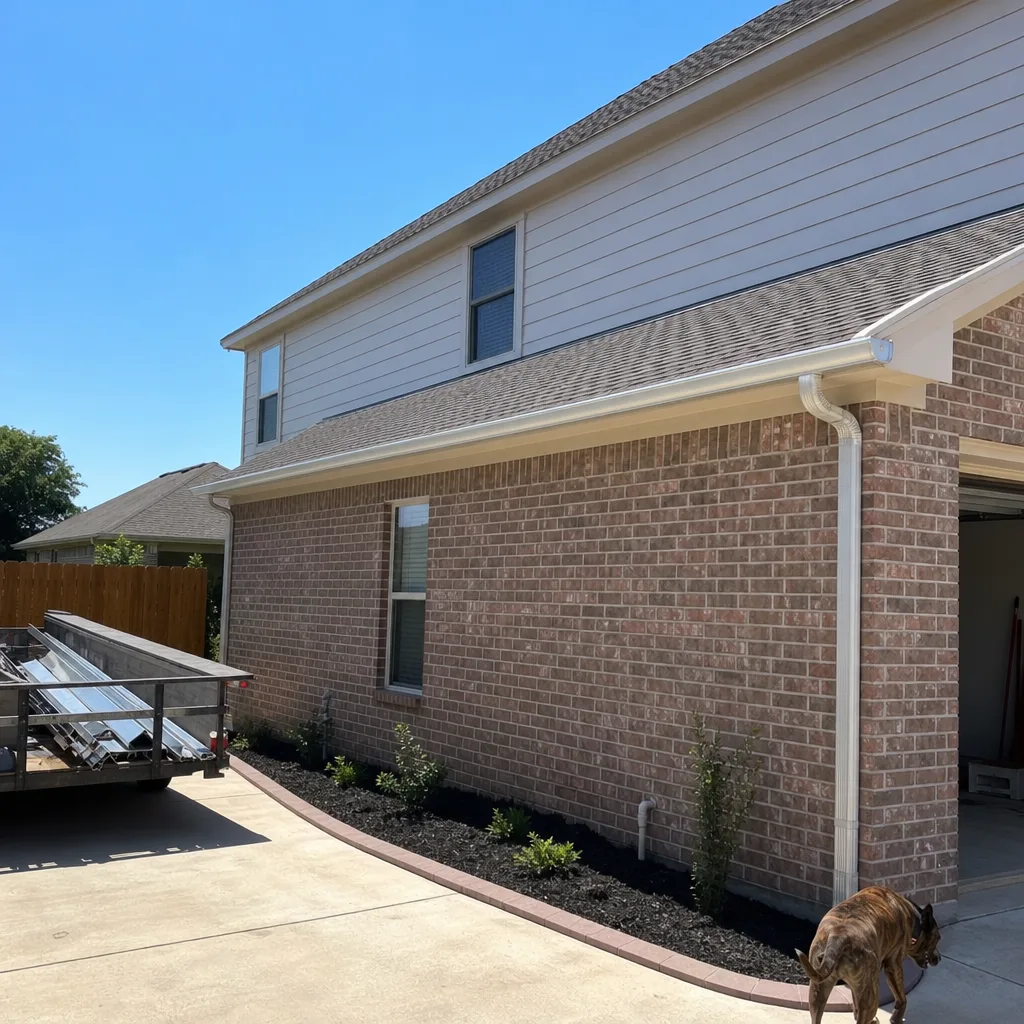
- Your roof sheds more water than a round trough can handle well. Big two-story homes with long, steep slopes send a lot of water to one edge, fast. You can size half-round up and add downspouts, but at some point you’re paying extra to match what a standard seamless gutter does on its own. If you don’t care much about the look, that money is better spent somewhere else on your house.
- Your budget is tight. Half-round usually costs more than a standard K-style system. The visible brackets, round downspouts, and extra joints all add parts and labor, and copper costs more still. If the real goal is getting water away from your slab before the next spring storm, a standard seamless gutter does that job for less.
- You need gutter guards. Lots of homes around Sunnyvale have big oaks and other shade trees over the roof, and guards make sense there. Most guards are built for the K-style shape. Fewer options fit a round trough, and the ones that do can be harder to find and fit. If guards are a must for you, settle that question before you settle on a gutter shape.
- You don’t want extra joints to watch. Half-round is often put together in sections, and every joint is a seam that has to stay sealed through hundred-degree summers and the odd freeze. If you’d rather not think about your gutters for years at a time, one long seamless run has fewer places that can leak.
- The style doesn’t fit your house. Half-round suits brick ranch homes and classic, simple rooflines. On a newer home with a modern, boxy look, the round shape can look out of place. Gutters are part of what people see from the street, so they should match the house you have.
- You’re selling soon. Buyers notice whether gutters work. Few will pay more for the shape. If you plan to list in the next year or two, put your money into clean, working gutters and a dry fascia, not a style upgrade.
There’s also the case where your HOA says no. If your neighborhood requires approval and the board won’t sign off on a style change, that settles it. Choosing a gutter that matches the rest of the street is the easier road.
None of these make half-round a bad product. They just mean the reasons to choose it are mostly about looks and fit, not performance. If performance and price matter most to you, standard seamless gutters are a smart, solid choice, and there’s nothing second-rate about them. If you’ve read this list and none of it describes your home, half-round is likely a good match, and the next step is sizing it right for your roof.
Ready when you are – get in touch today.
Schedule Your Free Inspection. Exteriors, Roofing & Outdoor Living is ready to help.
What To Expect From Inspection Through Installation
If half-round gutters sound right for your house, here’s how the job goes with ERO DFW. It runs from your first call to the last walk around the yard, with no pressure along the way.
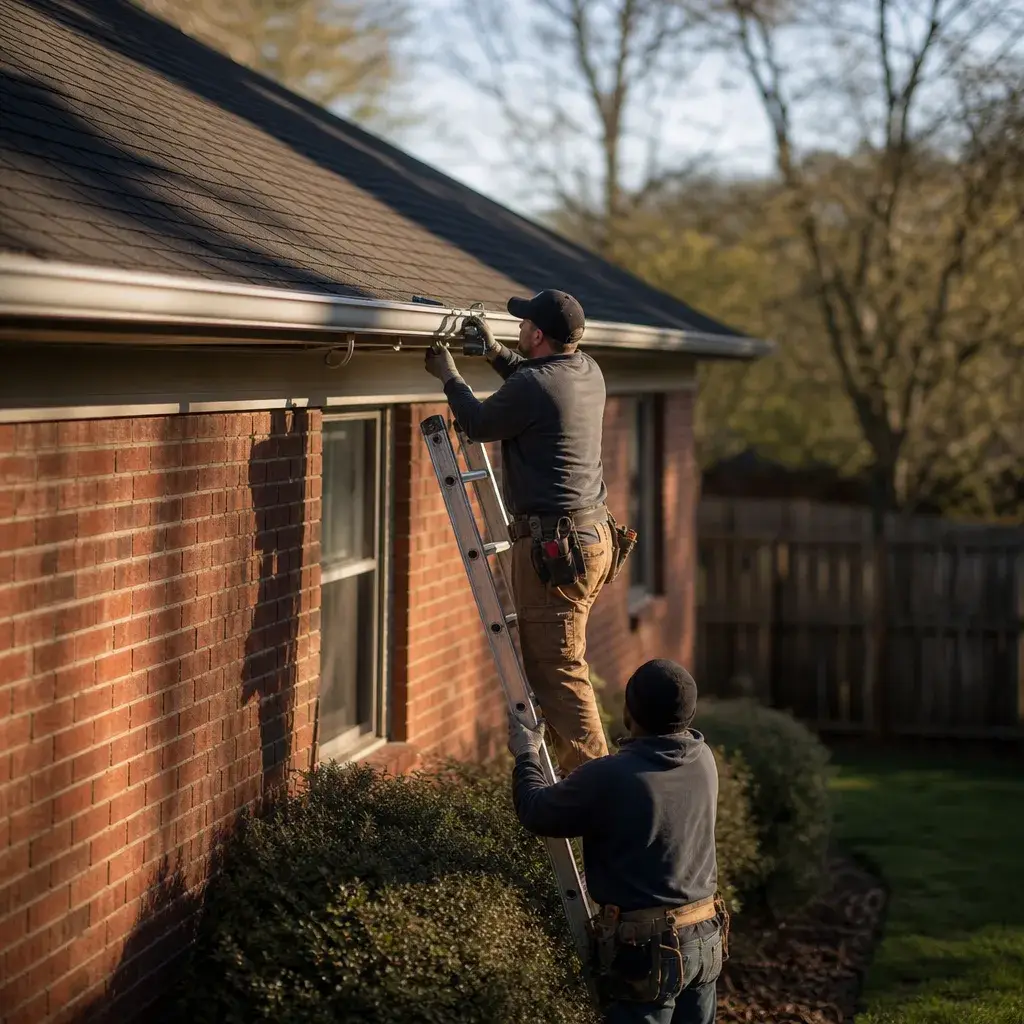
It starts when you ask for an inspection. We respond to every inspection request within 24 hours, and the inspection is free. One of our sales managers comes out and looks at your home. They’ll explain your options in plain English, including half-round or standard seamless, and aluminum, steel, or copper. Then you get an honest written estimate before you sign anything. If you’ve noticed soft fascia, stains on the brick, or a low spot where water pools by the slab, point it out. Those details shape the bid.
A good half-round estimate, from us or anyone else, should spell out these things clearly:
- The gutter width and material, so you know whether it’s been sized up to handle your roof’s water.
- The bracket type and where the brackets attach, either to the fascia or to the roof.
- How many downspouts you’ll get, their size, and where each one sends water away from your foundation.
- Whether the runs are seamless or built in sections, and how the joints get sealed.
- Any fascia or soffit repair, listed on its own line so you can see what it adds.
- Removal and haul-off of your old gutters.
If one bid comes in much lower than another, check these lines first. The gap usually hides in a smaller gutter, fewer downspouts, or rotted fascia that nobody priced in. When a bid is vague, ask. A contractor who wants your business for years won’t mind the questions.
Once you approve the work, a project manager takes it from there. They coordinate your materials and scheduling, handle permits or HOA approvals when your job needs them, and keep you updated so you’re not left guessing. If your neighborhood has an HOA, this is when the style change gets signed off, before any old gutter comes down.
On install day, our crew does the work, protects your property, and keeps the site clean. If the fascia needs repair, that board gets fixed before the new brackets go up, so your half-round is hanging on solid wood. Because we also handle fascia and soffit repair, you won’t have to bring in a second company for it.
When the crew is done, your project manager does a final walkthrough with you. Walk every run together. Look at where each downspout empties, and ask anything that’s on your mind. Then watch the next good North Texas rain. You should see water moving into the gutters and out the downspouts, not over the front edge or down the wall.
Financing is available if you’d rather spread out the cost. You’ll talk through that with your sales manager, the same person who wrote your estimate.
Watch Our Video
See How We Handle Half-Round Gutters in Sunnyvale, TX
Exteriors, Roofing & Outdoor Living — Serving Sunnyvale, TX and surrounding areas
Choosing Between Aluminum and Copper Half-Round Gutters
For most homes, aluminum is the practical pick. It’s lighter, costs far less, never rusts, and comes in painted colors that match your trim. Copper is the choice when you want the gutters to be a feature of the house, and when you plan to stay long enough to watch it age. Both carry water the same way. The difference is in cost, looks, and how each one holds up over time.

- Cost: Aluminum is the budget-friendly option. Copper costs a lot more for the metal, and it takes more skilled labor to install, so the gap between the two is big.
- Look: Aluminum comes painted, so it blends in with your trim or sits quietly against brick. Copper starts out bright and shiny, turns a deep brown, and over many years can take on a blue-green coat called patina. In our dry, sunny summers, that green shift tends to come slowly.
- Hail: Thin aluminum dents more easily in a spring hailstorm. Copper is heavier and holds its shape better, though a big enough stone will still mark it.
- Joints: Aluminum sections are joined with sealant, which needs a look every so often as it ages in the heat. Copper joints are usually soldered, meaning the metal is fused together, so they tend to stay tight much longer.
- Lifespan: Copper generally outlasts aluminum by a wide margin. If you’re staying in the house for the long haul, that matters. If you’re not, it may not.
Copper comes with a few things you should know up front. Water that runs off copper can leave blue-green streaks on light brick, stone, or a concrete drive where a downspout empties. Planning where each downspout lets out, and what it drains onto, keeps that from becoming a problem. Copper also can’t touch aluminum or regular steel, since the weaker metal corrodes when different metals meet. That means the brackets, straps, and screws all need to be copper or made to work with it. Any copper gutter has to stay clear of aluminum flashing or drip edge, the thin metal strip along your roof edge. Make sure any bid you get spells that out.
Here’s how that plays out on a real house. Say you own a red-brick ranch home in Sunnyvale with white trim, and you plan to retire in it. Copper half-round would warm up that brick nicely as it darkens, and it would likely outlast your next roof. Now say you’re in a two-story home with tan siding, and you expect to move in five or six years. White or bronze aluminum half-round gives you the classic shape for much less, and the next owner won’t value copper the way you might.
There’s no wrong answer between the two. If the shape is what drew you to half-round, aluminum gets you there. If the metal itself is the point, copper is worth a real look. When we come out, we can bring samples of both so you can hold them up against your brick and trim before you decide.
Frequently Asked Questions
Common questions about half-round gutters in Sunnyvale, TX
Can gutter guards be added to half-round gutters?
Yes, but your choices are more limited. Most gutter guards are designed to snap onto a K-style gutter’s flat top edge, not a rounded trough. If you have big shade trees dropping leaves and know you want guards, it’s worth settling that question before you settle on a gutter shape.
Will copper half-round gutters stain my brick or driveway?
They can, if a downspout isn’t planned well. As copper weathers, rain can carry blue-green streaks down onto light brick, stone, or concrete right where a downspout empties. Planning where each downspout drains, and what it lands on, keeps this from becoming a problem on your home.
Do half-round gutters need more maintenance than standard gutters?
They need about the same cleaning, but a closer eye on the joints. Half-round runs are often built in sections, so there are more seams than a single seamless K-style run. Those joints should get checked now and then, especially after a hot Sunnyvale summer or a hard freeze, to make sure the seal is still tight.
Ready to Get Started?
Schedule Your Free Inspection. Call (972) 288-9587 today.