
Gutter Repairs in Sunnyvale, TX: Repair or Replace?
Sagging, leaking and storm-damaged gutters repaired – with a free inspection that tells you honestly whether repair or replacement makes sense.
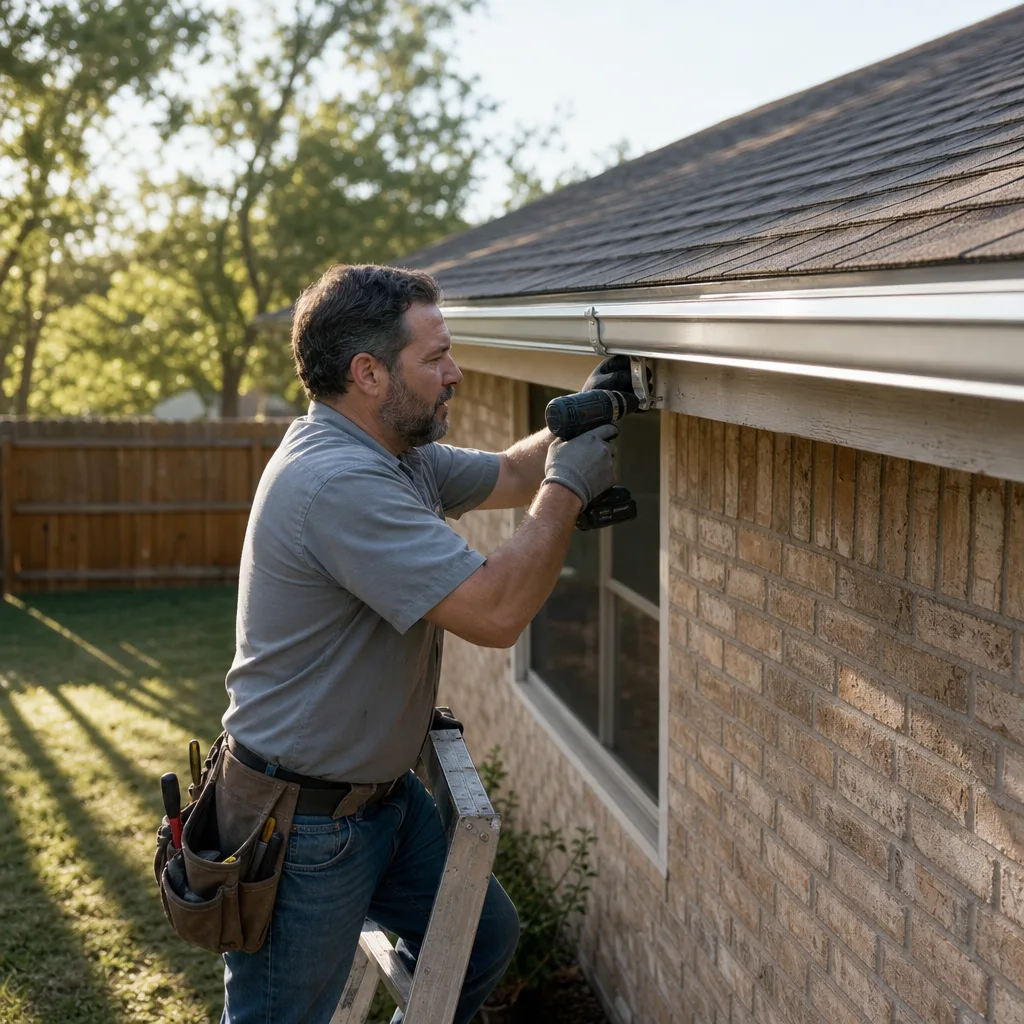
What’s Covered on This Page
- Repair or Replace: How to Tell the Difference
- Storm Damage Is the Leading Cause of Gutter Failure Here
- What a Thorough Gutter Repair Inspection Covers
- When Gutters Don’t Need Repair at All
- How Gutter Repair Pricing Works
- How long does a typical gutter repair take?
- Can I wait until after hail season to fix a damaged gutter?
- Do I need to be home during the gutter inspection?
Repair or Replace: How to Tell the Difference
Most gutter trouble is smaller than it looks. A gutter that’s pulling away at one end or spilling over a single corner can make you think the whole system is done. Often it’s one failed hanger, one bad seam, or one section that lost its slope. Fix that spot and the rest keeps doing its job.
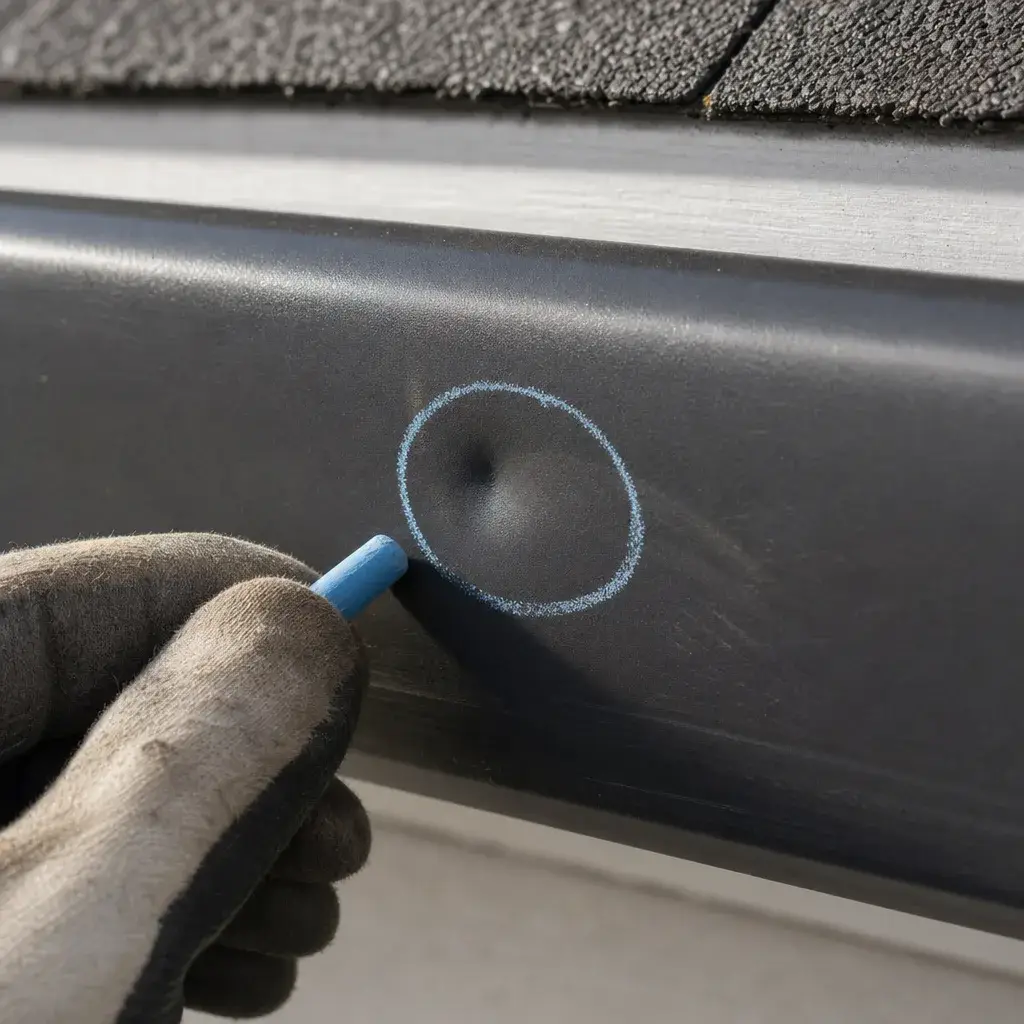
These are signs a repair is likely the right answer:
- One section sags or pulls away while the rest sits tight against the house.
- Water drips from a corner or a seam, but the gutter itself is solid.
- Hail left a few dents, and water still flows toward the downspout.
- A downspout came loose or split at an elbow.
- Water pools in one stretch because the slope shifted, not because the metal failed.
Replacement starts to make more sense when the trouble is spread out. Look for these:
- Rust spots or holes along much of the run, not just one corner.
- Leaks at seam after seam on an older sectional gutter, the kind built from short pieces joined together.
- The fascia, the board the gutter hangs on, is soft or rotted behind long stretches.
- You’ve fixed the same gutter more than once and it keeps coming back.
- Water shoots over the edge in every heavy storm, which can mean the gutter is too small for your roof.
That last one matters here. North Texas spring storms can drop a lot of rain fast, often with hail mixed in. A gutter that can’t keep up dumps water right along your slab foundation. In our clay soil, that water can wash out the dirt next to the house and leave the ground wet in one spot and dry in another. A repair won’t fix a gutter that’s simply too small for the job.
Age plays a part too. Many of the 1960s to 1980s ranch homes around Sunnyvale and the nearby older suburbs still carry sectional gutters, and every joint is a spot that can leak. If most of those joints are failing, new seamless gutters on that run are often the more sensible choice. A gutter formed in one piece has no joints along its length to leak. If the fascia behind is rotted, that board gets fixed first. That’s its own job, called fascia and soffit repair.
On cost, a repair depends on how many sections need work, how high the gutter sits, and whether the fascia needs attention too. A two-story eave takes more time and setup than a one-story ranch. A replacement depends on how many feet of gutter you have, the material, and how many downspouts you need. Ask anyone you’re thinking of hiring to show you the exact spots they want to repair or replace, and to explain why.
That’s how our team handles it. A sales manager looks at the whole run, explains your options in plain English, and gives you an honest written estimate. If a repair is all you need, that’s what we’ll tell you.
Storm Damage Is the Leading Cause of Gutter Failure Here
In Sunnyvale, gutters rarely wear out quietly. They get beaten up. Spring hail season runs roughly March through June, and straight-line winds can hit with the same storms. Your gutters sit right at the roof edge, so they take the first hit from all of it.
Here’s how each kind of storm does its damage:
- Hail dents the metal. Most gutters are thin aluminum, and a dent doesn’t just look bad. It can create a low spot where water sits, or crack a seam so it starts to drip.
- Wind pulls gutters off the fascia. A strong gust can get behind a gutter and pry it loose. Once a few hangers let go, the weight of the water does the rest.
- Heavy rain overloads them. A fast downpour can push more water into a gutter than it can carry. If leaves or roof grit are blocking the downspout, it spills over the front.
- Hail fills them with shingle granules. Those are the small, sand-like bits on top of your shingles. Hail knocks them loose, and they wash into the gutter and clog it.
- Ice adds weight. During an ice storm, ice can build up inside the gutter and along the edge. That extra weight can bend hangers and pull a run out of line.
After a storm passes, take a slow walk around your house. You don’t need a ladder. Look for gutters that sag or sit crooked against the fascia, dents you can see from the yard, and downspouts that came apart at the joints. Check the ground under each downspout, too. A pile of dark grit there can mean your shingles lost granules. If water poured over the edge during the storm instead of going down the spout, make a note of where it happened.
There’s another reason to look closely. Gutters often show hail damage before you can spot it on the roof. Dents in soft metal make it easier to judge how hard the hail hit. If your gutters took a beating, your roof may have too. That’s why our team checks both on a storm visit.
If the damage came from a storm, it may be part of a homeowners insurance claim along with your roof. Every policy is different, and no one can promise what your insurer will approve. What we can do is walk you through the claim, document what we find, and meet the adjuster when it applies. One thing is simple under Texas law: you pay your deductible. Be careful with anyone who offers to cover it or waive it.
That brings up the knock on the door. After a big storm, crews from out of town tend to show up and promise quick gutter work. Before you sign anything, ask where their office is and who you’ll call if a seam starts leaking next spring. ERO DFW is headquartered right here in Sunnyvale on the U.S. 80 frontage road, and we respond to every inspection request within 24 hours.
What a Thorough Gutter Repair Inspection Covers
A good gutter inspection doesn’t stop at the spot that’s dripping. The problem you can see is often caused by something a few feet away, or by something behind the gutter. If only the leak gets fixed, you may be calling someone back next spring. Here’s what a careful look should cover, so you know what to expect and what to ask.
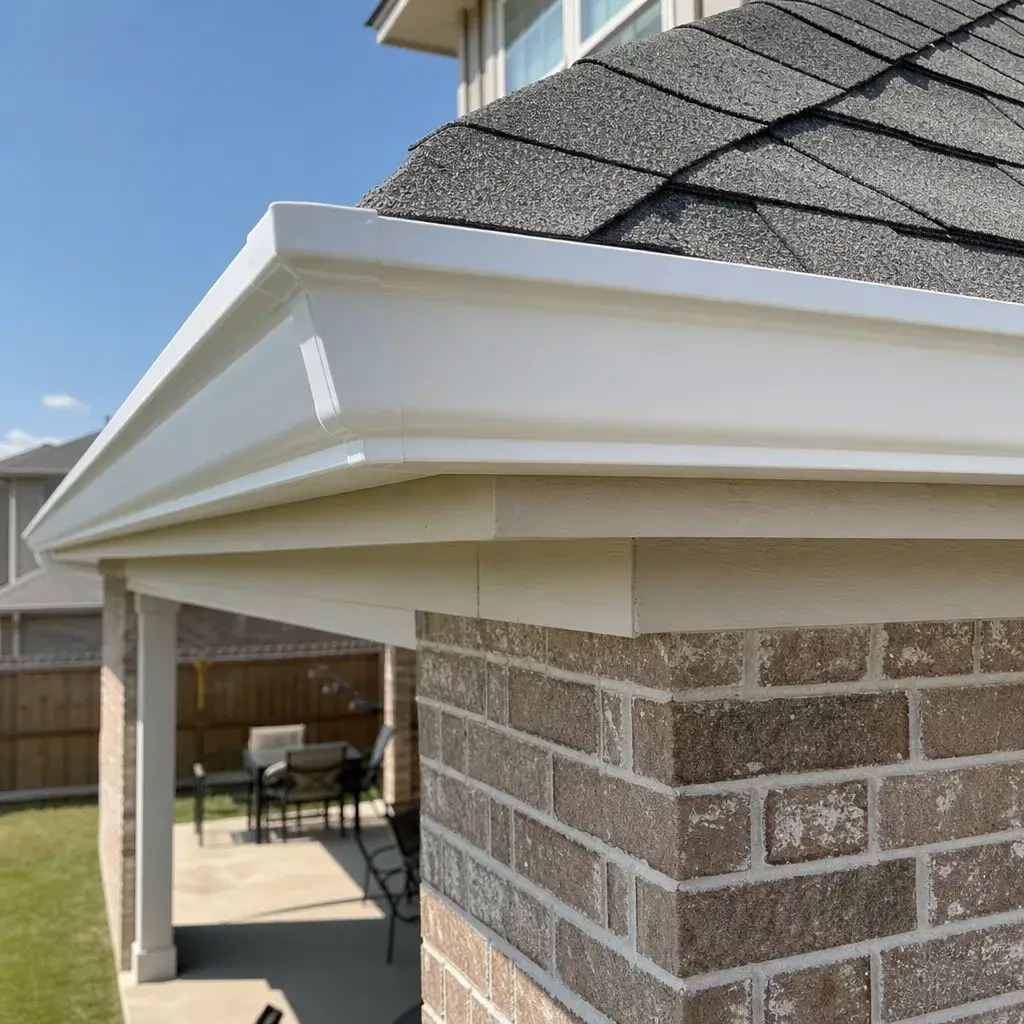
- Hangers and fasteners. These are the brackets and screws that hold the gutter to the house. A thorough check looks for loose, bent, or missing ones along the whole run, not just where it sags. Hangers spaced too far apart can let a full gutter bow between them.
- Slope. A gutter should tilt slightly toward the downspout so water keeps moving. If one stretch has gone flat or tilts the wrong way, water sits there. That standing water speeds up rust and adds weight.
- Seams, corners, and end caps. These are the joints where pieces meet and where the gutter closes off at each end. Sealant dries out and cracks in our summer heat, so these spots get a close look for gaps and old patches.
- Downspouts and elbows. The vertical pipes and their bends should be firmly attached, open inside, and free of crushed or split sections. A clogged elbow can back up the whole gutter above it.
- Where the water ends up. The inspection should follow each downspout to the ground. Water that drops right at the slab instead of being carried away can feed the clay soil problems covered above.
- The fascia and roof edge. That’s the board behind the gutter and the strip of roof just above it. Soft wood, peeling paint, or water stains there mean water has been getting behind the gutter. That changes what the repair needs to include.
- Gutter size and downspout count. If water spills over in every hard rain, the question is whether the gutter and downspouts can handle the amount of roof draining into them.
Height matters too. A one-story brick ranch lets someone see most of the run from a short ladder. On a larger two-story home, the kind found in many newer subdivisions around Sunnyvale and the rest of the Metroplex, the upper gutters are harder to see from the yard. A careful inspector gets eyes on those runs instead of guessing from the driveway.
When the inspection is done, you should walk away knowing three things. What’s wrong. Where it is. What it will take to fix it. Ask to see the problem spots yourself, in photos or in person. A repair you understand is a repair you can trust.
That’s the standard we hold ourselves to. ERO DFW is a family-owned, licensed, bonded, and insured company headquartered right here in Sunnyvale. Our inspections are free, and you’ll get a written estimate before you sign anything. If your gutters only need a few hangers and a resealed corner, that’s what you’ll hear from us. Financing is available if a bigger job makes sense.
Need help with your gutter repair project?
Schedule Your Free Inspection. Exteriors, Roofing & Outdoor Living is ready to help.
When Gutters Don’t Need Repair at All
Plenty of gutter trouble isn’t broken gutter trouble. Before you pay anyone for a repair, including us, rule out these common cases. Some take ten minutes and cost you nothing.
The gutter is just clogged. A gutter that spills over the front in every rain is often packed with leaves, seed pods, or roof grit, not damaged. Clean it out, then run a garden hose into it. If the water flows to the downspout and drains out the bottom, your gutter is fine. If the downspout backs up, the clog is usually in the elbow at the top or bottom. Flushing it with the hose from below often clears it. If you have big trees over the house, plan to clean the gutters after they drop their leaves in fall and again after spring storms.
The downspout extension got knocked loose. If water is pooling at your slab, walk to the bottom of each downspout first. A mower, a kid’s bike, or a hard rain can kick the extension or splash block out of place. Push it back on or set the splash block so it points away from the house. That one fix handles a lot of the wet spots people blame on their gutters.
The dent is only cosmetic. A small hail dent on the face of the gutter doesn’t always matter. If water still runs to the downspout and nothing drips at that spot, you can live with it. If the storm was big enough to dent your gutters, it may be worth having the roof looked at. But the dent alone isn’t a reason to fix the gutter.
It overflowed once in a freak storm. Some North Texas downpours drop more rain in a few minutes than almost any home gutter can carry. One overflow during a storm like that isn’t a failure. It only points to an undersized gutter if it happens in normal heavy rains, too.
You see granules after a new roof. New shingles shed loose granules for a while after they go on. A light layer of grit in the gutters during the first few months is normal. A heavy load after a hailstorm on an older roof is a different story.
Some small fixes you can handle yourself if you’re comfortable on a short ladder on a one-story home:
- Tighten a loose screw on a hanger that’s backed out a little.
- Put a little gutter sealant on a single dripping seam or end cap after it’s clean and dry.
- Reattach a downspout section that slipped apart at a joint.
Leave the two-story eaves, the long sagging runs, and anything that involves soft wood behind the gutter to someone with the right ladder and setup. No small fix is worth a fall.
If you’ve cleaned the gutter, reset the extensions, and it still leaks, sags, or spills in a normal rain, then it’s time for a real look. Until then, you may not need anyone at all.
Watch Our Video
See How We Handle Gutter Repairs in Sunnyvale, TX
Exteriors, Roofing & Outdoor Living — Serving Sunnyvale, TX and surrounding areas
How Gutter Repair Pricing Works
Gutter repair isn’t priced off a menu. Two contractors can look at the same sagging run and write up the price in very different ways. Once you know which kind of bid you’re holding, it’s much easier to compare them side by side.
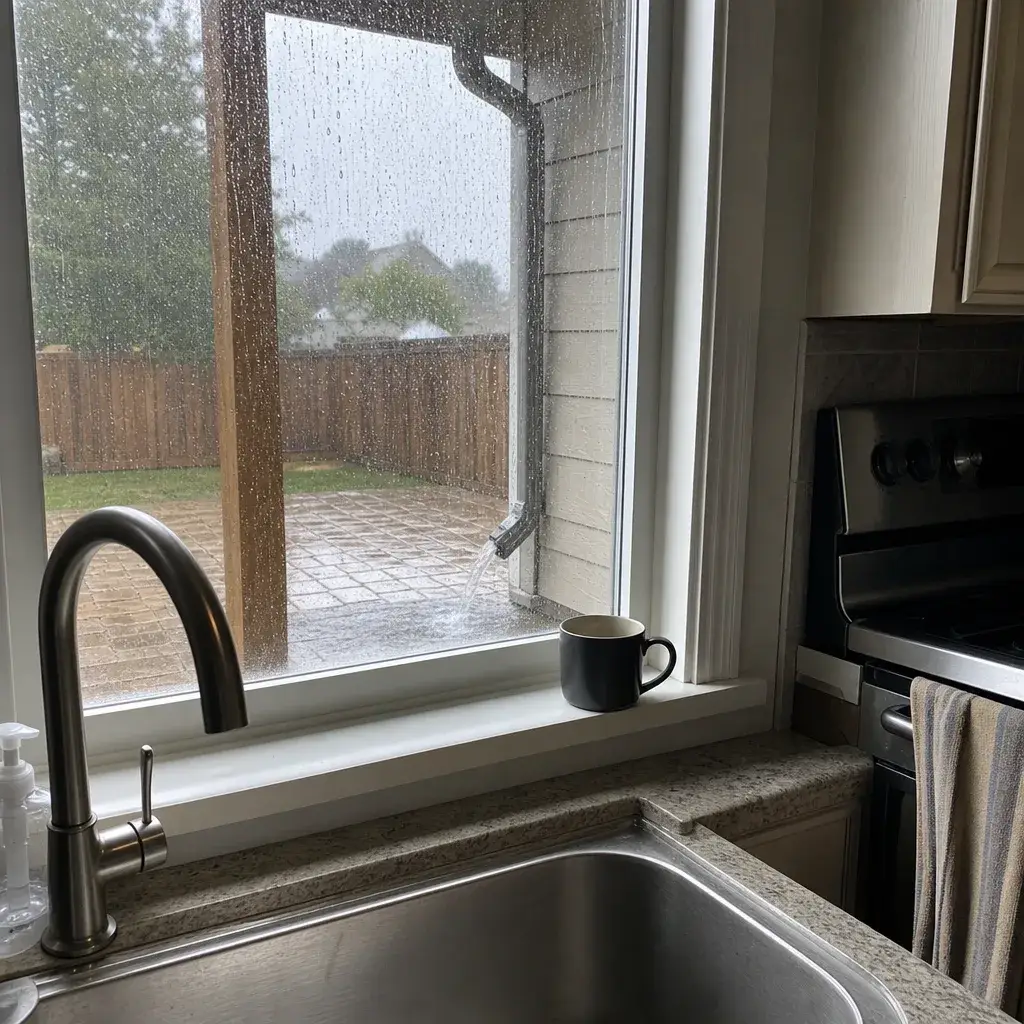
Most gutter repair bids follow one of three models:
- By the job. You get one price for a defined fix, like rehanging a sagging run and resealing two corners. This is the easiest kind to compare, as long as the bid spells out exactly what’s included.
- By the foot. This is common when a stretch of gutter gets rehung or swapped out. Ask whether the price covers hangers, end caps, and the outlet where the downspout connects, or only the gutter itself.
- By the part, plus labor. Some bids list every hanger, elbow, and end cap on its own line. That gives you a lot of detail, but read the labor line just as closely as the parts.
Many contractors also have a minimum charge for small calls. Getting a crew, a truck, and ladders to your house costs about the same whether they reseal one seam or five. If you’ve got a few small problems, it usually makes sense to have them all handled on one visit.
A few things can move the price beyond the basics of size and height:
- Matching what you have. A new piece has to match your gutter’s shape, color, and metal, or it won’t line up and water will find the gap. Copper and half-round gutters, the rounded style, use fewer stock parts and usually cost more to repair than standard aluminum.
- What’s hiding behind the gutter. Sometimes rotted wood only shows up once the gutter comes down. A good estimate tells you up front how that will be handled and priced, so you’re not surprised halfway through the job.
- Doing it alongside other work. If your roof needs repair too, doing both on the same visit can share the setup instead of paying for it twice.
If a storm caused the damage, the gutter repair may be part of your homeowners claim along with the roof. When a claim is approved, the insurer’s estimate guides what gets paid, and you pay your deductible, as covered above. Nobody can promise what a claim will cover. But a contractor who documents the gutter damage clearly gives your adjuster the facts to work from.
Before you agree to any price, ask these questions:
- Is this a flat price, a per-foot price, or parts plus labor?
- What exactly is included, and what isn’t?
- What happens to the price if you find rotted wood?
- Will the new pieces match my gutter’s shape and color?
- Can I get all of this in writing before work starts?
Watch out for a bid with no details and a number far below everyone else’s. A price that only means something after the ladder goes up isn’t really a price.
At ERO DFW, the inspection is free and you’ll get a written estimate before you sign anything. It shows what we found, where we found it, and what it will take to fix it. If the job turns out bigger than a few hangers and a seam, financing is available. We’re a family-owned team headquartered on the U.S. 80 frontage road in Sunnyvale, so we’ll still be here after the storm.
Frequently Asked Questions
Common questions about gutter repairs in Sunnyvale, TX
How long does a typical gutter repair take?
Most single-spot repairs, like rehanging a sagging section or resealing a corner, can be finished in one visit. A job gets longer if rotted fascia turns up behind the gutter once it’s taken down, or if several sections across the house need attention. That’s why a clear written estimate before work starts matters, so you know what the visit will involve.
Can I wait until after hail season to fix a damaged gutter?
You can, but waiting lets small problems grow. A dented or loose gutter that spills water at one spot can keep washing out soil next to your slab in our clay soil, and spring storms between March and June often bring the next round of hail and wind before you’d get to it. If a storm already caused the damage, having it documented sooner also helps if you file a homeowners insurance claim.
Do I need to be home during the gutter inspection?
You don’t have to be, since most of the inspection happens outside at the roofline and ground level. It helps to be there at the start and end, though, so you can see any problem spots in person or in photos before you get the written estimate. That way you know exactly what’s being recommended and why.
Ready to Get Started?
Schedule Your Free Inspection. Call (972) 288-9587 today.