
Emergency Roof Repair & Tarping in Sunnyvale, TX
Storm damage tarped to stop water getting in – then a free inspection and a clear plan for the permanent repair.
What’s Covered on This Page
- Deciding If Your Roof Damage Is a True Emergency
- What Happens During an Emergency Tarping Visit
- Why Spring Storms in North Texas Drive Emergency Roof Calls
- How Emergency Tarping Fits Into an Insurance Claim
- When You Don’t Need an Emergency Roof Call
- How long will a tarp hold up on my roof before I need the real repair?
- Can I just put bricks or sandbags on a tarp myself to save time?
- Will the crew that tarps my roof be the same one who does my permanent repair?
- What if I find roof damage but it’s not raining and nothing is leaking yet?
Deciding If Your Roof Damage Is a True Emergency
After a storm rolls through Sunnyvale, it’s hard to tell what’s urgent and what just looks bad. Here’s the simple test we’d give you in your driveway. Emergency roof repair and tarping is for one job: stopping water that’s coming in now, or that will come in the next time it rains. If that isn’t happening, you probably have time to slow down and get a proper look.
You likely need emergency work if you see any of these:
- Water dripping from a ceiling, light fixture, or around a vent or chimney inside your home.
- A ceiling stain that’s growing, or drywall that’s soft, bulging, or sagging.
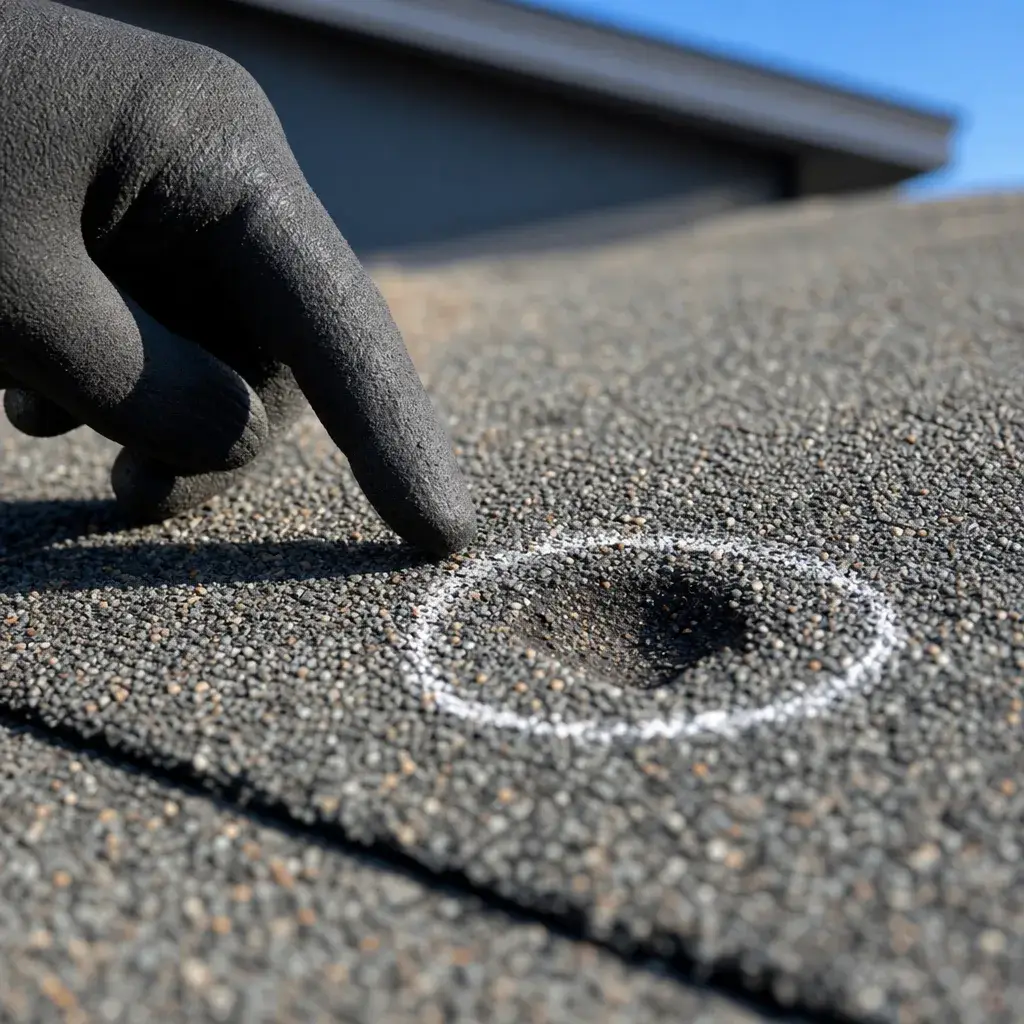
- Bare wood showing on the roof where shingles tore off. That wood is the decking, the layer the shingles are nailed to, and it isn’t built to stay dry on its own.
- A tree limb through the roof, or a hole you can see from the yard.
- Large sections of shingles or ridge caps gone after straight-line winds, with more rain in the forecast.
That last one matters here. North Texas hail season runs roughly March through June, and spring storms often come in waves. A roof that got opened up Tuesday night can take on a lot of water by Thursday. A tarp put on right buys you time. It keeps your attic insulation, drywall, and belongings dry while you sort out the permanent fix and the insurance side calmly.
Now the honest part. A lot of storm damage is real but not urgent. You probably don’t need emergency work if:
- You see hail dents on gutters, vents, or the siding at your gables, but nothing is leaking inside.
- A shingle or two is creased or lifted, and the layer underneath is still covered.
- You find granules, the sandy coating on shingles, in your gutters or at the bottom of a downspout.
- An older stain on the ceiling hasn’t changed since the last storm.
Those still deserve a look, because hail damage you can’t see from the ground can shorten a roof’s life. But they don’t call for a tarp tonight, and anyone telling you otherwise from your front porch is selling, not helping. Schedule a free inspection instead. We respond to every inspection request within 24 hours, and you’ll get a written estimate before you sign anything.
Whichever group you’re in, take dated photos of the damage inside and out from somewhere safe, like the ground, a window, or the attic hatch. Don’t climb onto a wet or storm-damaged roof to check. Photos help your insurance claim, and they help us tell you over the phone whether you need a tarp now or an inspection this week.
What Happens During an Emergency Tarping Visit
An emergency tarp visit has one goal: stop the water today so you can make the big decisions later, calmly. A good visit is quick, careful, and done in a set order. Here’s what it should look like at your house.
It starts on the phone. You tell us where water is showing up inside and what you can see from the yard. The photos you took from the ground or the attic hatch help a lot here, because they show the crew what to bring before anyone arrives.
The crew should look before anyone climbs. Water doesn’t always drip right under the hole. It can run along the decking or a rafter and come through the ceiling several feet away. A careful look from the ground and the attic finds the real opening, so the tarp goes where the water is getting in.
On the roof, a proper tarp job usually goes like this:
- Loose debris, torn shingle pieces, and small limbs come off first, so nothing sharp sits under the tarp and wears through it.
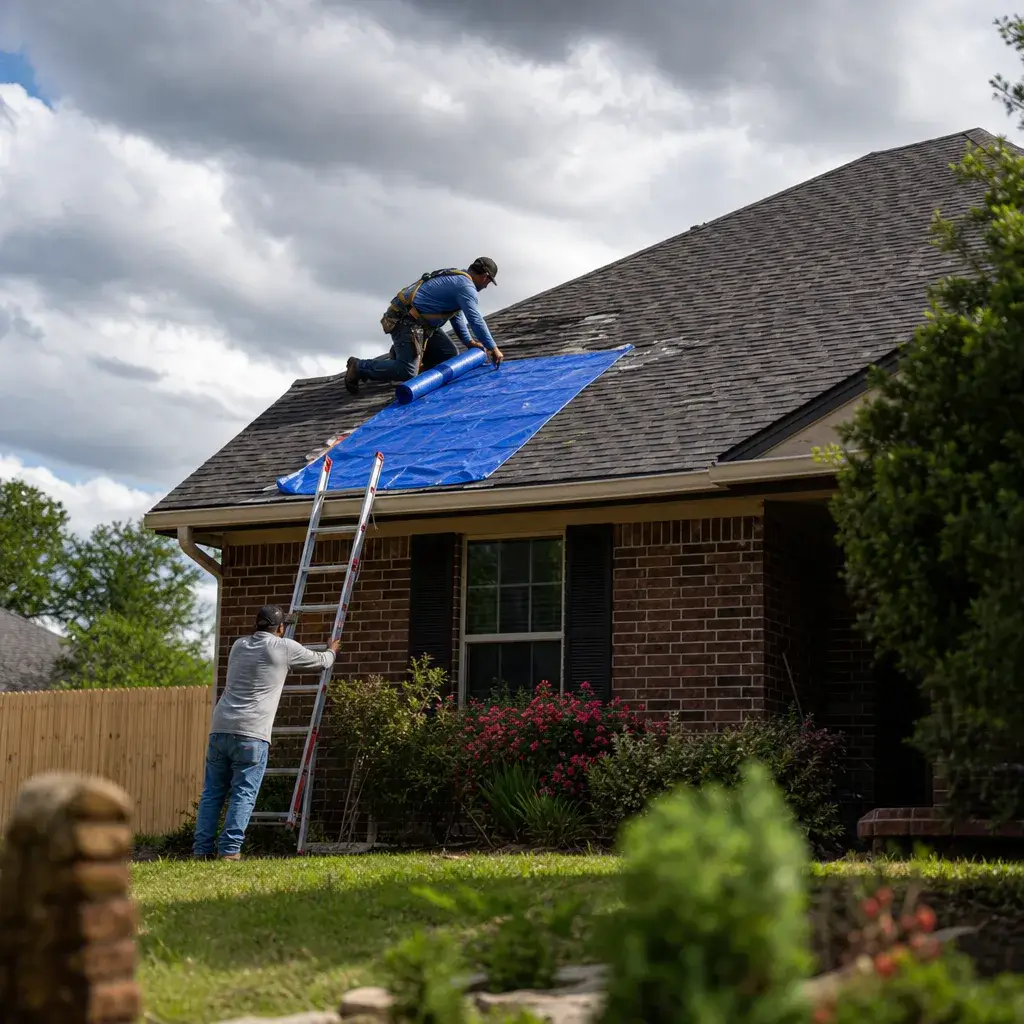
- The tarp is sized well past the damage. On most roofs it runs up and over the ridge, the peak line at the top, so rain sheds over the tarp instead of sneaking under its top edge.
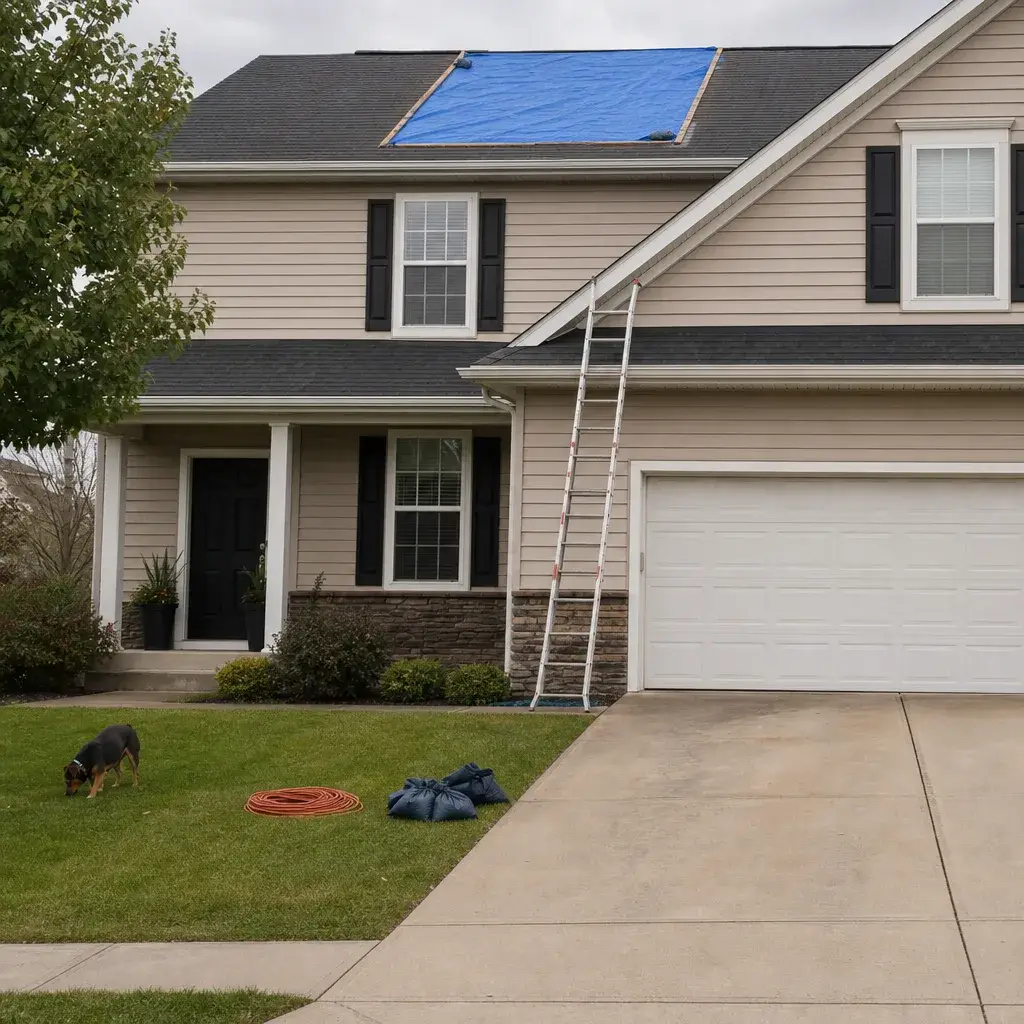
- The tarp is fastened down with wood strips screwed through its edges into the roof. Bricks, sandbags, and a few loose nails don’t hold up when straight-line winds come through North Texas, and a tarp that flaps loose can tear off more shingles.
- The edges are kept tight and flat so wind can’t get underneath and lift the tarp.
Access matters too. A one-story brick ranch home is a different job from a steep two-story house in a newer subdivision, and a wet, storm-damaged roof is no place to rush. That’s one reason to use a crew that’s licensed, bonded, and insured. If someone gets hurt on your roof, you don’t want to be the one asking whose insurance pays.
Before the crew leaves, they should check inside that the dripping has stopped. Wet attic insulation and soft drywall still need a look later, because soaked material can keep holding water after the leak stops. Our crews protect your property while they work and clean up the site when they’re done, so you aren’t picking roofing scraps out of your flower beds.
A tarp is a temporary fix, not a repair. North Texas sun breaks down tarp material, and spring storms keep coming, so plan on the permanent repair soon. Keep the receipt and any notes on what was covered. Your insurer will want to see what you spent to protect your home, and if you file a claim, ERO DFW’s project manager can meet the adjuster with you.
Why Spring Storms in North Texas Drive Emergency Roof Calls
A roof can look fine on Monday and leak on Tuesday night. That’s because a North Texas spring storm hits your roof three ways at once. Any one of them alone might be something your roof can shrug off. Together, they can open a weak spot and test it with heavy rain in the same hour.
- Hail. Big stones can crack shingles, knock off the protective granules, and bruise the mat underneath. That kind of damage doesn’t always leak right away. A hit near a vent, pipe boot, or skylight is different, because it can open a path for water the same night.
- Straight-line winds. Strong, steady gusts can lift shingle edges and break the seal strip, the line of tar that glues each shingle to the one below it. They can also peel off ridge caps along the peak. Once one shingle lets go, the wind has an easier time grabbing the next one.
- Wind-driven rain. When rain blows sideways, it gets pushed up and under flashing. Flashing is the metal that seals the joints where your roof meets a wall, chimney, or vent. A roof that stays dry in a calm shower can still leak in a storm because of this.
Timing makes it worse. Spring storms tend to roll in one after another. A roof that got opened up by one storm gets tested by the next before anyone can schedule a full repair. That gap between storms is exactly what a tarp is for. It keeps the water out while you get a real inspection, a written estimate, and your insurance questions answered without rushing.
Your type of house matters too. Around Sunnyvale, you’ll find one-story brick ranch homes with siding up at the gables, and larger two-story homes in newer subdivisions. On an older ranch roof, shingles that have baked through many Texas summers can turn brittle, so straight-line winds may tear off more of them at once. On a two-story home, the roof usually has more valleys and more spots where the roof runs into a wall. Each of those spots has flashing, and each one is another place for sideways rain to sneak in.
Then there’s what shows up after the storm. When a big line of storms crosses Dallas and Kaufman counties along U.S. 80, trucks from out of town are often knocking on doors within a day or two. Some of those crews do decent work. Others are gone by summer, and with them goes anyone you could call if the tarp blows loose or the repair fails. An emergency is when you’re most likely to get rushed into a decision, so it’s worth asking a simple question before anyone climbs your roof: will this company still be here next year?
ERO DFW is family-owned since 2019 and headquartered right here in Sunnyvale, with ten local offices across the Metroplex. We’re still here after the storm and here for the warranty call. Our work is backed in writing with a one-year workmanship warranty.
One practical point: after a major storm, a lot of neighbors call roofers at the same time. If water is already coming in, don’t wait for the next round of rain to make the call. Reach out while the roof can still be covered before more storms move through.
Not sure what your emergency roof repair project needs? Ask us.
Schedule Your Free Inspection. Exteriors, Roofing & Outdoor Living is ready to help.
How Emergency Tarping Fits Into an Insurance Claim
If water is coming in, stop the water first. Then call your insurance company. A tarp doesn’t hurt your claim. In most cases it helps, because it shows you acted to protect your home.
Most homeowners policies ask you to take reasonable steps to keep damage from getting worse after a storm. Waiting for an adjuster while rain soaks your attic insulation and ceiling can work against you. The water damage that builds up over those days may not be treated the same as the storm damage that started it. Read your policy or ask your insurer how they handle this, but the general rule is simple: protect the house, then report the claim.
Here’s how the pieces usually line up for a Sunnyvale homeowner after a spring storm:
- Take your dated photos from the ground, a window, or the attic hatch before anything is covered. Once the tarp goes on, the adjuster can’t see the damage under it the same way you can in those first pictures.
- Get the tarp on to stop the leak.
- Call your insurer to report the claim and write down your claim number. Ask whether your policy covers emergency tarping and what paperwork they want.
- Keep the tarp invoice separate from any estimate for the permanent repair. Two clear pieces of paper are easier for an adjuster to review than one blended bill.
- Schedule a full inspection. The tarp has bought you time, so use it to get a written estimate for the real repair instead of rushing.
- Meet the adjuster. When the adjuster comes out, ERO DFW’s project manager can be there to point out the damage and answer roof questions, so you aren’t trying to speak roofer on your own.
We can’t tell you what your insurer will approve. Nobody honest can. That depends on your policy, your coverage, and what the adjuster finds. What we can do is walk you through the claim one step at a time, so you know what’s happening and what comes next.
It’s also worth knowing that the claim and the tarp are two separate decisions. You don’t have to pick your permanent roofer on the night of the leak, and the crew that tarped your roof doesn’t automatically get the big job. If the claim is approved, you can take the time to compare written estimates and choose the company you trust.
If money is tight while you wait on the insurance side, financing is available for the permanent work. That way a slow claim doesn’t leave a tarp sitting on your roof through another round of storms.
Watch Our Video
See How We Handle Emergency Roof Repair & Tarping in Sunnyvale, TX
Exteriors, Roofing & Outdoor Living — Serving Sunnyvale, TX and surrounding areas
When You Don’t Need an Emergency Roof Call
Not every drip is a roof problem, and not every roof problem needs someone on it tonight. Here are the times we’d tell you to skip the emergency call. That’s true even when the first section’s quick test left you unsure.
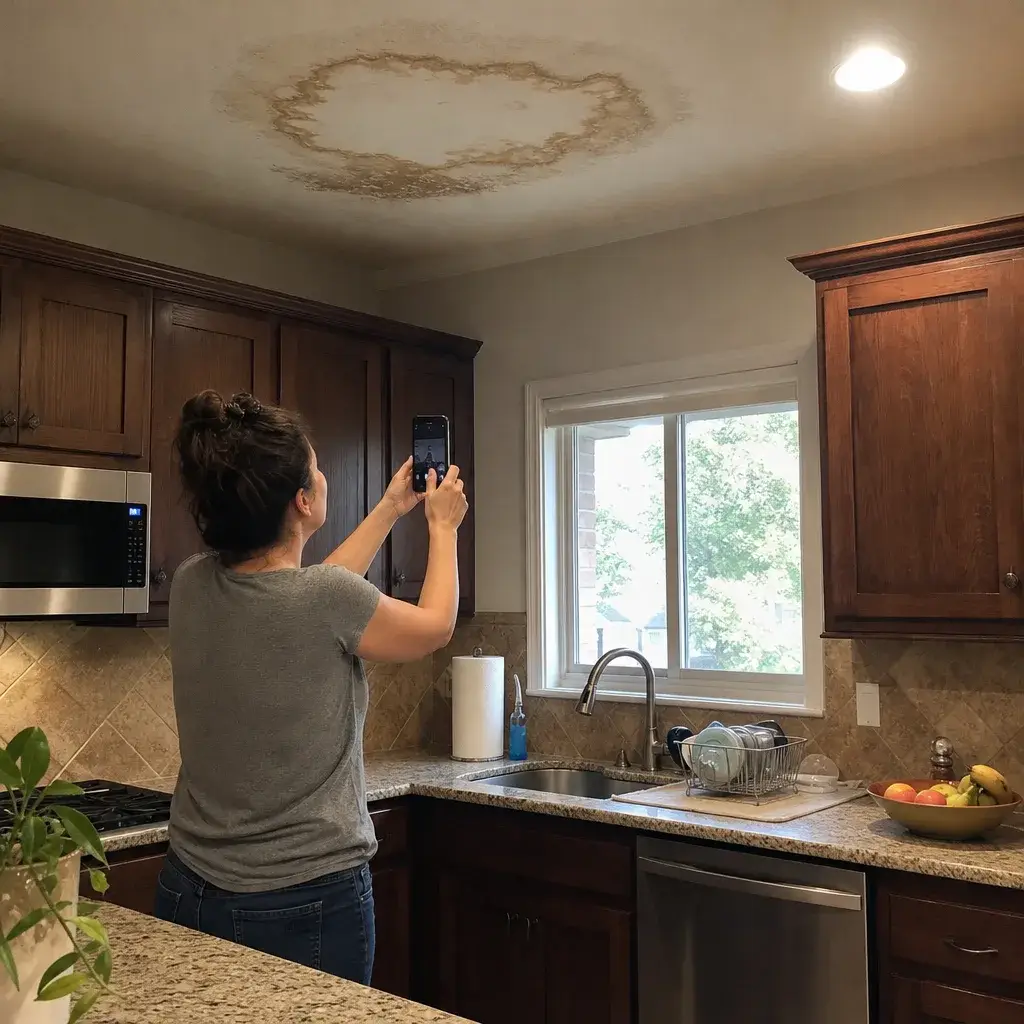
The water shows up on a dry day. Roof leaks follow rain. If a ceiling spot gets wet during a clear, hot week in July, the roof probably isn’t the cause. Water in an attic or ceiling on a sunny day often comes from a plumbing line or from equipment sitting up in the attic. That’s a job for a plumber or another trade, not a roofer, and a tarp won’t fix it.
The water comes in at a window or along a wall. Sideways rain can push water past old window seals, cracked caulk, or gaps where brick meets siding at the gables. If the wet spot is on the wall under a window and not on the ceiling, start there. Window replacement or siding repair may be the real fix, and nothing on your roof needs covering.
Your gutters overflowed. Gutters packed with leaves or pulled loose from the fascia can dump water down the side of the house in a heavy storm. That looks alarming, but it’s usually a gutter repair. It becomes urgent only if water is getting inside.
You already knew the roof was getting old. Maybe your roof is fifteen to twenty years old. Maybe a home inspection flagged it, or an insurance letter mentioned its condition. With no leak, that’s a planning decision, not an emergency. You’ll make a better choice comparing materials and written estimates over a few weeks than you will at night with a flashlight.
A flat roof has standing water but nothing inside. Ponding on a low-slope roof over a garage, porch, or business is worth fixing. Water that sits for days wears the surface down faster. If the ceiling below is dry, though, schedule a regular look instead of a rush job.
The leak was small and it stopped. Say you had one drip during a hard, wind-driven rain, and it quit when the storm passed. That’s real, and you’ll want the source found before the next storm. It still isn’t a tarp-tonight situation when the forecast is dry for the week. Put a bucket under the spot, move anything you care about out of the way, and keep your photos.
There’s one exception to all of these. If the forecast shows another line of spring storms coming through in the next day or two, the clock changes. A small, known opening heading into more rain is worth covering. A mystery drip on a dry afternoon isn’t.
If none of this sounds like your house, you’re in the right place. If it does, you’ve just saved yourself a call you didn’t need to make. Find the right fix at your own pace.
Frequently Asked Questions
Common questions about emergency roof repair and tarping in Sunnyvale, TX
How long will a tarp hold up on my roof before I need the real repair?
A tarp is only a short-term fix, not a lasting solution. North Texas sun breaks tarp material down fast, and spring storms keep rolling through, so plan to schedule your permanent repair soon after the tarp goes on. The tarp just buys you time to get a written estimate and sort out your insurance without rushing.
Can I just put bricks or sandbags on a tarp myself to save time?
We don’t recommend it, because loose weights like bricks or sandbags don’t hold up in straight-line winds common here in North Texas. A tarp that isn’t screwed down through wood strips can flap loose and tear off more shingles, making the damage worse than before. It’s safer to have a crew fasten it properly the first time.
Will the crew that tarps my roof be the same one who does my permanent repair?
Not automatically, and that’s by design. The tarp call and the permanent repair are two separate decisions, so you can take time after the tarp is on to compare written estimates and pick the company you trust for the full job.
What if I find roof damage but it’s not raining and nothing is leaking yet?
If there’s no active leak and no exposed wood, you likely have time for a scheduled inspection instead of an emergency tarp. Things like hail dents on gutters or a shingle or two lifted with the layer underneath still covered can usually wait for a free inspection rather than a rush call.
Ready to Get Started?
Schedule Your Free Inspection. Call (972) 288-9587 today.