
Storm & Hail Damage Repair in Sunnyvale, TX
Hail and wind damage found, documented and repaired – a free inspection first, then help with your insurance claim.
What’s Covered on This Page
- Signs Your Roof Needs a Storm Damage Inspection
- Cosmetic Damage vs. Functional Damage: When Repair Is Needed
- How the Insurance Claim Process Works After a Storm
- Texas Law on Insurance Deductibles and Why That Matters Here
- What to Expect From a Free Inspection and Written Estimate
- How long do I have to file a storm damage claim after a hailstorm hits Sunnyvale?
- Will my homeowners insurance rate go up if I file a hail damage claim?
- Can I choose my own roofer instead of using the one my insurance company recommends?
Signs Your Roof Needs a Storm Damage Inspection
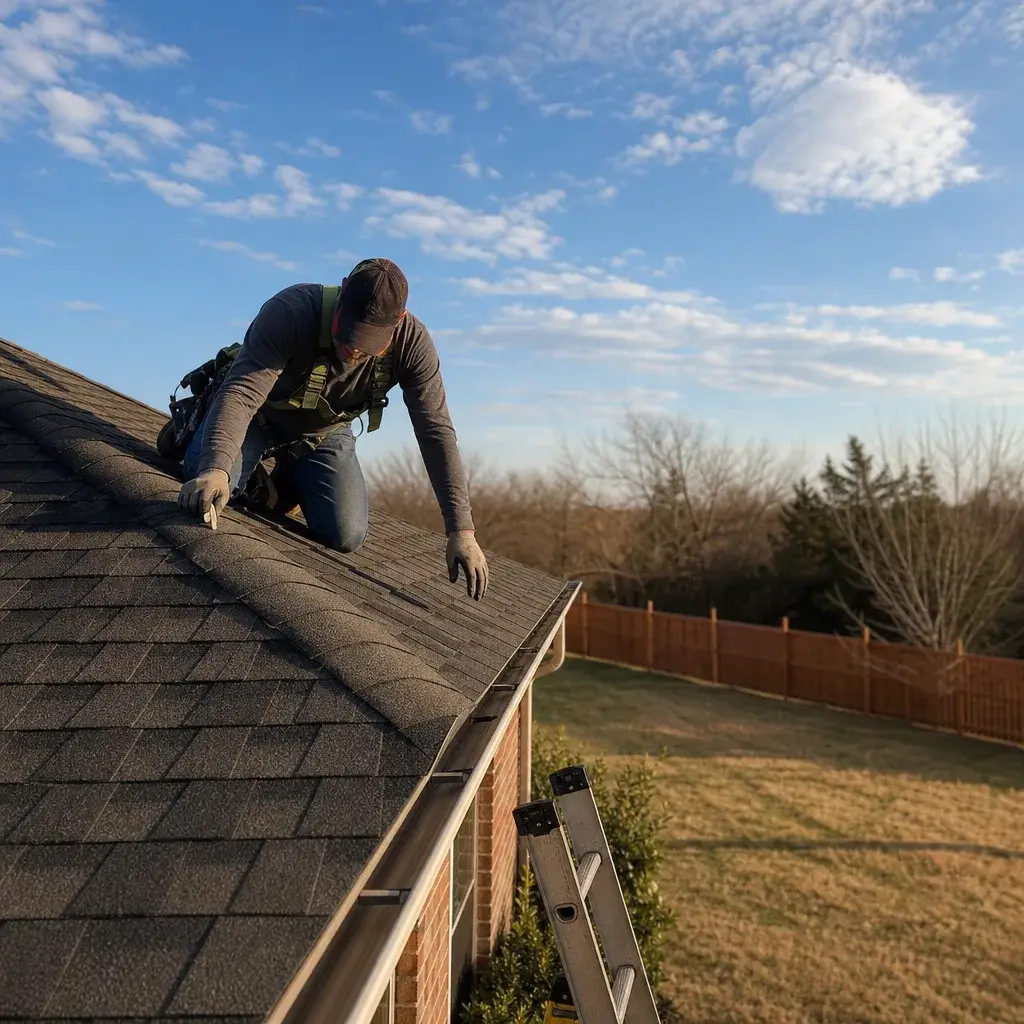
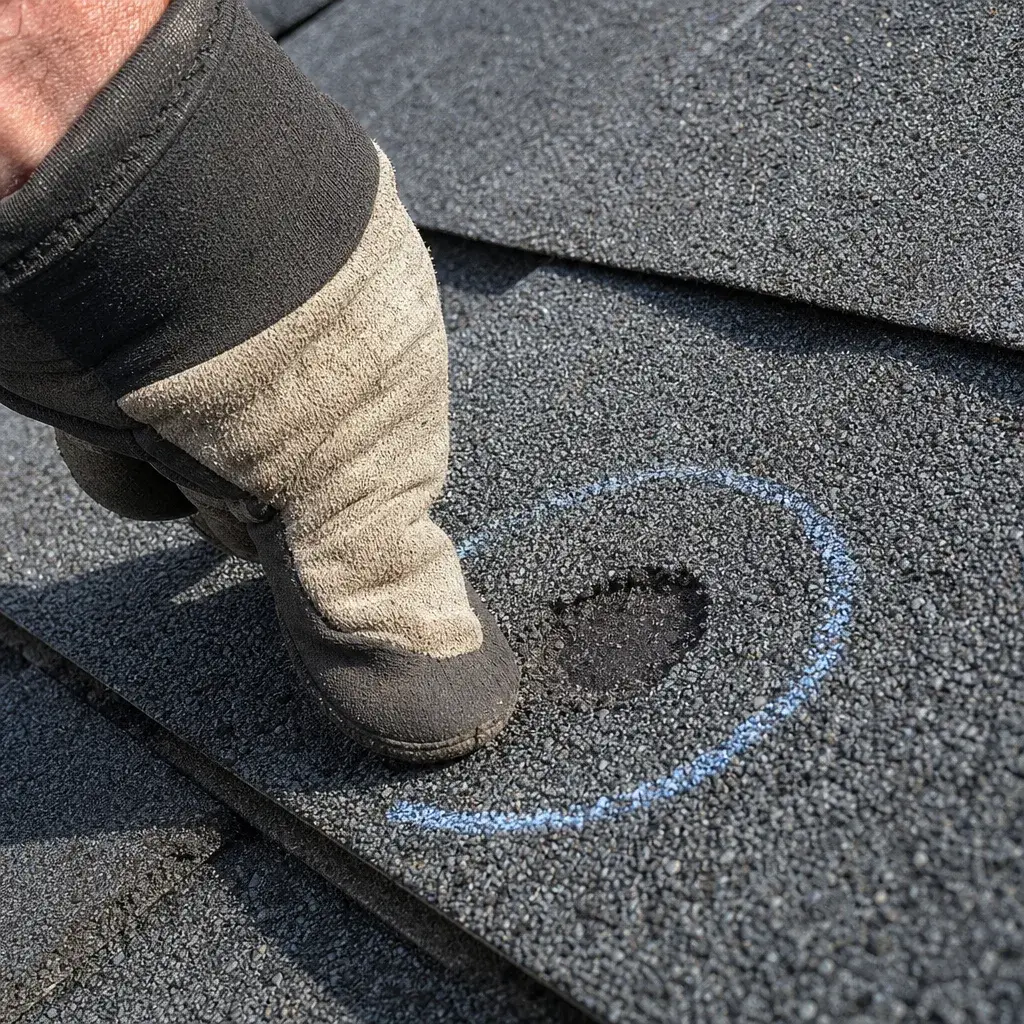
Most storm damage doesn’t announce itself. A hailstone can knock the protective granules off a shingle and bruise the mat underneath without making a hole. That shingle keeps shedding water for now. Then Texas summer sun bakes the bare spot, it cracks, and the leak shows up months later, long after you’ve forgotten which storm caused it.
So instead of waiting for a stain on the ceiling, look for the clues hail and wind leave around your property. You can spot most of them from your driveway or backyard.
- Dents in your gutters, downspouts, or the metal vents and flashing on the roof. Soft metal shows hail first. If it’s dinged, your shingles took the same hits.
- Granules in your gutters or washed out at the bottom of your downspouts. A handful of coarse, sand-like grit after a storm means your shingles are losing their armor.
- Shingles that are missing, lifted, creased, or lying in the yard. Straight-line winds can bend a shingle back without tearing it off, and a creased shingle no longer seals.
- Dings or cracks on the siding at your gables, the trim, window screens, or a skylight. On a brick home, those softer spots are where hail damage shows.
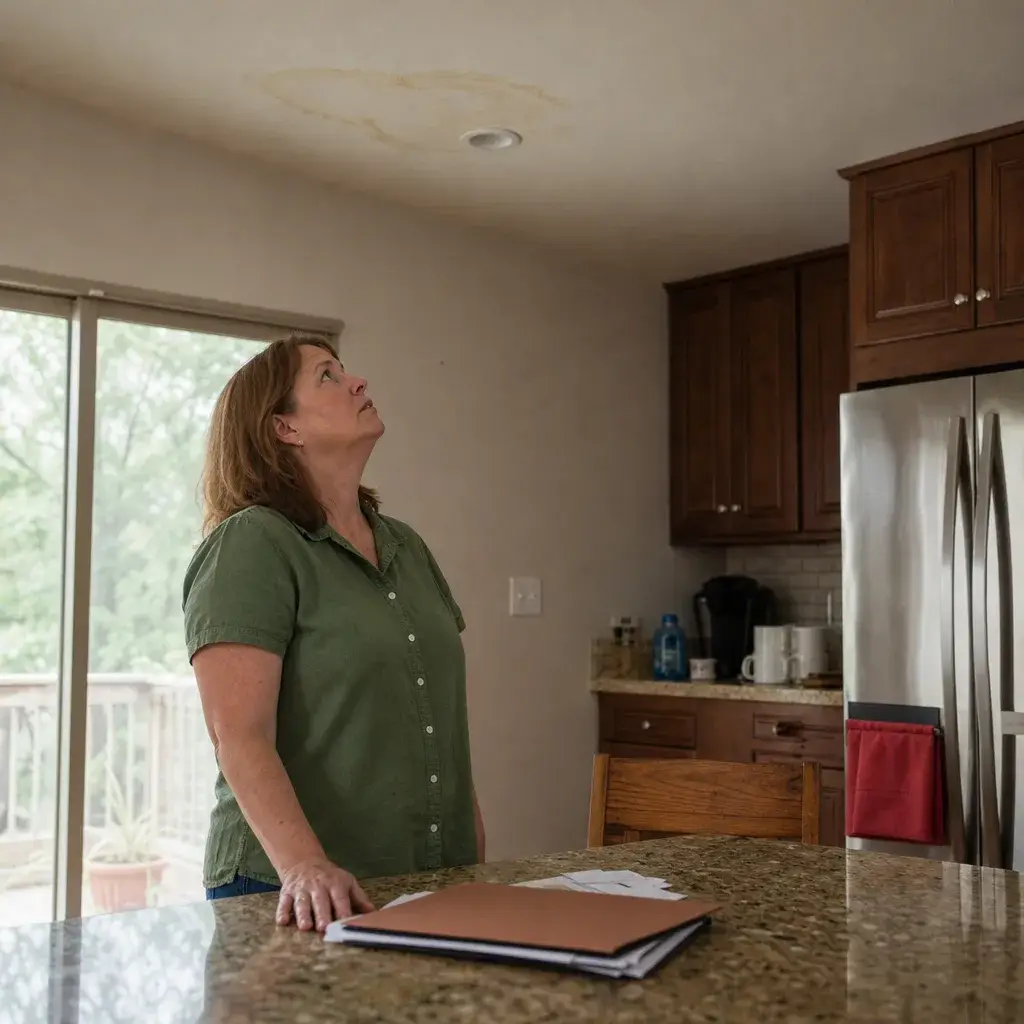
- Fresh water stains on a ceiling, damp insulation in the attic, or daylight showing through the roof deck.
Timing matters here in Sunnyvale. Spring hail season runs roughly March through June, and one roof can catch more than one storm in a single season. Getting it looked at soon after a storm makes it much easier to tie the damage to a specific date. That date matters when you talk to your insurance company.
Here’s a common scene. The storm passes, you walk outside, and the roof looks normal from the street. Your neighbor’s gutters are dented, though, and two houses down there’s already a crew on a roof. That’s a fair reason to have someone look at yours. Hail rarely hits only one house on a block, and shingle damage is hard to see from the ground.
There’s also an honest flip side. If the storm brought heavy rain but no hail, nothing on your property is dented, your gutters are clear, and your roof is fairly new, you may not need anything at all. A roof that’s fifteen to twenty years old is a different story. It’s worth checking after any real hailstorm, because older shingles bruise more easily.
Either way, you don’t have to guess. ERO DFW’s inspection is free, and we respond to every inspection request within 24 hours. If we find no storm damage, we’ll tell you so plainly.
Cosmetic Damage vs. Functional Damage: When Repair Is Needed
Not every dent is a problem. After a hailstorm, the real question isn’t whether something got hit. It’s whether the hit changed how well that part of your home keeps water out or how long it will last. Roofers split storm damage into two kinds, and the difference decides whether you need a repair at all.
Cosmetic damage changes how something looks, not how it works. Functional damage weakens the roof or wall so it can let water in or wear out sooner than it should.
Damage that’s usually cosmetic:
- Dents in gutters and downspouts that still drain freely and stay tight to the fascia, the board the gutter hangs on.
- Dings in metal vent caps or a metal roof panel where the metal isn’t cracked, punctured, or pulled loose at the fasteners.
- Small marks on aluminum trim or the siding at your gables where nothing is split or open to the wall behind it.
- Spatter marks on a fence, a deck, or the driveway that wash off or fade.
Damage that’s functional and needs a fix:
- Shingles with bruises that feel soft when pressed, or cracks in the mat under the surface.
- Shingles that are torn, creased, or no longer sealed down, so wind can lift them again in the next storm.
- Cracked or broken roof tiles, or metal panels with holes or failed seals around the screws.
- Bent or split flashing, the metal strips that seal around chimneys, vents, and walls.
- Cracked siding, broken window glass, or gutters that pulled away and now spill water against your slab foundation.
Here’s how that plays out on a lot of Sunnyvale homes. Many are slab-on-grade brick with siding only at the gables and trim. Brick shrugs off hail. The gutters, the vents, and that gable siding take the visible hits. You can have a gutter run full of dents and a roof that’s still sound, or clean-looking gutters and a roof full of bruised shingles. What you see from the yard doesn’t tell you which one you’ve got.
So here’s the straight answer. If an inspection finds only cosmetic damage, you may not need any repair. A dented gutter that drains well can do its job for years. You can leave it alone, or replace it later when it suits your budget and your taste. Nobody should push you to fix something that isn’t broken.
Insurance adds one more wrinkle. Some homeowners policies treat cosmetic damage differently from functional damage. Some even exclude dents in metal roofing or trim that don’t affect how it works. Read your own policy, or ask your agent how it handles cosmetic damage, before you assume a dent will be covered. We won’t tell you what your insurer will pay. That’s their call, based on your policy.
What we can do is show you which kind of damage you have. When ERO DFW inspects your home, we’ll point out each spot, tell you whether it’s cosmetic or functional, and put it in a written estimate before you sign anything. If the roof over your home is still doing its job, you’ll hear that from us too.
How the Insurance Claim Process Works After a Storm
A storm claim feels confusing mostly because nobody explains the order of things. Here’s how it usually goes, one step at a time. You stay in charge of every decision.
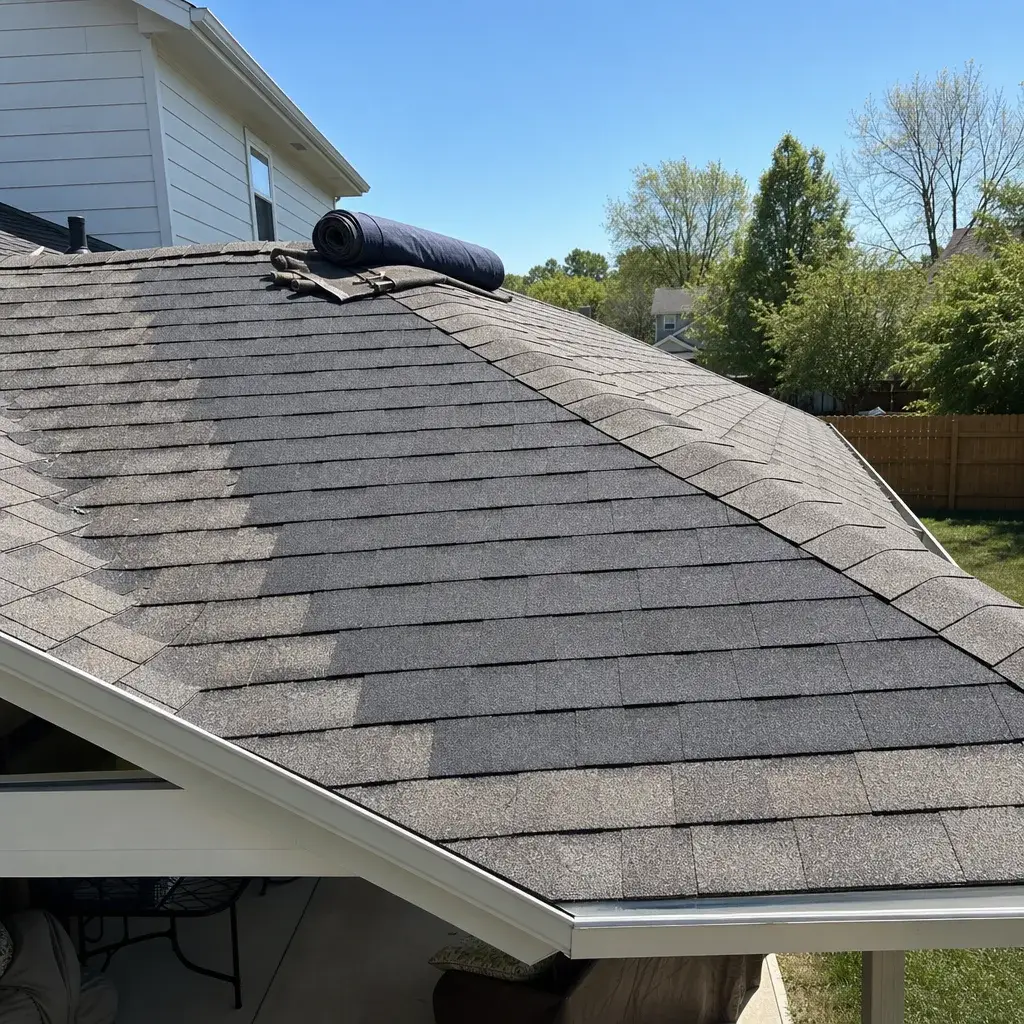
Start with whether to call your insurer or a roofer first. For most people, it makes sense to get the roof inspected first. Filing a claim for damage that turns out to be cosmetic, or that costs less than your deductible, gets you nothing. It can still go on your claim history. A free inspection tells you whether there’s real damage worth reporting before you pick up the phone to your insurance company.
- Write down the storm date and take photos. Photograph what you can see safely from the ground: dented gutters, shingles in the yard, a new ceiling stain. Your phone camera saves the date with each picture.
- Get the roof inspected. If there’s functional damage, you’ll know what it is and where it is before you file.
- File the claim yourself. It’s your policy, so the claim comes from you. Your insurer will give you a claim number and assign an adjuster, the person who inspects the damage for the insurance company.
- Meet the adjuster. The adjuster walks the roof and decides what the policy covers. When it applies, ERO DFW’s project manager meets the adjuster on site, so the damage we found gets looked at and nothing gets missed.
- Read the insurer’s estimate. This paperwork lists what they’ll pay for, and it may come in more than one check.
- Get the work done and settle up. Once you approve the work, the repair is scheduled, finished, and checked with you at a final walkthrough.
Step five trips up a lot of homeowners, so here’s what to look for. Many policies pay replacement cost value, or RCV, which is what it costs to fix the damage today. The insurer may first pay actual cash value, or ACV, which is that amount minus wear for the roof’s age. The rest, called recoverable depreciation, is often paid after the work is done. Some policies only ever pay ACV, and some older Texas policies pay roof claims on a schedule tied to the roof’s age. Your declarations page, the summary at the front of your policy, tells you which kind you have.
That rule matters in Sunnyvale every spring. After a big hailstorm moves through Dallas County and along U.S. 80, the door-knockers show up fast, and some of them lead with exactly that offer. A roofer who breaks the deductible rule on day one isn’t likely to be around when you need a warranty repair. If you ever have a question about your claim or a contractor, the Texas Department of Insurance is the state agency that oversees insurers, and it takes calls from homeowners.
We won’t tell you what your insurer will approve. That’s their decision, based on your policy. What we’ll do is walk you through the claim, explain each piece of paper in plain English, and put our price in writing before you sign anything. You’ll know what the insurance check covers and what your share is before any work starts.
Have questions? We’re happy to help.
Schedule Your Free Inspection. Exteriors, Roofing & Outdoor Living is ready to help.
Texas Law on Insurance Deductibles and Why That Matters Here
The rule itself is simple, and it’s in the claim steps above: you pay your deductible. The hard part is spotting someone who breaks it. Almost nobody says “I’ll waive your deductible” out loud anymore. The offer usually shows up dressed as something else.
Here’s what a disguised waiver tends to look like:
- A “discount” or “rebate” that happens to match your deductible to the dollar.
- An offer to pay you for a yard sign or for using photos of your home in ads, sized to cover your deductible.
- One price quoted to you and a higher price sent to your insurer, so the insurance check covers your share.
- Line items for work that isn’t being done or damage that isn’t there.
- “Don’t worry about the deductible, we’ll figure it out later.”
Any of these puts you in a tough spot, not just the roofer. The claim is filed under your name and your policy. If the numbers your insurer pays from aren’t true, that’s your problem too, and it can follow you long after that crew is gone.
Know your own number before anyone quotes you. Many Texas homeowners policies carry a separate deductible for wind and hail. It’s often a percentage of your home’s insured value rather than a flat dollar amount. On a larger two-story home, a small percentage can add up to more than people expect. Your declarations page shows the exact figure. If two separate storms hit your roof in one season, check how your policy handles each one, because a deductible usually applies per claim.
An honest estimate makes all of this easy to see:
- One price, and it’s the same price your insurer sees.
- Your deductible shown as your share, not erased or buried.
- Any upgrade you choose listed on its own line as your choice and your cost. One example is Class 4 impact-resistant shingles, which are built to take harder hail hits.
Here’s why this matters so much in Sunnyvale. The town straddles the Dallas County and Kaufman County line, right in the path of the spring storms that roll across North Texas from March through June. After a big one, your street can fill up with trucks and flyers within days. A roofer who will bend the deductible law to win your signature is showing you how they’ll handle the rest of the job, including the part where you need them to come back.
ERO DFW is headquartered here in Sunnyvale, family-owned since 2019, and licensed, bonded, and insured. We’ll show you your deductible, where it sits in the estimate, and what the insurance check covers before you sign anything. No discounts that aren’t real and no side deals, just a local team that will still be here after the storm.
Watch Our Video
See How We Handle Storm & Hail Damage Repair in Sunnyvale, TX
Exteriors, Roofing & Outdoor Living — Serving Sunnyvale, TX and surrounding areas
What to Expect From a Free Inspection and Written Estimate
Here’s what happens when you call. ERO DFW responds to every inspection request within 24 hours. A sales manager comes out, looks over your property, explains what they find and what your options are, and gives you a written estimate before you sign anything. The inspection is free. You decide what happens next.
Whoever inspects your home, ours or anyone else’s, a real storm inspection should look at more than the shingles you can see from the street. It should cover these areas:
- The roof surface: shingles, tiles, or metal panels, checked for bruises, cracks, creases, and shingles that no longer lie flat.
- Flashing, vents, and pipe boots. Pipe boots are the rubber collars around plumbing pipes, and they crack easily in hail.
- Gutters, downspouts, and the fascia boards they hang on.
- Gable siding, trim, window screens, and any skylights.
- Ceilings or the attic, if you’ve noticed a stain or a musty smell.
You should leave the inspection with a clear answer: functional damage that needs a fix, cosmetic damage you can live with, or no storm damage at all. If you can’t tell which one you have, ask again.
A good written estimate is specific. Look for these things:
- Each repair listed on its own line, with a note on whether the job is a repair or a full replacement and why.
- Materials named by type, such as architectural shingles or Class 4 impact-resistant shingles.
- How any rotten or damaged decking will be handled. Decking is the wood under the shingles, and you often can’t see it until the old roof comes off.
- Whether the Town of Sunnyvale requires a permit for your job, plus cleanup and haul-off.
- Your deductible shown as your share, and any upgrade you choose listed separately.
Several things push the price up or down: how big and steep your roof is, how many old layers have to come off, how much decking needs replacing, the material you choose, and whether the gutters, siding, or windows took hits too. If you file a claim, lay our estimate next to your insurer’s and compare them line by line. Any gap should have a plain reason.
Once you approve the work, a project manager takes it from there. They coordinate materials, scheduling, permits or HOA approvals, and updates to you. They meet the adjuster when that applies, and they handle the final walkthrough. Our crews protect your property and keep the site clean while they work. Because ERO DFW also handles gutters, siding, windows, and fencing, one North Texas team can take care of the roof over your home, the rooms in it, and the yard around it. If part of the cost falls to you, financing is available.
Before anyone climbs your roof, ask three questions. Where’s your office? Will I get a written estimate? Are you licensed, bonded, and insured? An honest contractor answers all three without blinking.
Frequently Asked Questions
Common questions about storm and hail damage repair in Sunnyvale, TX
How long do I have to file a storm damage claim after a hailstorm hits Sunnyvale?
Check your policy’s declarations page, since the filing window is set by your insurer, not by us. Many Texas policies give you one year from the storm date, but some are shorter. Getting a free inspection soon after a storm helps you document the damage while the date is still easy to prove.
Will my homeowners insurance rate go up if I file a hail damage claim?
That depends on your insurer and your claim history, so it’s a fair question to ask your agent before you file. A free roof inspection first helps you avoid filing on damage that’s only cosmetic or costs less than your deductible, which protects your claim history either way.
Can I choose my own roofer instead of using the one my insurance company recommends?
Yes, the choice of contractor is always yours, not your insurance company’s. Your insurer can suggest names, but nothing in your policy requires you to use them. You can hire whoever gives you a clear written estimate and answers your questions.
Ready to Get Started?
Schedule Your Free Inspection. Call (972) 288-9587 today.