
Insurance Claim Assistance in Sunnyvale, TX: Know What to Expect Before You Sign
Storm damage documented and your claim walked through step by step – starting with a free inspection and an honest answer on whether you have a claim.
What’s Covered on This Page
- Know When a Storm Means You Have a Claim
- Verify Any Contractor Before Letting Them Near Your Claim
- What Happens When ERO DFW Walks You Through a Claim
- Understand What You Pay and What Insurance Covers
- Decide If You Even Need Help With Your Claim
- Can a roofer negotiate directly with my insurance company for me?
- What should I do if my insurer and I disagree on the claim amount?
- Does my mortgage lender get involved in my insurance claim check?
- Is it ever too late to file a claim after a storm?
Know When a Storm Means You Have a Claim
Not every storm means you need insurance claim assistance. In Sunnyvale, spring hail season runs roughly March through June, and straight-line winds can hit any time of year. Plenty of those storms pass over without hurting a thing. Others leave damage you can’t see from the driveway. Your job is to figure out which one you just had before you pick up the phone to your insurance company.
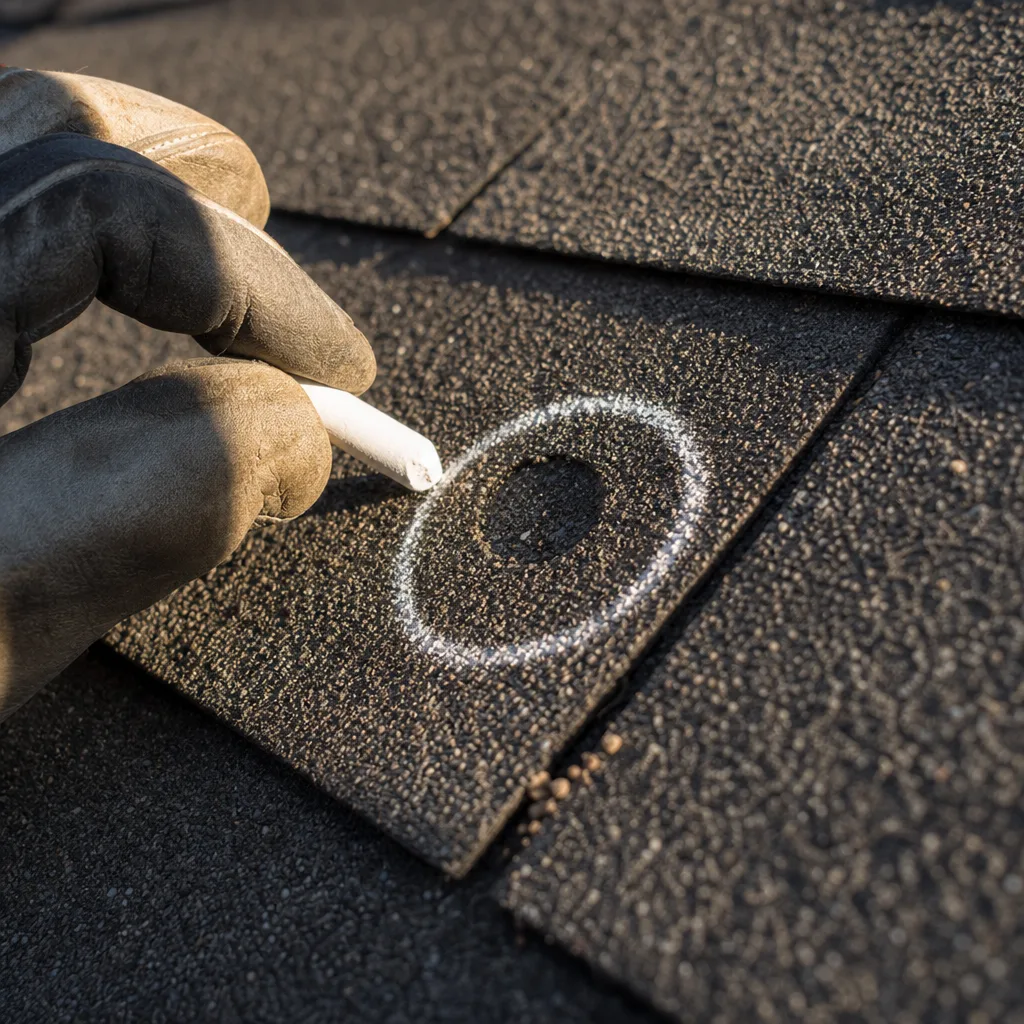
Start with what you can see from the ground. Don’t climb on the roof. Walk the yard and look for these signs:
- Shingles that are missing, lifted, or creased across the top, which usually points to wind
- Dark spots or soft dents on shingles where hail knocked the gritty coating loose
- Piles of those granules washed out at the bottom of your downspouts
- Fresh dings in your gutters, downspouts, or metal vents
- Cracked or split siding at the gables, the triangle of siding above the brick on most homes here
- Dented garage door panels, cracked window glass, or a fence section pushed over
- A new water stain on a ceiling after the rain
If you see two or three of these after a storm, it’s worth having someone look closer. Hail often damages several parts of a home at once, so dents on your garage door can be a clue that the roof took hits too.
Here’s the other side, and it matters just as much. Some problems look like storm damage but aren’t. Shingles that curl at the edges, crack all over, or lose granules everywhere usually come from years of North Texas sun and heat. That’s normal wear, and most policies don’t pay for it. A single missing shingle on an otherwise sound roof is often a simple repair that costs less than your deductible. Filing a claim in that case can cost more than it saves. It puts a claim on your record without a check to show for it.
Picture two neighbors off U.S. 80 after the same April hailstorm. One has a 15-year-old roof with dented vents, granules in the gutters, and a pocked garage door. That’s a strong case to call the insurer. The other has a newer roof and one torn tab near the ridge. That’s a repair, not a claim.
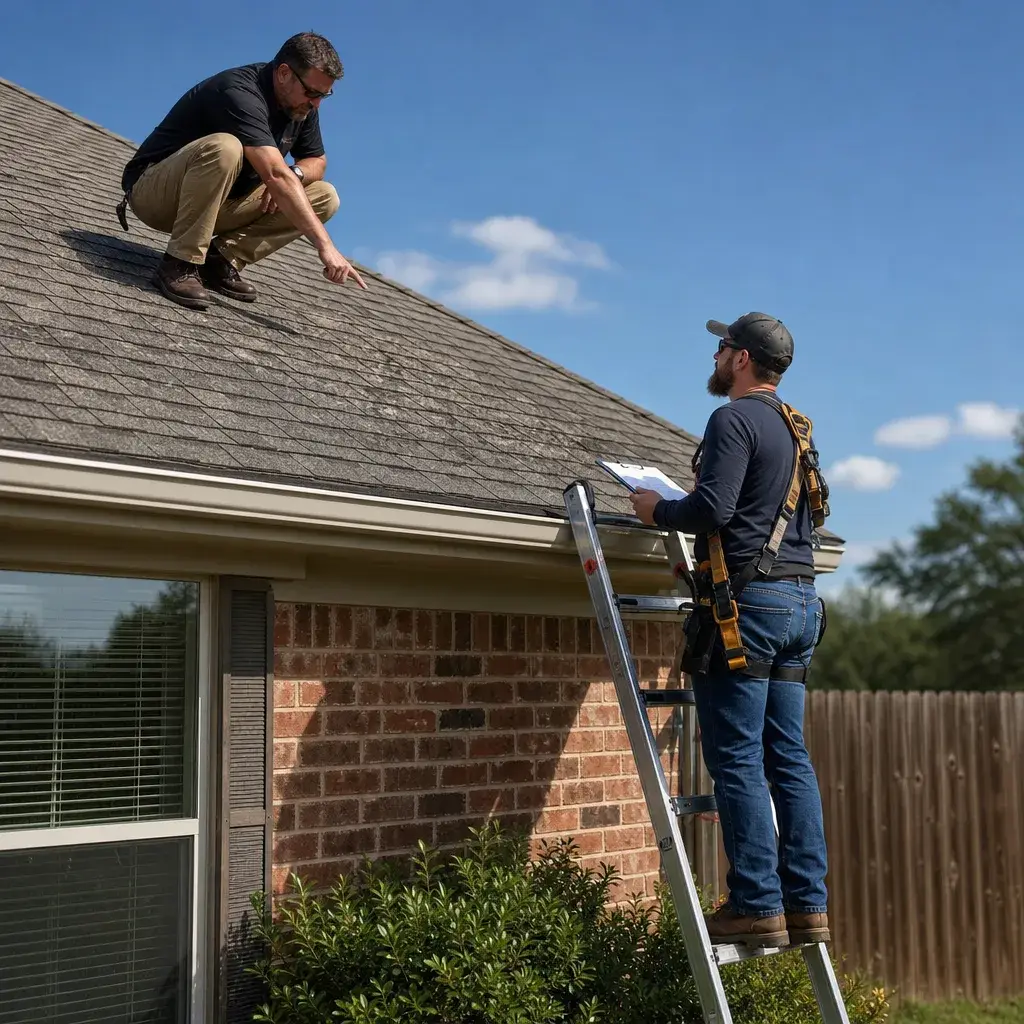
You don’t have to make that call alone, and you shouldn’t make it based on what a stranger at your door says. Our team inspects for free and gives you an honest opinion. If we don’t find storm damage, we’ll tell you so, and you can skip the claim. If we do, you’ll know what’s damaged and why before you talk to your insurance company. We respond to every inspection request within 24 hours, so you aren’t left guessing for long.
Verify Any Contractor Before Letting Them Near Your Claim
After a big hailstorm rolls through Sunnyvale, the knocks start fast. Trucks you’ve never seen park along your street, and a friendly stranger says he spotted damage from the road. Some of these folks are honest. Many aren’t, and you won’t find them when a leak shows up next spring. Who you let near your claim matters as much as the claim itself.
Here’s something most people don’t know. Texas doesn’t issue a state roofing license. So when someone says they’re “state-licensed,” that should make you more careful. You’ll have to check a few things yourself, and it only takes a few minutes.
Slow down if you hear or see any of these:
- They want you to sign something before they’ve inspected the roof or given you a written price. This is often a contingency agreement, a paper that says if insurance approves the claim, you’ve already hired them.
- They offer to “cover,” “waive,” or “take care of” your deductible. In Texas, you pay your deductible, nobody else.
- They say they’ll handle your insurance company for you and ask you to sign over control of the claim.
- They want a big cash payment up front, before materials ever show up.
- They can’t give you a local address, or the address is a mailbox or a hotel.
- They push you to decide today because “the adjuster is coming tomorrow” or “this price ends tonight.”
Before anyone goes up on your roof or meets your adjuster, ask for these things. A good contractor won’t mind. A storm chaser will get vague.
- A real street address you could drive to, close to home.
- Proof of insurance you can call to confirm. If a worker gets hurt on your roof, you don’t want that bill.
- A written estimate listing the work, the materials, and the price, before you sign a contract.
- A contract with the same company name that’s on the estimate, the truck, and the business card.
- A clear answer on who pulls any permits the job needs and who you’ll talk to if something goes wrong.
Think about the warranty call, too. A roof problem may not show up until the next hail season. A crew from out of state may not be around to answer that call. A local team you can drive to will be.
We’d like you to check us the same way. ERO DFW is a licensed, bonded, and insured roofing contractor and exterior remodeling company. We’re family-owned since 2019, and our headquarters sits right here at 308 U.S. 80 Frontage Rd, Suite B, in Sunnyvale. We have ten local offices across the Metroplex in Dallas, Plano, Fort Worth, Frisco, Allen, Irving, and Carrollton. We’ll walk you through the claim one step at a time without promising what your insurer will decide. That’s one North Texas team, still here after the storm.
What Happens When ERO DFW Walks You Through a Claim
Once you know the storm did real damage, the claim itself is a series of plain steps. You stay in charge of every decision. Our job is to make sure you understand what’s happening at each one and to keep one North Texas team accountable from the first look to the last nail.
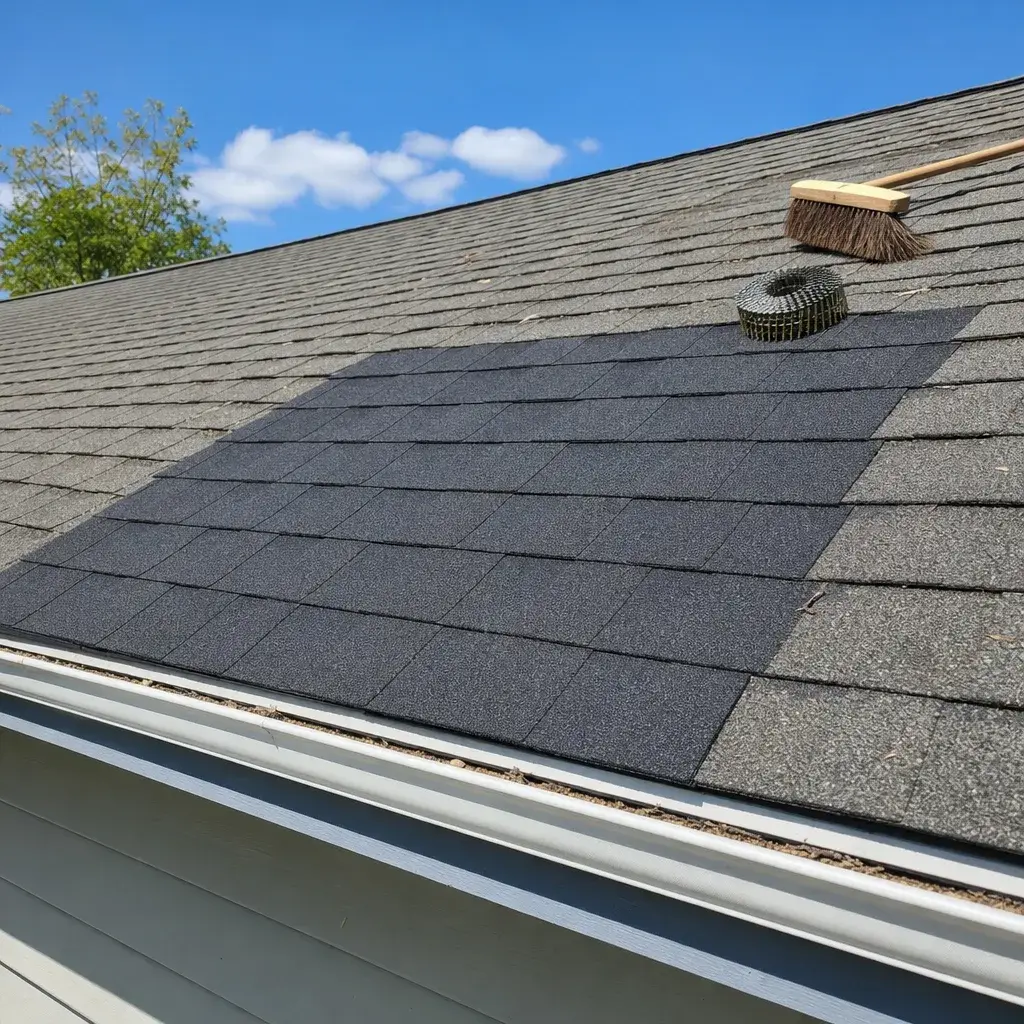
- The free inspection. One of our sales managers looks over your roof and the rest of the outside of your home. They explain what they found in plain English and give you an honest written estimate. Hail rarely hits only the roof, so this is where dented gutters, a cracked window, or a pocked garage door get noted too.
- You file the claim. The policy is yours, so the call to your insurance company comes from you. Give them the date of the storm and describe what was found. They’ll give you a claim number and assign an adjuster, the person your insurer sends to look at the damage and decide what the policy covers.
- The adjuster visit. When it applies, our team coordinates the adjuster meeting so someone who knows your roof is there to point out the damage. We don’t speak for your insurer, and we can’t promise what they’ll approve. We help make sure nothing obvious gets missed.
- Reading the insurer’s estimate. Your insurer sends a written breakdown of what they’ll pay. Many policies pay in two parts: the actual cash value first, meaning the cost to fix the damage minus wear for the roof’s age, then the rest after the work is done. Others pay only actual cash value. We’ll go through the paperwork line by line with you so you know what’s covered and what your share is beyond the deductible you pay.
- Your decision. Nothing moves until you say so. Financing is available if the numbers leave a gap.
- The work. Once you approve it, a project manager coordinates materials, scheduling, any permits through the Town of Sunnyvale, HOA approvals if your neighborhood requires them, and updates along the way. Our crews protect your property and keep the site clean.
- The final walkthrough. Your project manager walks the job with you before it’s called finished.
That handoff matters more than it sounds. On a storm job, the person who inspected your roof, the people who met the adjuster, and the crew on your roof often work for three different outfits. When something gets lost between them, you’re the one making calls. With ERO DFW, it’s one team from start to finish, and the same team handles the siding, gutters, windows, garage door, or fence the hail found on its way down.
Claims can take time. Insurers set their own pace for adjuster visits and payments, and that part is out of anyone’s hands. What we control is how quickly we answer you and how clearly we explain where things stand.
Proudly serving Sunnyvale, TX – reach out anytime.
Schedule Your Free Inspection. Exteriors, Roofing & Outdoor Living is ready to help.
Understand What You Pay and What Insurance Covers
The question most people really want answered is simple. What will this cost me? Your share of a storm claim is usually made of a few pieces. Once you know them, the numbers stop feeling like a mystery.
Start with your deductible, because it’s the piece people misread most. Many Texas policies don’t use a flat dollar amount for wind and hail. They use a percentage of your home’s dwelling coverage, the amount your policy would pay to rebuild the house. If your dwelling coverage is $300,000 and your wind and hail deductible is 2%, you’d pay the first $6,000 of the repair. Pull out your declarations page, the summary sheet at the front of your policy, and look for the words “wind and hail” or “named peril.” That number tells you how big the damage has to be before a claim makes sense.
Insurance usually pays to put your home back the way it was before the storm. That generally covers:
- Damaged roofing, replaced with similar material, like-for-like
- Parts that come off with the roof, such as vents, drip edge, and flashing (the metal strips that seal joints and edges)
- Other storm damage the adjuster agrees on, like dented gutters, cracked siding, or a hail-pocked garage door
- Code-required work, but only if your policy includes ordinance or law coverage
What insurance usually won’t pay for:
- Wear from age, sun, and heat that was there before the storm
- Upgrades you choose, like moving from standard shingles to Class 4 impact-resistant shingles that hold up better against hail. You’d pay the difference
- Damage you didn’t report, or damage that got worse because a leak sat too long
- Repairs that cost less than your deductible
So your total share can include your deductible, any depreciation your policy holds back if it only pays actual cash value, and the cost of any upgrades you pick. That’s it. Nobody can make your deductible disappear, and anyone who offers to is breaking Texas law.
Two more things often catch Sunnyvale homeowners off guard. If you have a mortgage, your lender’s name is often printed on the insurance check right next to yours. That can add a step before the money is released. Upgrades can also be worth a look here, since spring hail comes back almost every year. Some insurers offer a discount on premiums for impact-resistant roofs. Ask your agent before you decide.
Our team helps you add it all up before anything starts. You’ll get a written estimate before you sign anything, so you can set it next to your insurer’s numbers and see the gap for yourself. If there is one, financing is available.
Watch Our Video
See How We Handle Insurance Claim Assistance in Sunnyvale, TX
Exteriors, Roofing & Outdoor Living — Serving Sunnyvale, TX and surrounding areas
Decide If You Even Need Help With Your Claim
Here’s the honest answer. Plenty of homeowners don’t need a contractor’s help with their claim at all. The policy is yours. You can file it, meet the adjuster, and collect your own bids without anyone in the middle. Whether help is worth it depends on how much damage you have and how clear it is.
- Nobody finds storm damage. If the inspection comes back clean, there’s no claim to help with. Skip it and move on.
- The damage is small and easy to see, like a few blown-off shingles or one dented gutter run, and the fix likely costs less than your deductible. Pay for the repair and keep the claim off your record.
- The adjuster has already been out, the insurer’s estimate lists everything you saw, and you agree with it. At that point you just need a contractor to do the work, not help with the claim.
- You already have a local roofer you trust who’ll be around for the warranty call. Stick with them.
Help starts to pay off when the damage is spread out and easy to miss. A North Texas hailstorm can hit the roof, the gutters, the window screens, the garage door, and the fence in the same ten minutes. That makes a long list. After a big spring storm, adjusters may have a full schedule of homes to get through, and small items can slip by. Having someone on the roof who knows what a fresh hail bruise looks like, next to the adjuster, makes that less likely.
The same goes for an older roof. On a 15- or 20-year-old roof, the line between normal sun wear and new hail damage gets blurry. That’s where a careful second look matters most, because the difference decides what gets paid.
Know where a roofer’s help stops, too. In Texas, a contractor can’t negotiate your claim or argue coverage with your insurer for you. That’s the job of a licensed public adjuster, and anyone offering to be both your roofer and your negotiator is a red flag. A roofer can show the damage, explain it, and price the repair. The money conversation stays between you and your insurer.
If you and your insurer can’t agree on how much is owed, you still have options. Check your policy for an appraisal clause, which lets each side bring in its own appraiser to settle the amount. Talk to your agent. You can also file a complaint with the Texas Department of Insurance, which oversees insurers in this state. For a large dispute, a lawyer who handles insurance claims is another route.
So the short version is this. Small, clear damage you and the adjuster agree on doesn’t need anyone’s help. Spread-out hail damage, an older roof, or an adjuster’s estimate that seems to miss things is when a second set of trained eyes earns its keep.
Frequently Asked Questions
Common questions about insurance claim assistance in Sunnyvale, TX
Can a roofer negotiate directly with my insurance company for me?
No, a roofer in Texas cannot negotiate your claim or argue coverage with your insurer on your behalf. That work belongs to a licensed public adjuster. A roofer can point out damage, explain it, and give you a price, but the money conversation stays between you and your insurance company.
What should I do if my insurer and I disagree on the claim amount?
Check your policy for an appraisal clause first, since it lets each side bring in its own appraiser to settle the number. You can also talk to your agent, file a complaint with the Texas Department of Insurance, or hire a lawyer who handles insurance claims if the disagreement is large.
Does my mortgage lender get involved in my insurance claim check?
Yes, if you have a mortgage, your lender’s name is often printed right on the insurance check next to yours. That can add an extra step before the money is released, so it helps to ask your lender about their process early in the claim.
Is it ever too late to file a claim after a storm?
Insurance policies generally require you to report damage within a set window, so don’t wait to get a free inspection after a storm. Waiting too long can also let a small leak get worse, which makes it harder to prove the damage came from that one storm instead of neglect.
Ready to Get Started?
Schedule Your Free Inspection. Call (972) 288-9587 today.