
Roof Inspection in Sunnyvale, TX
A straight answer on whether your roof is safe to leave alone – from a free inspection that checks the whole roof up close, not from the ground.
What’s Covered on This Page
- A Roof Inspection Answers One Question: Is This Roof Safe to Leave Alone
- Spring Storms Make North Texas Roofs Hard to Judge from the Ground
- No State Roofing License in Texas Means Insurance and a Written Report Matter More
- What Happens During a Roof Inspection
- Signs You Can Wait vs. Signs You Should Call Today
- How long does a roof inspection take?
- Do I need to be home during the inspection?
- Will a roof inspection damage my shingles?
- What should I do if a roofer knocks on my door after a storm?
A Roof Inspection Answers One Question: Is This Roof Safe to Leave Alone
You don’t need fifty roofing terms. You need one answer: is this roof safe to leave alone, or is something up there going to get worse? That’s the whole job of a roof inspection. Everything we look at points back to that one question, and you deserve a straight answer to it.
Most inspections end in one of three places:
- Leave it alone. The shingles are holding, the seals are tight, and nothing feels soft underfoot. You get peace of mind and nothing to buy.
- Fix one spot. Maybe it’s a lifted shingle, a cracked rubber boot around a vent pipe, or loose flashing. Flashing is the metal strip that seals the joint where your roof meets a wall or chimney. A small repair now keeps water out later.
- Plan something bigger. Hail bruises across many shingles, heavy granule loss, or decking that gives when you step on it means it’s time to talk about replacement or an insurance claim. Decking is the wood boards under the shingles.
Why does this matter so much here? Sunnyvale sits along U.S. 80 on the Dallas County and Kaufman County line, right in North Texas hail country. Hail season runs roughly March through June. Hundred-degree summers bake shingles and wear down the gritty granules that protect them from UV. Then the occasional ice storm adds weight and freeze on top of all that. A hail-bruised shingle can look fine from the yard and start leaking a season later. That’s why guessing from the ground doesn’t work.
Your house matters too. Many older Sunnyvale-area brick ranch homes from the 1960s to the 1980s are on their second or third roof. They often have patched spots nobody remembers. Newer two-story homes from the 1990s onward tend to have tall, steep roofs. Those roofs aren’t safe for you to climb, and you can’t read them from the street.
A careful inspection checks the places where roofs really fail:
- The shingle surface, looking for hail hits and missing or creased shingles
- Flashing around chimneys and walls
- Vents and pipe boots
- Gutters, where loose granules collect
- Any stains on your ceilings that point to water already getting in
After a big storm, someone may knock on your door and tell you the roof is ruined. Maybe it is. Maybe it isn’t. A second answer from a local team is worth having before you sign anything. ERO DFW is headquartered right here in Sunnyvale. We’re licensed, bonded, and insured, we respond to every inspection request within 24 hours, and the inspection is free. If your roof needs work, we’ll put the estimate in writing first. If it doesn’t, we’ll tell you that too.
Spring Storms Make North Texas Roofs Hard to Judge from the Ground
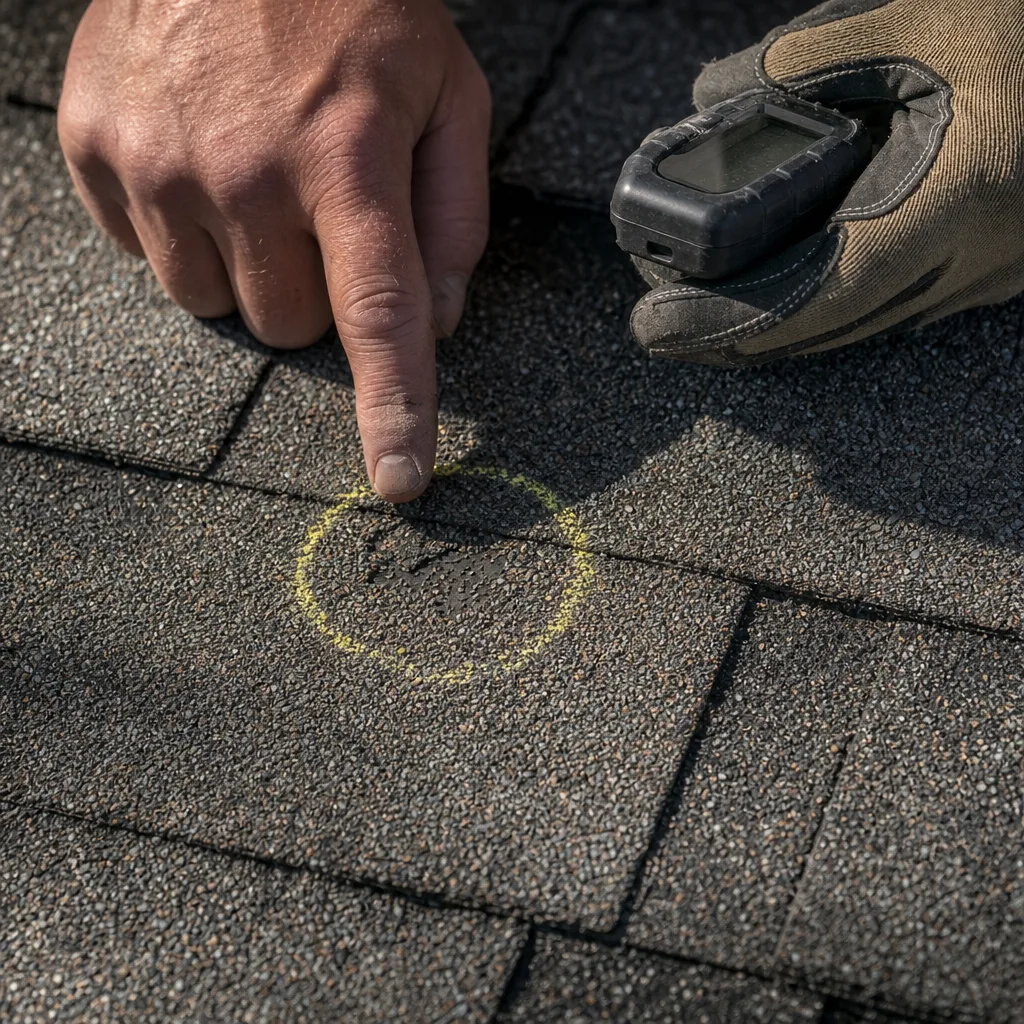
From your driveway, a hail-damaged roof and a healthy one can look almost the same. Hail doesn’t always rip shingles off. More often it leaves a bruise, a small dark spot where the gritty granules got knocked loose. Sometimes there’s a soft spot underneath that gives like a bruised apple when you press on it. From 20 or 30 feet below, those marks blend right into the shingle pattern.
Wind fools people too. North Texas storms often bring straight-line winds along with the hail. A hard gust can lift a shingle, break the sticky strip that holds it down, and drop it right back in place. It looks flat. But now it’s creased at the bend and no longer sealed. The next storm can peel it off or push rain under it.
Storms also stack up. You might get two or three hail days in one spring. Damage from the first one can sit quietly until a later storm opens it up. By then it’s harder to tell which storm did what, and that matters if you end up filing a claim.
So what can you check without leaving the ground? Look for the side effects of a storm. None of these prove your roof is damaged. They do tell you the hail or wind at your house was strong enough to be worth a closer look.
- Dents or dings in metal gutters, downspouts, and roof vents
- Piles of granules at the bottom of your downspouts or washed onto the driveway. They look like coarse black sand.
- Torn window screens, chipped paint on trim, or dented siding on the side of the house that faced the storm
- Pieces of shingle or bent strips of metal flashing in the yard
- Dark, shiny patches on the roof where the granule coating is gone
- Roofers’ signs going up on several houses on your street
Inside, check the attic if you can get into it easily. Daylight showing through the boards, damp insulation, or water stains on the wood framing mean water has already found a way in. A fresh brown ring on a ceiling tells you the same thing.
Write down the date of the storm. Take photos of anything you notice, from right where you’re standing. Dated pictures of dented gutters or granule piles help anyone who looks at your roof later, including an insurance adjuster. They’re also your own record if a second storm hits before anyone gets up there.
If you check everything on that list and find nothing, that’s good news. It just isn’t proof. A slope facing away from the street can take a beating while the front looks perfect. Hail bruises can sit on the shingles with no sign at all on the ground. That gap is exactly why a close-up inspection matters. Only someone looking at each slope up close, shingle by shingle, can tell you whether your roof is safe to leave alone.
No State Roofing License in Texas Means Insurance and a Written Report Matter More
Here’s something many people don’t know. Texas doesn’t issue a state roofing license. A plumber or an electrician needs one to work in your home. A roofer doesn’t. Anyone with a ladder and a truck can knock on your door and offer to look at your roof.
That doesn’t make every roofer a bad one. It does mean the state isn’t checking for you, so you have to check for yourself. Two things do most of that work: proof of insurance, and an answer in writing.
Insurance matters because an inspection means someone is climbing on your roof. Steep two-story roofs and shingles that get slick with morning dew are real hazards. If a worker without coverage gets hurt on your property, the problem can end up on your doorstep. Liability insurance covers damage to your home. A bond adds one more layer of protection if the job isn’t finished the way it was promised.
Before anyone goes up, it’s fair to ask:
- Can you show me proof of your insurance? A real company won’t mind the question.
- Where is your office? A local street address you can drive to means more than a phone number on a yard sign.
- Will I get your findings in writing?
- Will I see your estimate in writing before I’m asked to sign anything?
The written part is the one people skip, and it’s the one that protects you most. A spoken opinion in the driveway is easy to give and easy to change later. A written answer pins it down. It tells you which slopes have trouble, what kind of trouble it is, and what the inspector thinks you should do about it.
That paper is useful well beyond the day of the visit. If you file an insurance claim, you have something to compare against what the adjuster finds. If a second roofer tells you something different, you can lay the two answers side by side. If you’re selling your home, or a home inspector flags the roof, you have a record of what was found and when. And when the dated photos you took after the storm line up with a written report, your story holds together.
Be careful with anyone who wants a signature before you’ve seen anything in writing. After a big hailstorm, crews from out of town sometimes show up along U.S. 80 and work their way through the neighborhoods. They inspect fast, ask you to sign right there, and are gone by summer. If something goes wrong with the roof a year later, there’s no one left to call.
ERO DFW is licensed, bonded, and insured, and our headquarters is right here in Sunnyvale at 308 U.S. 80 Frontage Road. We’ve been family-owned since 2019, with ten local offices across the Metroplex. If your roof needs work, we’ll put the estimate in writing before you sign anything. If it doesn’t, you’ll hear that from us just as plainly. Either way, you’ll know where to find us when you have a question later.
Proudly serving Sunnyvale, TX – reach out anytime.
Schedule Your Free Inspection. Exteriors, Roofing & Outdoor Living is ready to help.
What Happens During a Roof Inspection
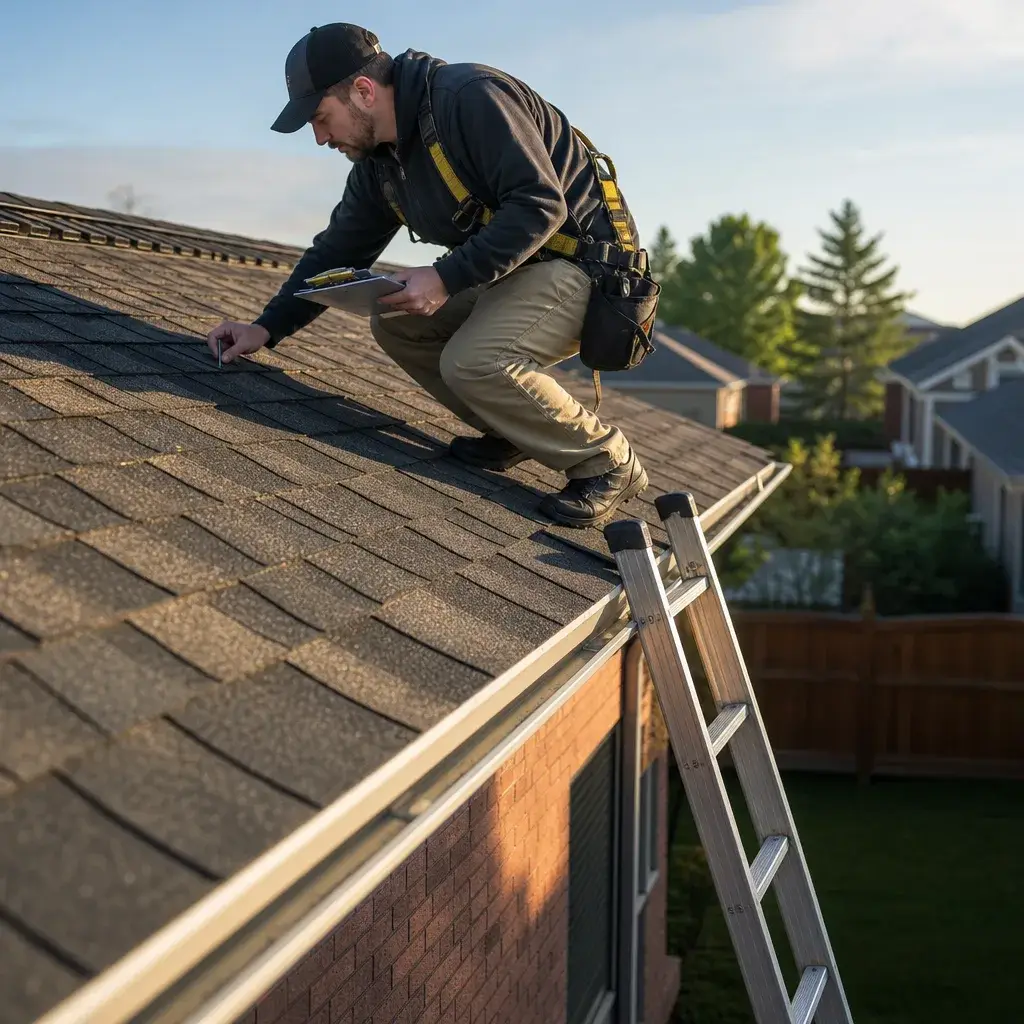
A real roof inspection isn’t someone popping up a ladder, looking for two minutes, and climbing down with bad news. A careful one starts on the ground, moves across every slope of the roof, and ends inside your house. Each step answers part of the same question: is your roof safe to leave alone?
- A walk around the outside. Before anyone climbs, the inspector looks at the soft metal around your home: gutters, downspouts, and vent caps. Dents there show how big the hail was and which way it came from. That tells the inspector which slopes probably took the hardest hit.
- Every slope, up close. Hail driven by wind can hammer the back of a house and barely touch the front, so each face of the roof gets its own look. The inspector checks the valleys, where two slopes meet and water runs heaviest. They check the ridge along the top and the edges, where wind lifts shingles first. They also pay attention to how the roof feels underfoot, because soft or spongy spots can point to wet or weak decking below.
- The attic, if you have access. From underneath, stains on the wood, damp insulation, or pinpoints of light show trouble the shingles hide. The attic also shows how well your roof breathes. In a Sunnyvale summer, an attic with poor airflow can get hot enough to cook shingles from below and shorten their life. Vents along the ridge and under the eaves let that heat out.
- Your ceilings. Any stains get matched to what’s above them. A brown ring under a valley or near a chimney often leads straight to the problem.
One more thing a good inspection sorts out is the difference between storm damage and plain old age. A twenty-year-old roof that’s losing granules evenly all over tells a different story than fresh, scattered bruises after a hailstorm. That difference shapes whether you’re looking at a repair, a planned replacement, or a conversation with your insurance company.
You can make the visit go smoothly with a few small steps:
- Move cars out of the driveway so a ladder can go up safely.
- Clear a path to your attic hatch. In many slab-on-grade homes, it’s in the garage or a hallway closet.
- Keep pets inside.
- Have your storm date and any photos you took ready to share.
When the looking is done, you should get a plain answer, not a pitch. It’s fair to ask the inspector to show you exactly where the damage is, which slope it’s on, and why they think it came from a storm instead of age. If they can’t point to it, that tells you something too.
With ERO DFW, one of our sales managers assesses your property and explains your options in plain English. If your roof needs work, you’ll get that estimate in writing before you sign anything. If a storm caused the damage, we’ll walk you through the claim. If nothing needs fixing, we’ll tell you that and leave it there.
Watch Our Video
See How We Handle Roof Inspection in Sunnyvale, TX
Exteriors, Roofing & Outdoor Living — Serving Sunnyvale, TX and surrounding areas
Signs You Can Wait vs. Signs You Should Call Today
Not every roof needs a visit this week. Some don’t need one this year. Here’s an honest way to sort where yours falls.
You can probably wait if all of these are true:
- Your roof is fairly young, and no hail or hard wind has hit your house since it went on.
- Your ceilings and attic are dry, with no new stains.
- You see only a light sprinkle of granules after a rain on a newer roof. Fresh shingles shed some loose grit in their first year or so, and that’s normal.
- The only reason you’re worried is that roofers put signs up down the street. Their storm path may not have crossed your yard.
If that’s you, leave it alone. Keep an eye on your ceilings after big storms, and look again next spring. Please don’t climb up yourself to check. A slick or steep roof isn’t worth the risk, and nothing on that list calls for it.
Book a check soon, but don’t panic, if any of these sound familiar:
- Your roof is fifteen to twenty years old and nobody has looked at it closely in years.
- A spring storm dented your gutters or vents, but nothing is leaking.
- You’re selling your home, or a home inspector flagged the roof.
- Your insurance company sent a letter asking about your roof’s condition.
None of these are emergencies. They’re reasons to get a clear answer before a small problem grows or a deadline sneaks up on you. If a storm is involved, check your policy for how long you have to report damage. Those time limits are real, and waiting until next year can close a door you didn’t know was open.
Call today if you see any of these:
- Water dripping inside, or a ceiling stain that’s new or getting bigger.
- A spot on the ceiling that sags or feels soft.
- Daylight showing through the boards in your attic.
- Shingles or metal flashing in your yard and bare patches on the roof, especially with another storm in the forecast.
- A tree limb resting on the roof after high winds.
Once water is getting in, it doesn’t stay put. It soaks insulation, stains drywall, and can rot the wood decking under your shingles. When a roof is open to the weather, ERO DFW also offers emergency roof repair and tarping to cover it until the real fix can happen.
Maybe you’ve read this far and still aren’t sure which group you’re in. That’s fair. Hail damage can hide, as you saw earlier. The point of a free inspection is that you don’t have to guess, and you won’t be talked into work your roof doesn’t need. Sometimes the honest answer is “leave it alone,” and we’ll tell you just that.
Frequently Asked Questions
Common questions about roof inspections in Sunnyvale, TX
How long does a roof inspection take?
Most roof inspections take 30 to 45 minutes, depending on the size and pitch of your roof. A steep two-story roof in a newer Sunnyvale subdivision can take longer to walk safely than a single-story ranch home. The visit includes a walk around the outside, a close look at every slope, and a check of your attic and ceilings if you have access. You’ll get a plain answer about what we found before anyone leaves.
Do I need to be home during the inspection?
It helps if you’re home, but it’s not required for the outdoor part of the inspection. You do need to be there, or leave access open, if you want us to check your attic and ceilings from inside. Being home also lets you share your storm date and any photos you took, and hear the findings directly instead of secondhand.
Will a roof inspection damage my shingles?
A careful inspection shouldn’t damage your shingles. Walking a roof the right way, stepping where the decking is supported and avoiding the edges and ridges, doesn’t harm healthy shingles. If your roof already has soft or spongy spots from water damage, those areas need a light touch no matter who is up there, which is one more reason to get a trained eye on it rather than guessing from the ground.
What should I do if a roofer knocks on my door after a storm?
Ask for proof of insurance and a local address before you let anyone on your roof. After hail hits North Texas, crews sometimes travel along U.S. 80 looking for storm work and move on by summer. A written estimate before you sign anything, and a local office you can drive to, matter more than a fast promise in your driveway.
Ready to Get Started?
Schedule Your Free Inspection. Call (972) 288-9587 today.