
Asphalt Shingle Roofing in Sunnyvale, TX: Repair or Replace with Confidence
Asphalt shingle roofs repaired or replaced, with an honest answer on which one you need – starting with a free inspection and a written estimate.
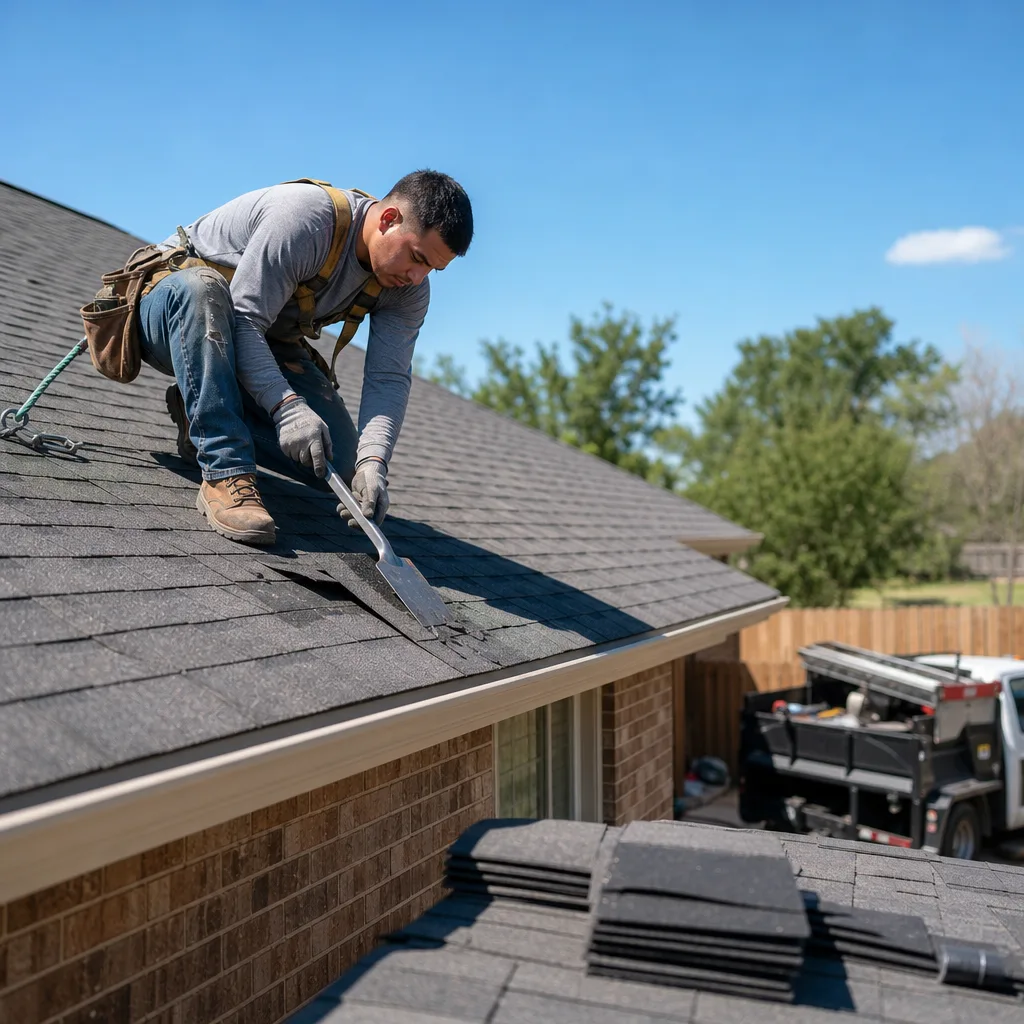
What’s Covered on This Page
- Signs Your Asphalt Shingles Need a Closer Look
- Repair Versus Full Replacement: Making the Call
- When Storm Damage Changes the Insurance Math
- What ‘Licensed, Bonded, and Insured’ Means in Texas
- When a Full Roofing Call Is Not Needed
- How long does an asphalt shingle roof replacement take?
- Can I stay home during a roof repair or replacement?
- What should I ask a roofer before hiring them for storm damage work?
Signs Your Asphalt Shingles Need a Closer Look
Most roof trouble shows up as small clues long before it turns into a leak. Some of them are signs of a roof that’s simply getting old. Others are signs of storm damage that may matter for an insurance claim. It helps to know which is which.
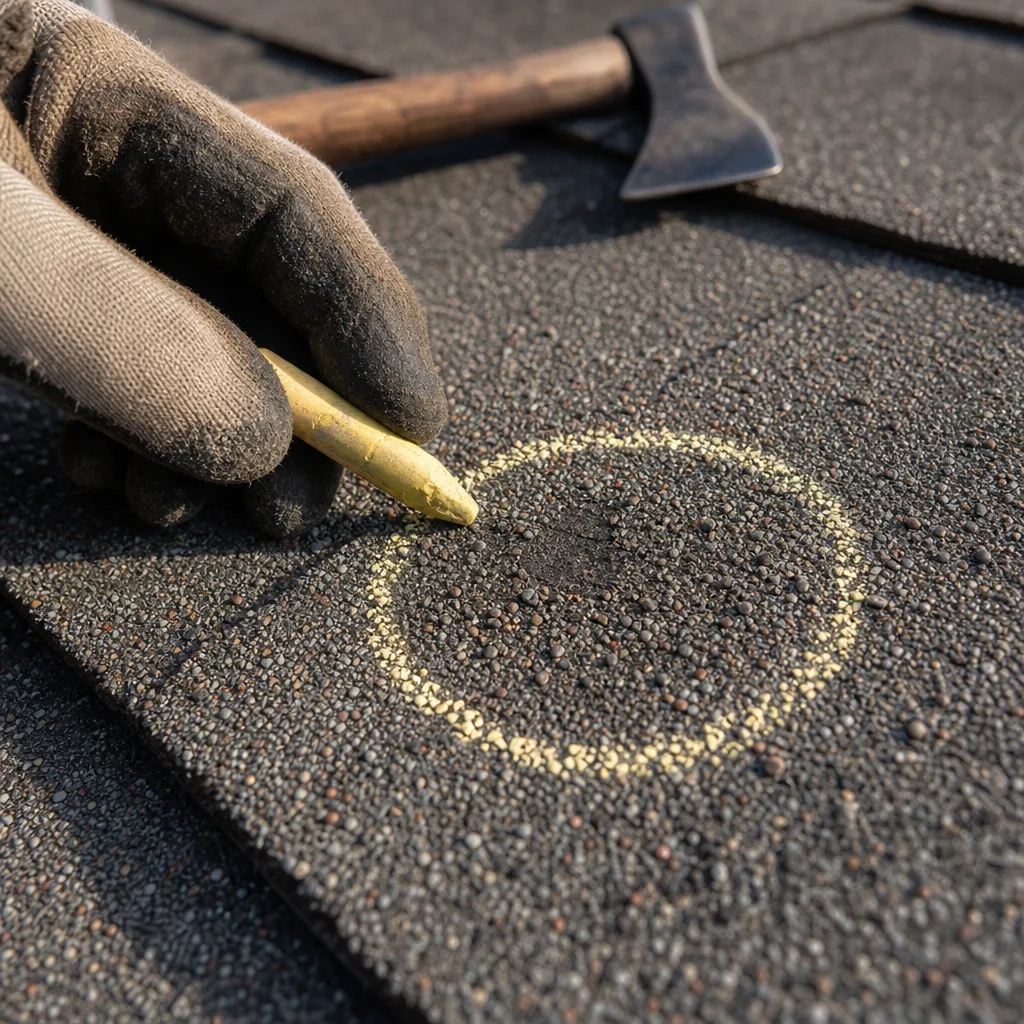
- Granules in your gutters or at the bottom of your downspouts. The gritty top coat on each shingle shields the asphalt from the sun. A little loss over the years is normal. A sudden pile after a storm usually means hail knocked it loose.
- Dark spots or soft bruises on the shingles. Hail can crack the mat under the surface without leaving a hole you’d notice from the yard.
- Missing, lifted, or creased shingles. Straight-line wind can bend a tab back and break the seal that holds it down. After that, the tab can flap loose in the next storm even if it looks fine today.
- Curling, cupping, or cracking. Years of hundred-degree afternoons dry shingles out until the edges turn up or the surface splits.
- Stains on a ceiling or wet spots in the attic. Water usually gets in at flashing, the metal that seals around chimneys, vents, and walls, or at a damaged spot uphill from where the stain shows.
- Shiny metal at the edges, nail heads poking up, or a ridge line that sags. Each one points to a problem below the shingles.
Age matters too. If your roof is fifteen to twenty years old, it’s worth a look even if nothing seems wrong. That’s especially true on Sunnyvale’s older brick ranch homes, which may already be on a second roof that has lived through a lot of hail seasons. Newer two-story homes aren’t safe from it either. Their steeper, taller roofs are harder to see from the ground, so damage can go unnoticed for a long time.
Timing matters as well. Hail season in North Texas runs roughly March through June, and the damage often doesn’t show right away. A bruised shingle can look fine for months, then shed its granules and start letting water through after a summer of heat or a winter ice storm. If a hailstorm crossed U.S. 80 and you’ve seen roofers’ signs going up in yards nearby, it’s smart to find out where your own roof stands while the storm date is still fresh.
You can spot many of these signs from the ground, from an upstairs window, or by looking at what washes out of your downspouts. Snap a photo and note the date. Once you know what you’re looking at, it’s much harder for anyone to talk you into work you don’t need, or to talk you out of a repair you do.
Repair Versus Full Replacement: Making the Call
Most asphalt shingle problems can be fixed without a new roof. A repair is the right call when the damage is limited to one area and the rest of the roof still has plenty of life left. A full replacement makes sense when the damage is spread across the roof, the shingles are near the end of their life, or a repair would only buy you a few months. The honest answer depends on what’s up there, not on what someone wants to sell you.
A repair usually makes sense when:
- A few shingles blew off or creased in a windstorm, and the shingles around them still lie flat and hold their granules.
- A leak traces back to one spot, like cracked flashing around a vent pipe or chimney. That’s often a fix to the metal and sealant, not the shingles.
- Your roof is still fairly young and in good shape overall.
- The decking, the wood boards under the shingles, is solid when someone walks the roof.
Replacement usually makes more sense when:
- Hail bruised shingles on every side of the roof, not just one slope. Patching one area leaves the rest to fail later.
- The roof is fifteen to twenty years old and shows curling, cracking, and bald spots from years of North Texas sun.
- You’ve had more than one leak in different places.
- The decking feels soft or spongy, which means water has been getting under the shingles for a while.
- There are already two layers of shingles. Adding repairs on top of an old second layer is like patching a tire that’s worn through.
Matching is the part people don’t expect. Shingles fade in the sun, and styles and colors get discontinued. On an older roof, new shingles can stand out like a patch on a pair of jeans. That’s mostly about looks, but it matters if you plan to sell. It’s worth asking any roofer to show you how close a match they can get before you agree to a repair.
Here’s a common picture. Say a spring storm lifted a strip of shingles on the back slope of a 1970s brick ranch home in Sunnyvale. If the rest of the roof is a newer second roof in decent shape, a repair is likely all you need. Now say that same storm dropped hail, and there are bruises on the front, the back, and both sides. That’s a different conversation. It may be one your insurance company needs to hear about. Whether a claim covers it is up to your insurer and adjuster, not your roofer.
If replacement is the right answer, it’s also your chance to upgrade. Class 4 impact-resistant shingles are built and tested to take harder hits from hail, which matters in a place where hail season comes back every spring. Better ridge ventilation, which lets hot air escape at the peak of the roof, helps your attic stay cooler through hundred-degree summers and keeps the shingles from baking out as fast.
Whatever the call, you should see it in writing. At ERO DFW, you get a written estimate before you sign anything, and we’ll tell you plainly when a repair is enough. If a roofer pushes a full replacement but can’t point to the damage that justifies it, that tells you something too.
When Storm Damage Changes the Insurance Math
When hail or wind caused the damage, the question isn’t just repair or replace anymore. It’s also whether to file a claim. That depends on how much damage there is, what your policy says, and how your deductible compares to the cost of the work. A storm doesn’t automatically mean a claim, and a claim doesn’t automatically mean a new roof. Your insurer and adjuster make that call, not your roofer.
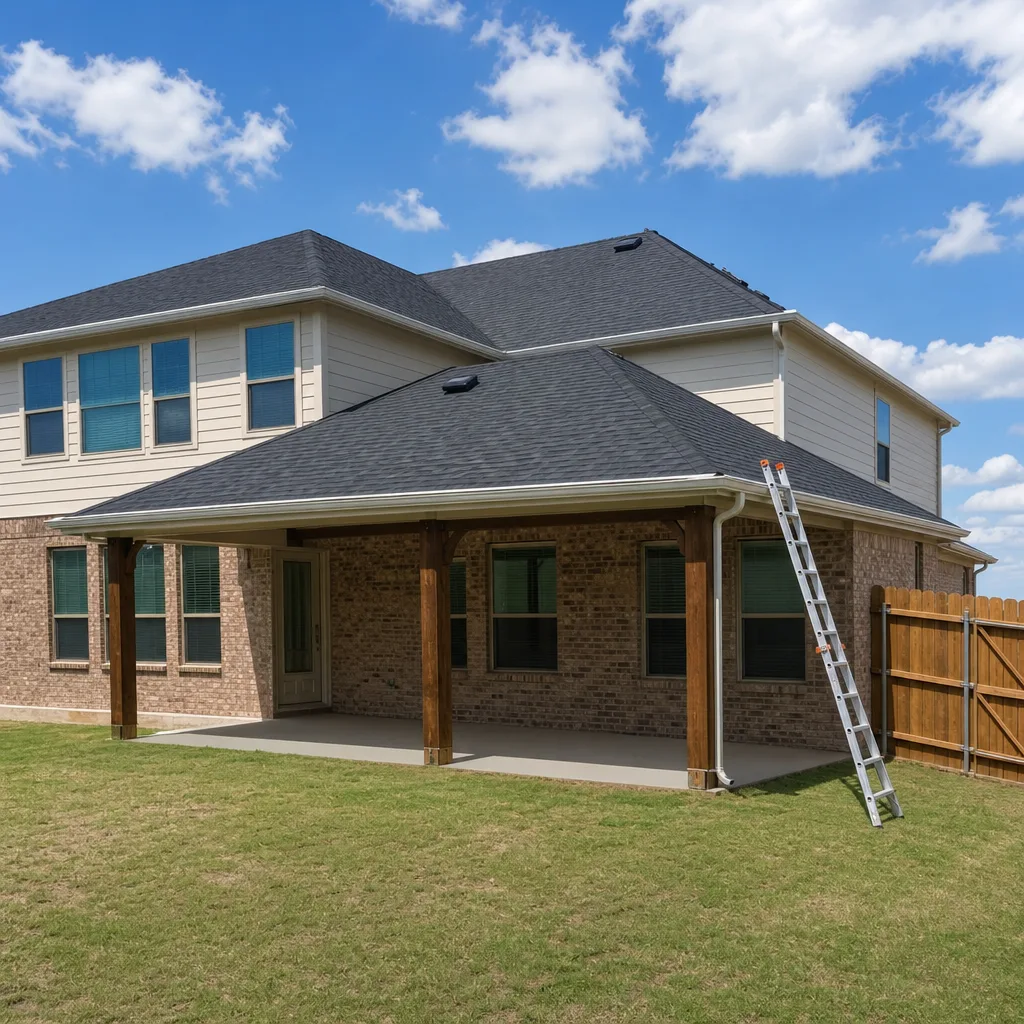
Start with your deductible. In Texas, many homeowner policies carry a separate wind and hail deductible, and it’s often a percentage of your home’s insured value instead of a flat dollar amount. On a lot of homes, that adds up to more than people expect. If a storm only lifted a few shingles and the fix costs less than your deductible, filing a claim may not make sense. If hail bruised every slope, as described above, the numbers can look very different.
Next, check how your policy pays. Some policies pay replacement cost, which is what it takes to put a comparable new roof on today. Others pay actual cash value, or ACV, which is that cost minus wear and tear for the roof’s age. On a roof that’s fifteen to twenty years old, that age deduction can be large. Knowing which one you have before the adjuster comes out keeps you from being surprised later.
Here’s the part every Sunnyvale homeowner should hear plainly: you pay your deductible, nobody else. Texas law doesn’t allow a roofer to waive, cover, or rebate your deductible, or to hide it in an inflated bill. If someone at your door offers to “take care of” it, they’re asking you to take part in something illegal, and it’s a good sign to close the door. The Texas Department of Insurance is the state agency that oversees insurers, and it’s a good place to check your rights if anything about a claim feels off.
If storm damage is likely, this order keeps you in control:
- Write down the storm date and take photos of anything you can see from the ground, the gutters, and the downspouts.
- Get the roof inspected so you know what’s up there before you call your insurer. A free inspection gives you facts, not a sales pitch.
- Read your policy for your deductible, how it pays, and the deadline to report damage. That deadline is set by your policy, so don’t let months slip by after a hailstorm.
- File the claim yourself. You’re the policyholder, and the claim is yours.
- Have your roofer there when the adjuster inspects, so the damage gets pointed out and nothing is missed.
- Compare the adjuster’s scope, the written list of what insurance will pay for, against your roofer’s written estimate before any work starts.
That’s where ERO DFW fits in. We’ll walk you through the claim one step at a time, and once you approve the work, your project manager can meet the adjuster on your roof. You’ll still get a written estimate before you sign anything, whether insurance is involved or not. We won’t promise you an approval, because that isn’t ours to promise. What we can promise is that we’re headquartered right here on U.S. 80 in Sunnyvale and we’ll still be here after the storm, long after the crews that followed it have moved on.
Need help with your shingle roof project?
Schedule Your Free Inspection. Exteriors, Roofing & Outdoor Living is ready to help.
What ‘Licensed, Bonded, and Insured’ Means in Texas
Almost every roofer says “licensed, bonded, and insured.” The phrase only helps you if you know what’s behind each word and how to check it. Here’s the plain version for Texas.
Start with “licensed.” Texas doesn’t issue a state roofing license. That surprises a lot of homeowners. It means anyone with a ladder and a truck can call themselves a roofer here, and no state test stands between them and your roof. So if someone shows you a “Texas roofing license number,” ask what it is. In practice, “licensed” in Texas means the business is properly registered and follows the permit rules in the towns where it works. If your roof needs a permit, it comes from the Town of Sunnyvale, not from the state. A good roofer pulls that permit under the company’s own name, not yours.
“Bonded” means a surety company has backed the contractor with a bond. If the contractor takes your money and doesn’t finish the job, or doesn’t meet its obligations, the bond gives you a way to recover some of that loss. It doesn’t make the work better. What it does is make it harder for a contractor to walk away from you.
“Insured” is the one that protects your home most directly, and it covers two different things:
- General liability insurance pays if the crew damages your property. Think of a bundle of shingles through a skylight, a dented gutter, or a ladder through a window.
- Coverage for workers matters because roofing is dangerous work. Texas doesn’t require every private contractor to carry workers’ compensation. If an uninsured worker gets hurt on your roof, ask the contractor exactly who pays before you sign.
You don’t have to take anyone’s word for any of this. Here’s how to check it:
- Ask for a certificate of insurance sent straight from the contractor’s insurance agent, not a photo on a phone.
- Ask who pulls the permit, and in whose name.
- Ask for a physical business address, then drive past it or look it up.
- Get everything in writing: the scope, the materials, and the price, before you sign anything.
That third question matters more than people think. After a big hailstorm crosses U.S. 80, new trucks show up in Sunnyvale driveways within days. Some come from out of state with a temporary phone number. Their paperwork might even look fine. What a certificate can’t tell you is whether that company will answer the phone two years from now when a shingle lifts or a flashing seal lets go.
ERO DFW is licensed, bonded, and insured, and we’re happy to show you the proof. We’re also family-owned since 2019 and headquartered at 308 U.S. 80 Frontage Road in Sunnyvale, with ten local offices across the Metroplex. Our work is backed in writing. When the warranty call comes, it comes to a local team you can drive over and see.
Watch Our Video
See How We Handle Asphalt Shingle Roofing in Sunnyvale, TX
Exteriors, Roofing & Outdoor Living — Serving Sunnyvale, TX and surrounding areas
When a Full Roofing Call Is Not Needed
Not every roof worry needs a roofer. Some things look alarming from the driveway and turn out to be harmless. Others look like roof problems but start somewhere else. Here are the cases where you can relax, wait and watch, or call a different kind of help first.
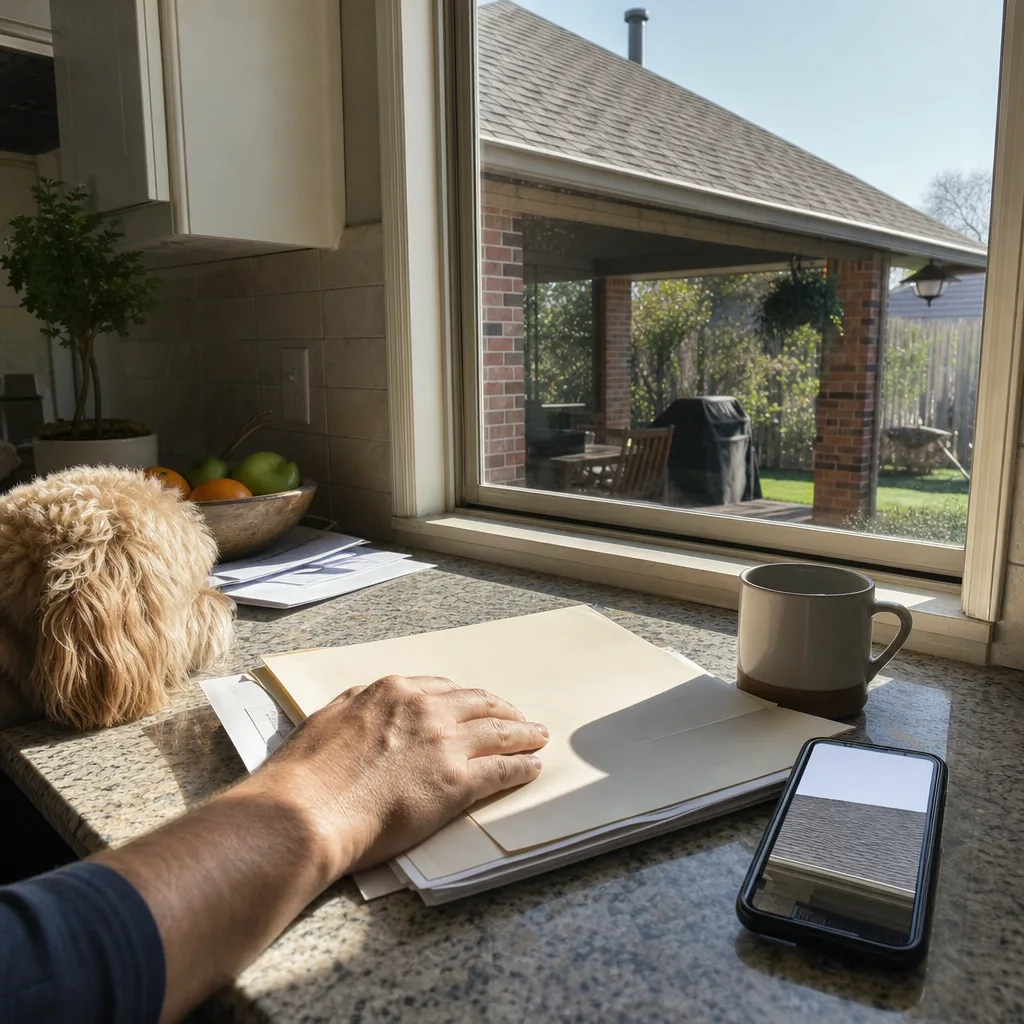
- Dark streaks running down the shingles. Those black or gray stripes are usually algae, not damage. They’re mostly a looks problem. If the shingles under them lie flat and still have their granules, nothing is wrong with the roof itself.
- A small dusting of granules on a brand-new roof. New shingles shed loose, extra grit for a while after they go on. A light sprinkle in the gutters during the first year is normal. It isn’t the same as the sudden pile after a hailstorm described above.
- A stain right below an upstairs bathroom. If the spot sits under a tub, shower, or toilet and doesn’t change with the weather, the roof may have nothing to do with it. Notice whether it grows after rain or after someone showers. That one clue can save you an inspection you don’t need.
- Water coming in around a window or along an outside wall. Sometimes the leak is a failed seal around the window or a gap in the siding, not the shingles. A stain low on a wall, below the window frame, points away from the roof.
- Gutters spilling over in a heavy rain. Clogged gutters overflow and send water down the side of the house. That can look like a roof leak from inside, but the fix is in the gutter, not the roof.
- A storm that rolled through without hail on your street. Straight-line wind and heavy rain don’t damage every roof they touch. If nothing is missing, nothing is in the yard, and nothing new is washing out of your downspouts, you likely don’t need anyone on your roof.
Waiting is also fine when your roof is fairly young and you can’t find any of the warning signs covered earlier on this page. A roof doesn’t need a yearly visit just because someone knocked on your door and said the neighborhood “got hit.” Hail in North Texas can be very spotty. One side of U.S. 80 can take a beating while the other side barely gets wet. If your own roof shows no clues, a neighbor’s new roof isn’t a reason to replace yours.
A single shingle in the grass doesn’t always mean trouble either. After a windy night in Sunnyvale, debris can blow in from down the block. Before you worry, look up and check whether there’s a gap or a bare strip on your roof where that shingle would have come from. If the roof looks whole, it may not be yours.
Here’s a fair test. If you can’t point to a sign, the roof isn’t old, and no storm with hail crossed your street, you can keep watching from the ground. Take a photo now so you have something to compare against after the next spring storm. That isn’t putting things off. It’s knowing your roof well enough to tell when something has changed.
Frequently Asked Questions
Common questions about asphalt shingle roofing in Sunnyvale, TX
How long does an asphalt shingle roof replacement take?
Most asphalt shingle roof replacements on a typical Sunnyvale home take one to two days once work starts. Larger two-story homes or steep rooflines can add extra time. Weather matters too, since crews won’t tear off a roof with rain or high wind in the forecast. Your roofer should give you a realistic start-to-finish window before work begins.
Can I stay home during a roof repair or replacement?
Yes, you can stay home during a roof repair or replacement. Expect noise from hammering and foot traffic overhead, plus some vibration felt inside the house. Pets do better in a closed room or crate, since nail guns and ladders near doors can spook them. Parking your car away from the driveway also keeps it clear of falling debris.
What should I ask a roofer before hiring them for storm damage work?
Ask for proof of insurance sent directly from their agent, who pulls the permit, and a written estimate before anything is signed. These three questions matter most after a hailstorm, when out-of-town trucks often show up in Sunnyvale driveways within days. A company with a real local address is one you can find again if a problem shows up later. Get the scope, materials, and price in writing before you agree to anything.
Ready to Get Started?
Schedule Your Free Inspection. Call (972) 288-9587 today.