
Metal Roofing in Sunnyvale, TX: Is It Right for Your Roof?
Metal roofs built to stand up to North Texas hail and wind – with a free inspection and a straight answer on whether metal fits your home.
What’s Covered on This Page
- Metal Roofing Stands Up to North Texas Hail and Wind
- When Metal Roofing Is the Right Call – and When It Isn’t
- What Happens During a Metal Roofing Inspection and Estimate
- Metal Roofing and Your Insurance Claim After a Storm
- How Metal Roofing Pricing Works
- How long does a metal roof last compared to shingles?
- Does a metal roof affect my homeowners insurance rate?
- What maintenance does a metal roof need after it’s installed?
Metal Roofing Stands Up to North Texas Hail and Wind
If you’re thinking about metal roofing, it’s probably because you’re tired of the spring routine. A storm rolls through Sunnyvale, the shingles take a beating, and you’re on the phone with your insurer again. Metal is a strong answer to that problem. But it’s not magic. The roof only lives up to its reputation when it’s picked and put on for the weather we get here.
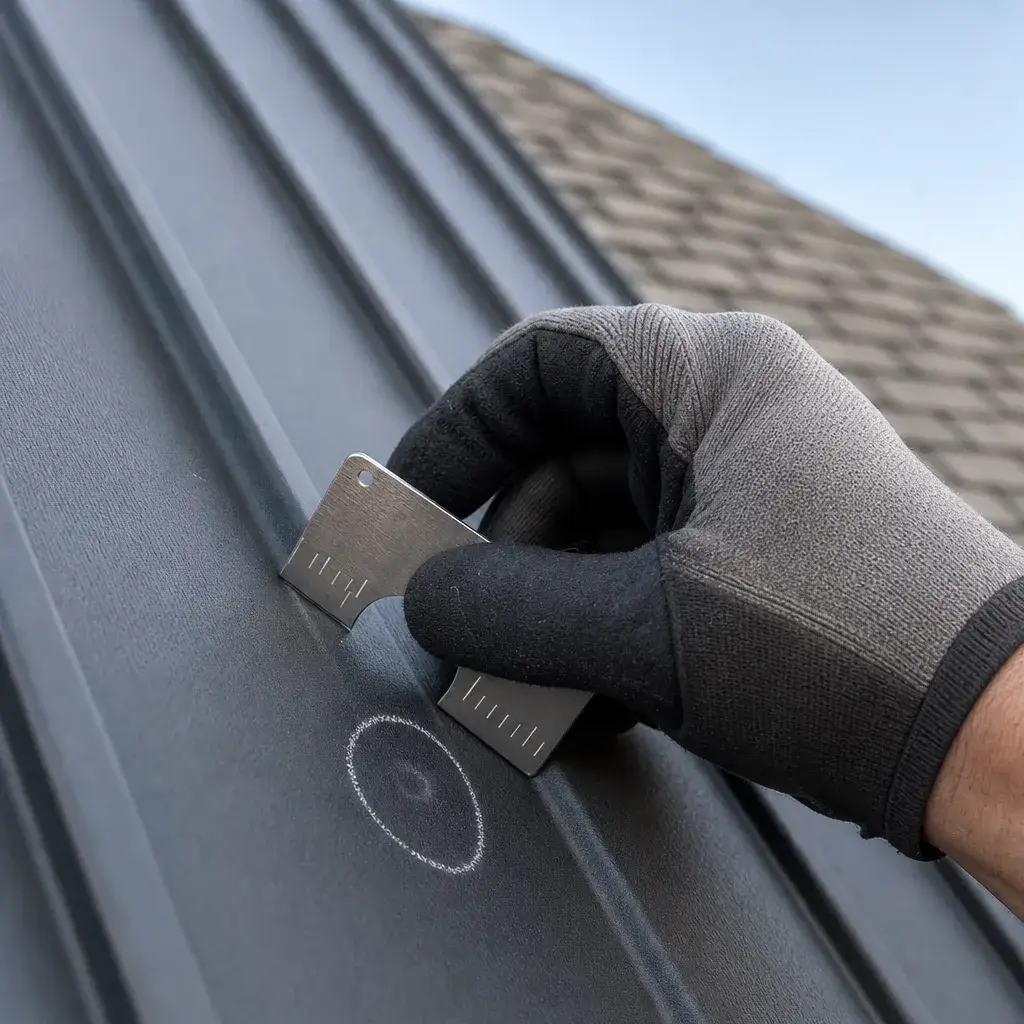
Here’s what each kind of North Texas weather does to a metal roof, and what decides whether yours handles it.
- Hail: Metal doesn’t crack, split, or shed granules the way shingles do, so hail rarely punches a hole through it. What hail can do is dent it. Thicker panels and impact-rated products dent less. Thin, soft metal can look like a golf ball after a bad storm, even if it still keeps the water out.
- Straight-line wind: Wind doesn’t usually tear off a whole roof. It gets under an edge, the ridge, or a loose fastener and pries from there. Standing seam panels have raised seams and hidden clips, with no screws poking through the face. They give wind fewer places to grab than panels screwed straight through the surface.
- Summer heat and sun: A light or reflective finish bounces back a good share of the sun instead of soaking it into your attic. That helps on a hundred-degree July afternoon. Metal also grows and shrinks as it heats and cools, so the fastening has to let it move without loosening screws or wearing holes over time.
- Ice storms: Metal sheds ice and sleet faster than shingles. That’s good for the roof. It can also mean a slab of ice sliding off over your front door or driveway, so it’s worth talking about where that runoff lands.
That dent question matters more than most people expect. A dented panel can still be a watertight roof. Some insurance policies treat that kind of cosmetic hail damage differently than damage that lets water in. Before you choose a metal roof, ask your insurance agent how your policy handles dents on metal. That way you’re not surprised after the next storm.
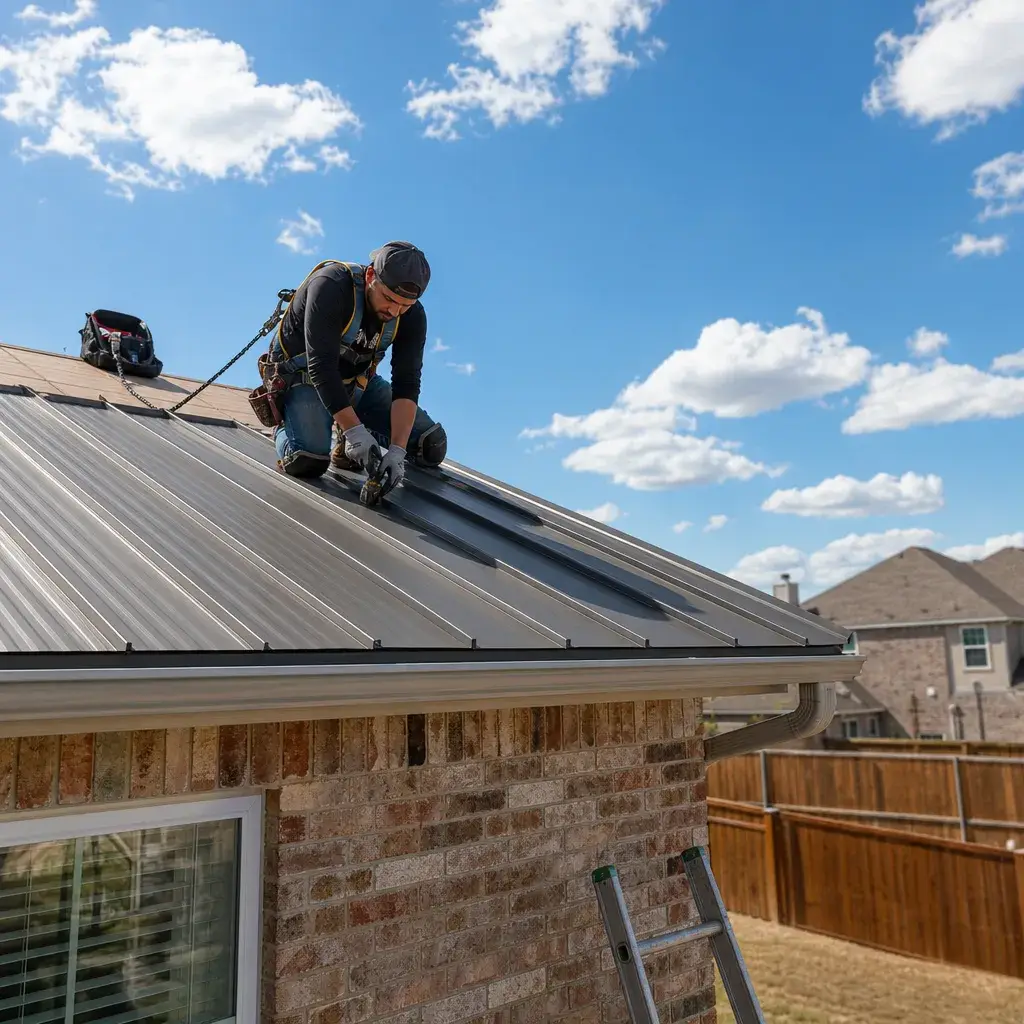
Your house matters too. A 1970s brick ranch with a simple low roof is a very different job than a newer two-story home with valleys, dormers, and an HOA that wants to approve the color first. More valleys and walls mean more flashing, the metal trim that seals the spots where roof planes meet. That’s where a metal roof is most likely to leak if the work is rushed.
So the real decision isn’t just metal or not. It’s which metal, how thick, which panel style, and who stands behind it. ERO DFW is headquartered right here in Sunnyvale. When you ask, we’ll look at your roof for free and tell you whether metal makes sense for your home and your budget, or whether another roof would serve you better.
When Metal Roofing Is the Right Call – and When It Isn’t
Metal is a great roof for some homes and the wrong roof for others. Here’s how to tell which side you’re on before you spend a dime.
Metal usually makes sense when:
- You plan to stay put for a long time. Metal costs more up front than shingles. You get that money back by not replacing the roof again, so the longer you live there, the better the deal.
- You’re worn out by the storm cycle. If your shingles have been patched or replaced after more than one spring storm, a roof that holds up better to hail and wind starts to pay off in peace of mind.
- Your attic bakes every summer. A light, reflective finish can take some of the edge off a hot upstairs room on a hundred-degree day.
- Your roof shape is fairly simple. A ranch home with a few long, plain slopes is a good fit for metal. There are fewer cuts and fewer seams, and the job goes smoother.
Metal is probably not the right call when:
- You’re selling in the next few years. You may not get the extra cost back in the sale price. A well-installed shingle roof is often the smarter move before you list.
- Your current roof still has life in it. If it’s only a few years old and has one leak or a few lost shingles after a storm, a repair is the honest answer. Don’t tear off a good roof just because metal sounds nice.
- Your budget is tight right now. Metal is a bigger check today. Impact-resistant shingles may give you a lot of the hail protection for less money.
- Your HOA says no. Some neighborhoods limit roof materials or colors. Check your HOA rules before you fall in love with a panel style.
- Your roof is nearly flat. A low, flat section over a porch or addition may need a different system made for that slope.
There are also a few gray areas worth thinking through.
Noise is the one people ask about most. Metal put over solid roof decking, which is the wood layer under your roof, with a good underlayment on top usually isn’t much louder than shingles inside the house. Metal on open framing, like a barn or a carport, is a different story.
Looks matter too. If dents would bother you every time you pull into the driveway, and your policy doesn’t cover cosmetic hail damage, that’s a real cost to weigh. It’s the same dent question from above, just viewed as part of the decision.
Then there’s what’s under the old roof. If the decking is soft or rotted, it has to be fixed first, no matter what material goes on top. That’s not a reason to skip metal. It just means your final price depends on what’s found once the old roof comes off. A good bid should say how that will be handled before any work starts.
If you read the second list and saw your home in it, that’s a good thing to know now. Shingles, tile, or a simple repair may serve you better, and there’s nothing wrong with that choice.
What Happens During a Metal Roofing Inspection and Estimate
Once you call, we respond to your inspection request within 24 hours. The inspection is free. One of our sales managers comes out, looks over your roof and your property, and talks through your options with you. That includes the options that aren’t metal. Then you get a written estimate before you sign anything.
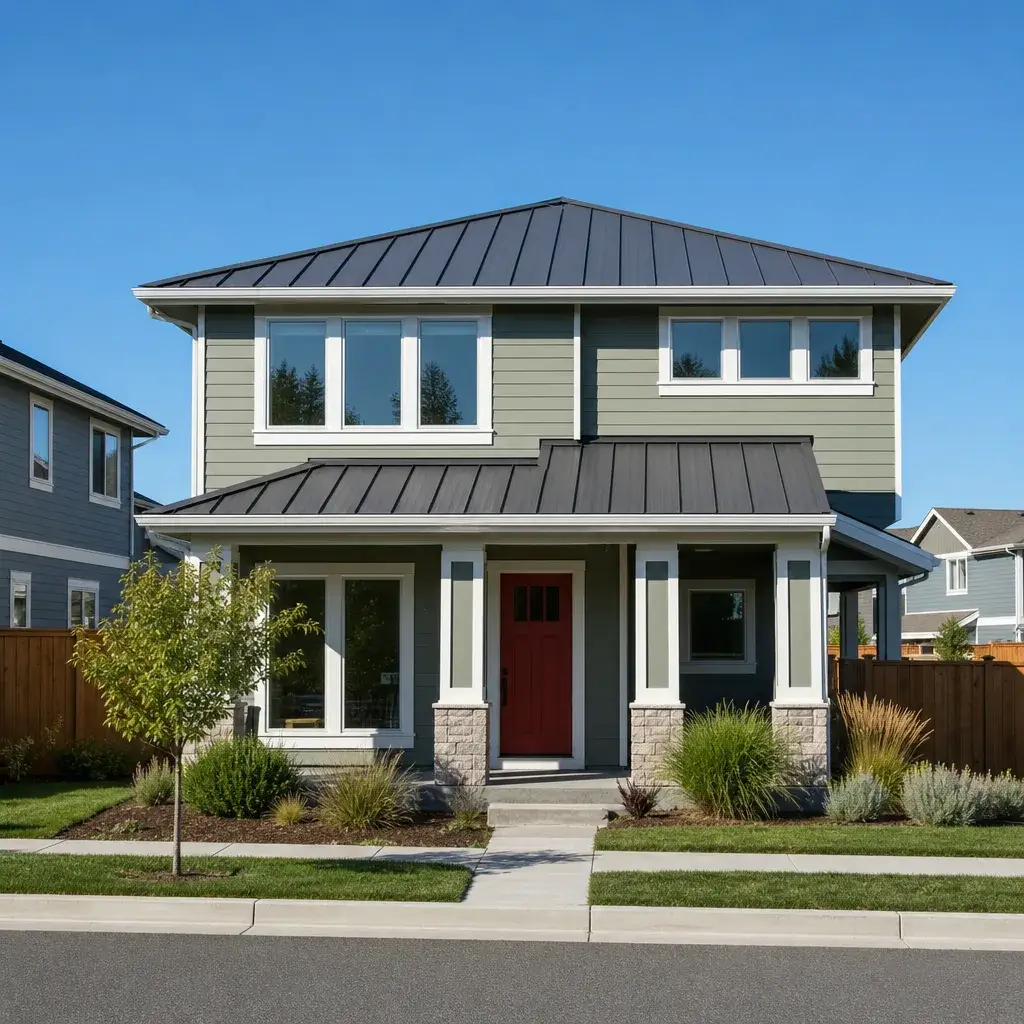
A good metal roofing inspection looks at more than the shingles you have now. It should answer the questions that decide how well metal will hold up on your house:
- How many valleys, walls, chimneys, and skylights the roof has, since each one needs flashing and careful trim work.
- Whether any section is too low or flat for the panel style you want.
- Signs that the decking may be soft, so you know up front that repairs could come up once the old roof is off.
- How the attic breathes, because a hot, poorly vented attic works against any roof in a Sunnyvale summer.
- Where ice and rain will slide off and land, like over a door, a walkway, or the driveway.
The estimate is where you protect yourself. A vague one-line bid that just says metal roof leaves too much room for surprises. A solid metal roofing bid should name each of these in writing:
- The panel style, such as standing seam with hidden clips or exposed-fastener panels.
- The metal’s thickness, often listed as gauge, where a lower number means thicker metal.
- The finish and color, and whether it’s a light, reflective coating.
- The underlayment, the water-shedding layer that goes under the panels.
- Flashing and trim at every edge, ridge, valley, and wall.
- Tear-off and haul-away of the old roof.
- How decking repairs will be priced if bad wood turns up.
- Permits, HOA approval, and the expected timeline.
Those same items drive your price. Standing seam usually costs more than screw-down panels. Thicker metal costs more than thin metal. A plain ranch roof costs less per square foot than a two-story home with dormers and a lot of valleys. Rotted decking adds to the bill no matter what goes on top. If two bids look far apart, compare them line by line. Often one of them leaves something out.
If a storm is part of the story, we’ll walk you through the claim. A project manager can meet with your insurance adjuster when that applies. We won’t promise what your insurer will approve, and you pay your deductible, nobody else. If metal costs more than your claim covers, financing is available, so ask about it during the visit.
Once you approve the work, your project manager handles materials, scheduling, any Town of Sunnyvale permits or HOA approvals, updates along the way, and the final walkthrough. You’ll have one person to call.
ERO DFW is family-owned since 2019, and we’re licensed, bonded, and insured. We’re headquartered at 308 U.S. 80 Frontage Road in Sunnyvale, with ten local offices across the Metroplex. That’s not the crew that knocked on your door an hour ago. We’ll still be here after the storm.
Need help with your metal roofing project?
Schedule Your Free Inspection. Exteriors, Roofing & Outdoor Living is ready to help.
Metal Roofing and Your Insurance Claim After a Storm
A storm just rolled through Sunnyvale. You’re wondering if the roof is damaged, who to call first, and what this will cost you. Here’s how a claim usually goes, one step at a time. It works the same way whether you already have a metal roof or you’re thinking about swapping hail-beaten shingles for metal.
- Stop the water first. If something’s dripping inside, catch it and cover what you can. Keep receipts for any temporary fix, like a tarp.
- Write down the storm date and take photos. Shoot the roof from the ground, plus the gutters, downspouts, siding, window screens, and anything dented in the yard. Soft metal like gutters shows hail marks clearly, and those marks help show the storm hit your house.
- Get the roof inspected. An honest inspection tells you whether the damage is worth filing for. If the repair costs less than your deductible, a claim may not make sense.
- File with your insurance company. They’ll send an adjuster, the person who inspects the damage and writes up what the policy will pay.
- Compare the adjuster’s report with your inspection. If something was missed, like torn flashing or a lifted seam, that’s the time to raise it. When it applies, an ERO DFW project manager can meet the adjuster on your roof.
If you’re upgrading from shingles to metal, know this going in. Most policies pay to replace what you had with something of like kind and quality. If your old roof was shingles, the claim is usually written for shingles. The difference in price to go metal is yours to cover. That’s where the financing we mentioned earlier can help.
Also check whether your policy pays replacement cost or actual cash value. Replacement cost pays what it takes to put a new roof on. Actual cash value pays what your old roof was worth after years of wear, which can be a lot less. Your policy’s declarations page, the summary sheet at the front, will tell you which one you have.
If you already have a metal roof, the adjuster will look for damage that affects how the roof works. That means punctures, bent or torn flashing, lifted seams, loose fasteners, and wind damage at the edges and ridge. Dents alone fall under that cosmetic coverage question from earlier, so pull out your policy before the adjuster arrives.
Don’t let anyone rush you after a storm. Before you sign anything, you should have a written estimate in your hand. Be careful with any paper that hands your claim or your insurance check over to a contractor. We can’t tell you what your insurer will approve, and nobody honest can. What we can do is look at your roof, show you what we found, and walk through the paperwork with you.
Watch Our Video
See How We Handle Metal Roofing in Sunnyvale, TX
Exteriors, Roofing & Outdoor Living — Serving Sunnyvale, TX and surrounding areas
How Metal Roofing Pricing Works
Metal roofing costs more up front than shingles. That part’s no secret. What surprises people is how the number gets built. Once you know how roofers measure and price the job, a bid stops looking like a mystery and starts looking like a list you can check.
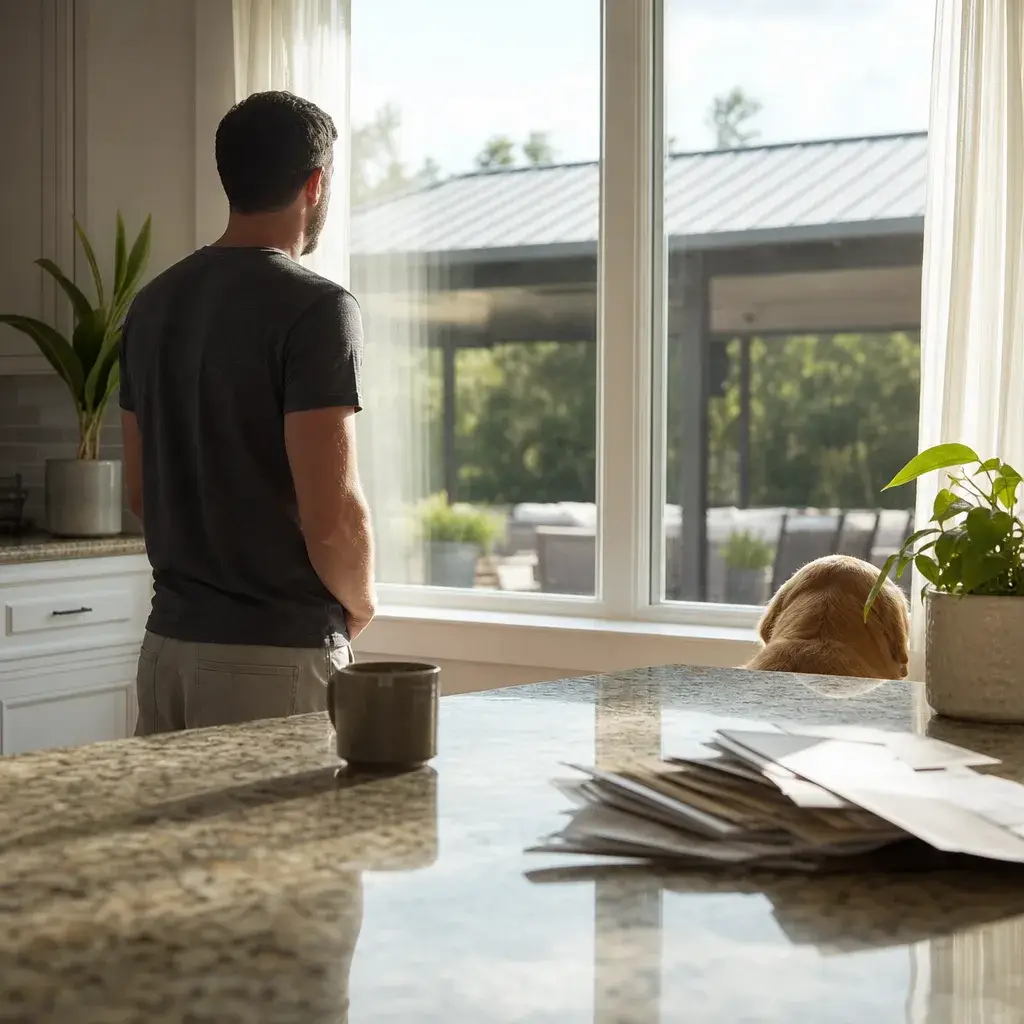
Most roofers price by the square. One square is 100 square feet of roof. Your roof is bigger than your house’s floor plan, because it slopes and hangs past the walls. A steeper roof has more surface, and it takes more time and safety gear to work on. Two homes the same size on the same Sunnyvale street can need very different amounts of metal.
Metal panels are cut to fit your roof. Every hip, valley, and odd angle means more cutting, and some of that metal ends up as scrap. A simple ranch roof wastes very little. A cut-up two-story roof wastes more, and that waste is part of what you’re paying for. It’s one more reason the panel and complexity choices we covered earlier move the price so much.
A few other items can quietly change the total:
- Tear-off or overlay. Some crews offer to put metal right over your old shingles to save on tear-off. Ask whether that’s allowed for your home. Ask, too, how anyone will spot soft decking that stays hidden under the old roof.
- Layers. If your house already has two layers of shingles, removing both takes more labor and more trips to haul it away.
- Gutters and edges. Gutters often come off so the edge trim can go on right, then go back up. If yours are worn out, this is a good time to price new seamless gutters.
- Attic airflow. A ridge vent or other roof ventilation upgrade may be added so your attic can breathe through a long, hot summer.
- Timing. After a big spring hailstorm, crews get booked up, and some metal products can take longer to arrive. Planning outside the rush gives you more choices and more time to compare.
Watch how a bid handles unknowns. A fixed price for the full job is easy to compare. An allowance is a placeholder amount for something nobody can see yet, like decking repairs. Allowances are normal, but ask what happens if the real cost goes over. Ask, too, whether you’ll see it before anyone does the work.
Then look past the first check. Take the total and divide it by the number of years you plan to live in the house. Do the same with a shingle bid, and count how many times shingles might need replacing over that stretch after North Texas storms. If you’re staying put, metal often looks better on that math. If you’re moving soon, it often doesn’t, and that’s fine to admit.
Before you hire anyone, ask a few plain questions. How did you measure my roof? What’s included, and what isn’t? Which parts are fixed, and which are allowances? Who do I call if something’s wrong a year from now? Good answers come easily. Fuzzy ones tell you something too.
Frequently Asked Questions
Common questions about metal roofing in Sunnyvale, TX
How long does a metal roof last compared to shingles?
A well-installed metal roof typically outlasts shingles by decades, which is why it pays off most for homeowners who plan to stay put. The panel type and metal thickness you choose play a big role in how long it holds up. If you move in a few years, you may not recover that extra upfront cost in your home’s sale price.
Does a metal roof affect my homeowners insurance rate?
It can, since some insurers offer savings for impact-resistant roofing, but this varies by policy and carrier. Ask your agent directly how your specific policy treats metal roofing and whether it affects your premium. Also ask how that same policy handles cosmetic hail dents, since that question matters most after a North Texas storm.
What maintenance does a metal roof need after it’s installed?
Metal roofs need far less upkeep than shingles, but they still benefit from a yearly look at the flashing, seams, and fasteners. Valleys, chimneys, and skylights are the spots most likely to need attention over time, since each one relies on flashing to stay watertight. A quick visual check after a big Sunnyvale hailstorm can catch loose trim or dented panels early.
Ready to Get Started?
Schedule Your Free Inspection. Call (972) 288-9587 today.