
Roof Replacement in Sunnyvale, TX: Know Before You Sign
A full tear-off and new roof done right – starting with a free inspection, an honest repair-or-replace answer and a complete written estimate.
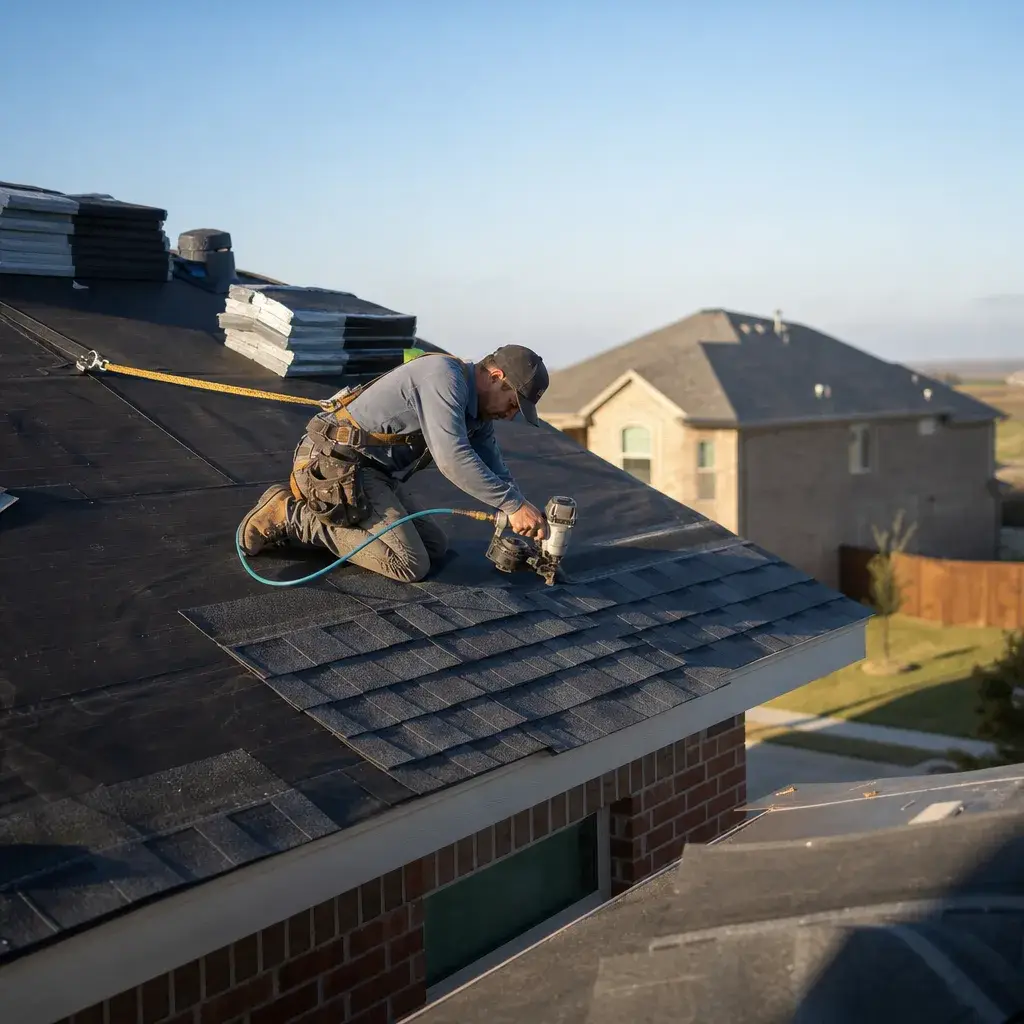
What’s Covered on This Page
- Signs Your Roof Needs Full Replacement, Not a Patch
- When Repair Beats Full Replacement
- Hail and Wind Damage: What to Do First After a North Texas Storm
- How the Insurance Claim Process Works
- What a Complete Written Estimate Should Include
- How long does a full roof replacement take in Sunnyvale?
- Can I stay in my home during a roof replacement?
- Do I need a permit for a roof replacement in Sunnyvale?
- What should I do with my yard and driveway before the crew arrives?
Signs Your Roof Needs Full Replacement, Not a Patch
Here’s the simplest way to think about it. If the problem lives in one place, you probably need a repair. If it shows up everywhere you look, patching starts to cost more than it saves. A new roof is the honest answer.
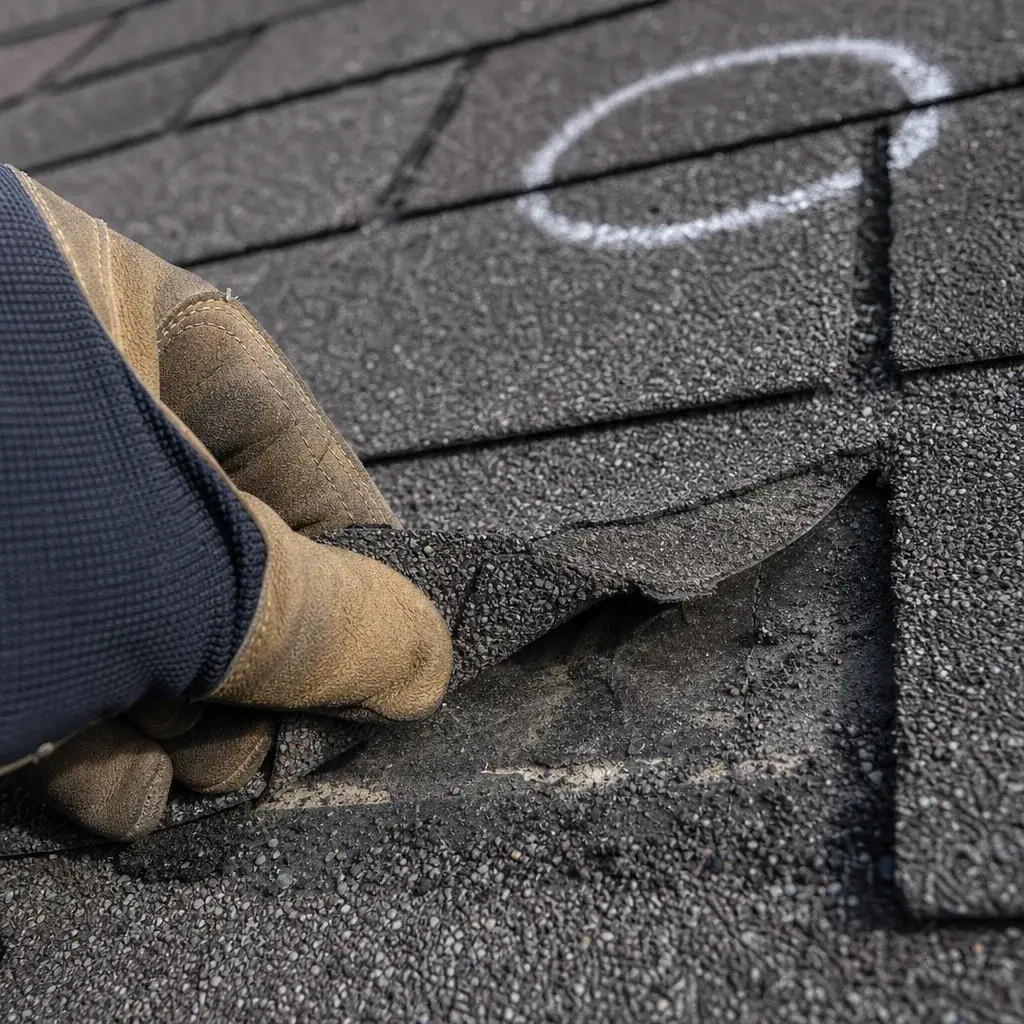
- Hail hits on every side of the house. One dented vent cap is a repair. Dark bruises and cracked shingles on every slope after a spring storm usually mean the whole surface has been weakened.
- Granules piling up in your gutters. Those sandy bits are the shingle’s armor against the sun. When you see bare, shiny patches on the roof, years of Texas summer UV have worn that armor away.
- Curling, cupping, or cracked shingles across large areas. Heat bakes shingles until they turn brittle. A roofer can’t lift an old, brittle shingle to slide a new one in without cracking the ones next to it.
- Leaks that keep moving. If you fixed a ceiling stain in the hall last year and now there’s one in the bedroom, the roof is failing in more than one spot.
- A soft or sagging roofline. The decking is the layer of wood boards under your shingles. If it feels spongy underfoot or dips between rafters, water has been getting in for a while, and that wood has to come off.
- Age plus wear. A roof that’s fifteen to twenty years old and showing any of the signs above is near the end of its working life, even if it isn’t leaking yet.
- A home inspection or insurance letter that flagged the roof. Buyers and insurers look hard at roof condition. Have someone walk the roof and tell you whether the concern is real.
Where you live in Sunnyvale can shape what this looks like. On a 1970s brick ranch home, it’s often an original or second roof that’s simply worn out from decades of sun. On a larger two-story home built in the 1990s or later, the trigger is more often a single bad hailstorm that damaged every slope at once.
There’s one more sign people miss: matching. If your shingle style or color isn’t made anymore, a patch will stand out from the street. That matters if you plan to sell, or if your neighborhood has rules about how your home looks.
Now the other side, said plainly. You don’t need a new roof if a few shingles blew off in a straight-line wind on a roof that’s otherwise in good shape. You don’t need one if a leak traces back to the flashing, the thin metal strips that seal around vents, chimneys, and walls. And you don’t need one for a single damaged spot on a younger roof. Those are repair jobs, and a good roofer will tell you so. Our roof repair page covers that work.
If you can’t tell which side of the line your roof is on, that’s normal. Most of these signs are hard to judge from the ground, and nobody should ask you to decide based on a guess.
When Repair Beats Full Replacement
Repair is the right call when your roof still has good years left and the problem has a clear edge you can point to. In those cases, spending less now is the smart move, not a shortcut.
These problems can look scary from inside the house but are usually small fixes:
- A cracked pipe boot. That’s the rubber collar around the plumbing pipes that stick up through your roof. Texas sun dries it out and cracks it long before the shingles wear out. Swapping it can stop a leak that left a big stain on your ceiling.
- Lifted or missing ridge caps. These are the shingles that run along the peak, and they catch the most wind in a storm. New caps fix the problem without touching the rest of the roof.
- Nail pops. A nail backs out over time, lifts the shingle above it, and lets water in through the hole. The fix is to reset the nail and seal the spot.
- Hail that dented metal but not the shingles. Vents, gutters, and downspouts can show dings while the shingles held up fine. Those parts can be replaced on their own.
- A hot attic over a sound roof. Poor airflow bakes shingles from below and pushes your summer bills up. Fixing the roof ventilation can add years to the shingles you already have.
- A leak around a skylight. The cause is often the skylight’s seal or frame, not the roof around it.
Here’s a simple test for any repair: how many years does it buy you? Fixing a pipe boot on a roof with plenty of life left is money well spent. Paying for one repair after another on a roof near the end of its life is money you’ll wish you had put toward the new one. A fair roofer should be able to tell you roughly where your roof sits on that line and why.
Insurance follows the same logic. If storm damage is limited to a few spots and the repair costs less than your deductible, filing a claim may not make sense. You’d pay the full repair cost either way. Get the repair priced first, then decide whether to call your insurer.
Waiting is also a real option. If your roof is getting older but isn’t leaking, still has most of its granules, and lies flat, you don’t have to replace it this year. That gives you time to set a budget, compare written bids, and choose materials, such as Class 4 impact-resistant shingles built to take harder hail. You get to decide calmly instead of in the rush after a spring storm, when the trucks and door-knockers show up all over Sunnyvale at once. A small repair or two can keep the roof watertight while you plan.
While you wait, a few things are worth doing yourself. Keep your gutters clear so water runs off the roof edge instead of backing up under the shingles. After a heavy rain, check your ceilings and closets for new stains. If you find one, write down the date. That note tells a roofer whether a problem is new, growing, or holding steady. It’s the best tool you have for knowing when a repair has stopped being enough.
Hail and Wind Damage: What to Do First After a North Texas Storm
Spring hail season in North Texas runs roughly March through June, and straight-line winds can hit any time a big line of storms comes through. When one passes over Sunnyvale, the next few days matter more than the next few hours. You have time to do this right. Here’s the order we’d follow if it were our own house.
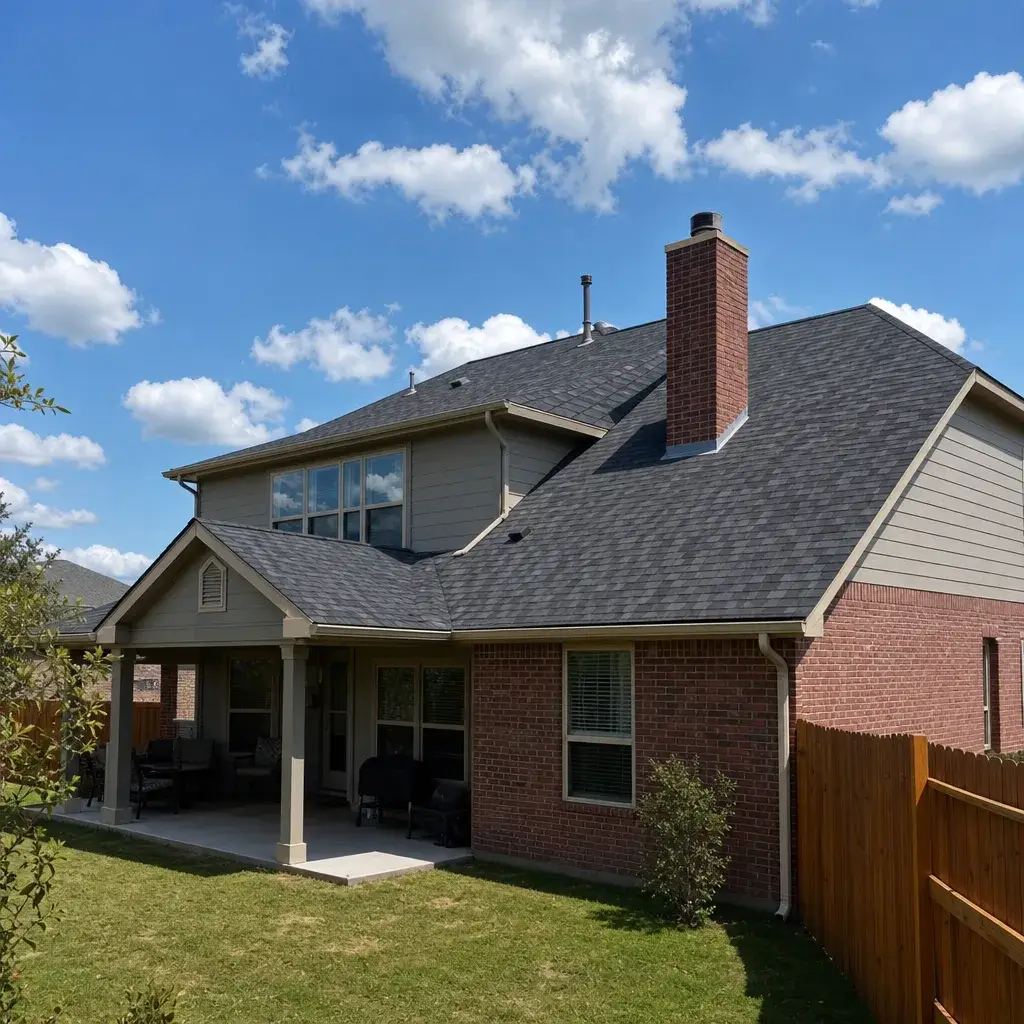
- Take photos while the evidence is fresh. Shoot hailstones in the yard next to a coin or ruler, dents in your gutters and downspouts, dings on your car or mailbox, and any new ceiling stains inside. Your phone saves the date. Those pictures help later if anyone asks when the damage happened.
- Deal with active water first. If water is coming through the ceiling, move what you can, catch the drips, and get the hole covered. Emergency roof tarping keeps a small leak from turning into wet insulation and ruined drywall while you sort out the rest.
- Get the roof looked at before you file. You can call your insurer whenever you like. But a claim goes on your record either way, so it helps to know first whether there’s real damage to claim. Hail bruises and wind-creased shingles are often impossible to see from the driveway.
- Check your policy for deadlines. Most policies set a time limit for reporting storm damage. Find yours so you aren’t rushed, and so you don’t wait too long either.
Then come the door-knockers. After a big storm, trucks from all over show up in neighborhoods off U.S. 80 and across the east side of the Metroplex. Some are honest. Some will be gone before the first rain shows you their work. A few questions sort them out fast:
- Where’s your local office, and will you be here next year if something goes wrong?
- Will you give me a written estimate before I sign anything?
- Are you licensed, bonded, and insured, and can I see proof?
- Why do you need my signature today?
Be careful with anyone who offers to cover, waive, or work around your deductible. Under Texas law, you pay your deductible, nobody else. A roofer who says otherwise is asking you to take part in something that can put your claim at risk. Also slow down before you sign any paper that hands your claim or your insurance check over to a contractor. Read it, and ask questions.
This is where a local team earns its keep. ERO DFW is family-owned since 2019 and headquartered right here in Sunnyvale, at 308 U.S. 80 Frontage Rd. We respond to every inspection request within 24 hours. The inspection is free, and you get an honest opinion. If we find storm damage, we’ll walk you through the claim one step at a time, and your project manager can meet the adjuster on your roof so nothing gets missed. We can’t promise what your insurer will decide. What we can promise is that you’ll understand every step and see every number in writing.
If the inspection shows the damage is minor, we’ll say so. Then you can decide whether a claim is worth it, using the same math covered above.
Proudly serving Sunnyvale, TX – reach out anytime.
Schedule Your Free Inspection. Exteriors, Roofing & Outdoor Living is ready to help.
How the Insurance Claim Process Works
Once an inspection confirms real storm damage, the claim follows a fairly set path. If you know the steps ahead of time, nothing in the paperwork will catch you off guard.
- You file the claim. Call your insurer or use their app. Give them the storm date and your photos. You’ll get a claim number, so write it down. Every call after this starts with it.
- The insurer sends an adjuster. The adjuster works for the insurance company, not for you. They’ll walk the roof, count hail hits on each slope, and check gutters, vents, and siding. If you’ve hired a roofer, your roofer can be there to point out damage the adjuster might miss.
- You get the insurer’s written estimate. It lists every item they agreed to pay for and what each one is worth.
- You compare it to your roofer’s written estimate. Go line by line. Look for missing items, such as vents, flashing, gutters, or the full number of slopes.
- Money arrives in stages. The work happens between the first payment and the last one.
That last step confuses a lot of people, so here’s how it usually works. Look at your policy’s first page, called the declarations page. It will say whether your roof is covered at replacement cost or actual cash value.
- Replacement cost means the insurer pays what it costs to put a new roof on today. They often hold part of that money back at first. This part is called depreciation, which is the value your old roof lost to age. You get the first check, do the work, and send in the final invoice. Then the insurer releases the money it held back.
- Actual cash value means the insurer pays only what your old roof was worth on the day of the storm. On a roof that’s fifteen or twenty years old, that can be far less than a new roof costs. Some Texas policies also pay for roofs on a set schedule based on age.
Either way, your deductible comes out of the total, and it’s yours to pay, as covered above.
If you have a mortgage, the check may be made out to both you and your lender. Call your mortgage company early and ask how they handle roof claims. Some want an inspection before they sign the check over, and you don’t want to find that out in the middle of the job.
Sometimes the roofer finds damage that nobody could see before the old shingles came off. Rotted decking is a common example. When that happens, the roofer photographs it and sends the insurer a request to add it to the claim. This request is called a supplement. The insurer reviews it and decides. It isn’t automatic, but it’s a normal part of the process.
Insurance pays to put back what you had. If you want something better, such as Class 4 impact-resistant shingles that hold up to bigger hail or a metal roof, you pay the difference. Before you decide, ask your insurer whether an impact-resistant roof would lower your premium. Financing is available through ERO DFW if you’d like to spread that difference out.
If you think the insurer’s estimate is wrong, you can ask for a second look at the roof. If you still have concerns after that, the Texas Department of Insurance takes questions and complaints from homeowners.
Watch Our Video
See How We Handle Roof Replacement in Sunnyvale, TX
Exteriors, Roofing & Outdoor Living — Serving Sunnyvale, TX and surrounding areas
What a Complete Written Estimate Should Include
A good estimate tells you what’s coming off your house, what’s going on, and what happens if the crew finds a surprise in between. If two bids are far apart on price, the gap usually hides in what one of them left out. At ERO DFW, you get a written estimate before you sign anything, and here’s what we think every roofer’s estimate should show you.
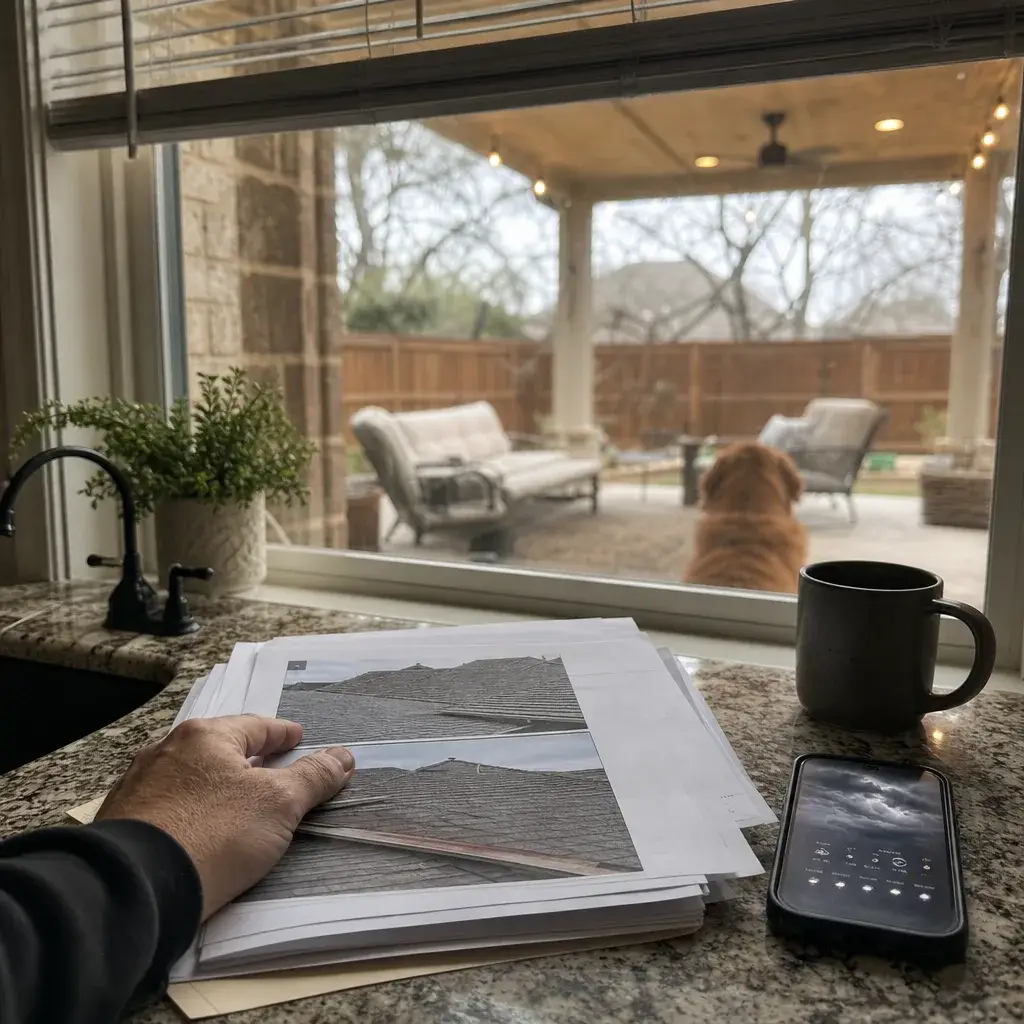
- Roof size in squares. Roofers price by the square, which is 100 square feet of roof. Your estimate should list the total, and you can check whether bids measured your roof about the same.
- Tear-off, not an overlay. A full replacement should say the old shingles come off down to the wood. It should also say how many layers are up there now, since each extra layer adds labor and dump fees.
- The shingle by type and rating. Look for words like architectural or Class 4 impact-resistant, plus the color. “New shingles” alone isn’t enough to compare.
- Everything under and around the shingles. That means underlayment, the water-shedding layer under the shingles. It also means drip edge along the roof’s edges, starter strips, ridge caps, pipe boots, and vents.
- New flashing or reused flashing. The bid should say which. Old, rusted flashing around a chimney or wall is a common reason a new roof leaks.
- Ventilation. If your attic runs hot, the estimate should say how airflow will be fixed, such as ridge vents along the peak.
- A per-sheet price for rotten decking. No one can see the wood until the shingles are off. A fair bid names the price per sheet up front, so a bad spot doesn’t turn into a blank check.
- Permit. Re-roofs in Sunnyvale go through the Town of Sunnyvale’s permit office. The estimate should say who pulls the permit and whether its fee is included.
- Cleanup. Look for haul-off of old materials and a magnet sweep of your yard and driveway for loose nails.
- Payment schedule. It should say when each payment is due and what work has to be done first.
A few things push the price up or down no matter who you hire. These include a steep roof that needs more safety gear, a two-story home, lots of valleys and dormers, more than one old layer to remove, and the shingle grade you pick. A 1970s single-story ranch and a 1990s two-story with a busy roofline can be close in square footage and still price very differently.
If this is an insurance job, line the estimate up against the adjuster’s, as covered above. The items should match closely enough that you can see what’s covered and what’s an upgrade you chose.
Frequently Asked Questions
Common questions about roof replacement in Sunnyvale, TX
How long does a full roof replacement take in Sunnyvale?
Most roof replacements on a typical Sunnyvale home take one to three days once the crew starts, depending on roof size and how many layers have to come off. A steep roofline, lots of valleys, or rotten decking found underneath can add time. Weather matters too, since crews won’t tear off shingles with rain or high wind in the forecast.
Can I stay in my home during a roof replacement?
Yes, most homeowners stay home during the work. Expect noise from the tear-off and nailing, and some vibration through the house. Pets do better in a back room or boarded elsewhere for the day, since the yard will have ladders, dumpsters, and crew moving around it.
Do I need a permit for a roof replacement in Sunnyvale?
Yes, re-roofs in Sunnyvale go through the Town of Sunnyvale’s permit office. Your roofer’s written estimate should say who pulls the permit and whether the fee is included, so ask before you sign if it isn’t listed.
What should I do with my yard and driveway before the crew arrives?
Move cars out of the driveway and clear patio furniture, grills, or potted plants away from the house walls. Falling debris during tear-off can land several feet out, so give the crew open space on all sides. A good crew will do a magnet sweep for nails afterward, but clearing the area first keeps the job moving faster.
Ready to Get Started?
Schedule Your Free Inspection. Call (972) 288-9587 today.