
Roof Installation in Sunnyvale, TX
A new roof installed right from inspection to final walkthrough – starting with a free inspection and an honest answer on whether a repair would do.
What’s Covered on This Page
- Signs You Need a Full Roof Installation, Not a Repair
- When a Repair Is Enough and Full Installation Can Wait
- What Happens From Inspection to Final Walkthrough
- What Drives Roof Installation Cost
- Insurance Claims for Storm-Related Roof Installation
- How long does a full roof installation take?
- Can I get multiple roofing bids before deciding?
- What if the crew finds rotted wood after tearing off my old roof?
Signs You Need a Full Roof Installation, Not a Repair
Here’s the honest test we’d give you in your driveway. Is this one problem, or is the whole roof wearing out at once? One problem gets a repair. A roof that’s failing everywhere gets a new one, because patching it is like putting new tires on a car with a dying engine.
These signs point toward a full installation:
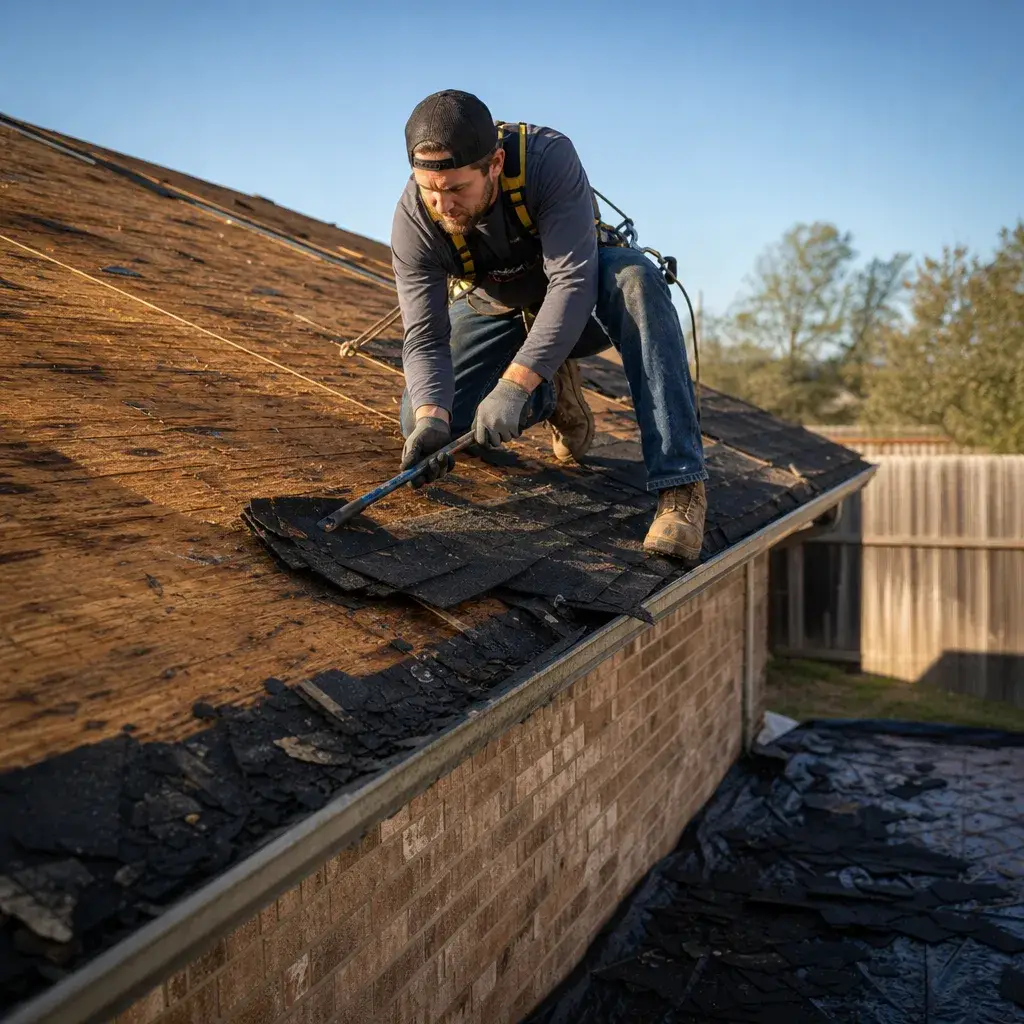
- Your roof is around fifteen to twenty years old and the shingles look tired. You’ll often find sandy granules piling up in your gutters or at the bottom of downspouts. Those granules are the shingle’s sun shield, and once they wash off, North Texas heat and UV bake the shingle underneath.
- Hail hit every slope, not just one side. A spring hailstorm doesn’t pick a single shingle. When bruises, cracks, or dents show up across the whole roof, spot repairs leave you with a patchwork that won’t hold up through the next storm season.
- You’ve had more than one leak in different rooms. One stain on the ceiling might be one bad spot. Stains in the hallway, a bedroom, and the garage usually mean the roof as a system is giving out.
- The roof feels soft or looks wavy. The decking is the wood boards under your shingles. If it’s spongy underfoot or the roofline sags, water has likely been getting in for a while, and that wood needs replacing.
- Shingles are curling, cupping, or cracking all over. Years of hundred-degree summers dry them out until they lift in straight-line winds and snap in an ice storm.
- You keep paying for repairs. If you’ve called a roofer two or three times in a couple of years, that money is better spent on a roof you can stop worrying about.
- A home inspection or your insurance company flagged the roof. If you’re selling, buying, or renewing a policy, a written note about the roof’s condition often settles the question for you.
Older 1960s to 1980s ranch homes around Sunnyvale and the nearby suburbs sometimes have a second layer of shingles laid right over the first. That extra layer adds weight and hides whatever is happening to the decking underneath. When it’s time for a new roof on a house like that, both layers should come off so the wood can be checked and fixed before anything new goes down.
Now the other side, because it matters just as much. You probably don’t need a new roof if the wind tore off a few shingles on a roof that’s only several years old. You probably don’t need one if a single leak traces back to the flashing, the metal strips that seal around chimneys, vents, and walls. And you don’t need one if a branch damaged one small area and the rest of the roof is solid. Those are repair jobs. If someone tells you otherwise without showing you widespread damage, get a second opinion.
If you’re not sure which side of the line you’re on, that’s exactly what a free inspection is for. You’ll get an honest opinion either way, and sometimes that opinion is “fix this one spot and you’re fine for years.”
When a Repair Is Enough and Full Installation Can Wait
A repair is enough when the roof still does its main job, keeping water out, and the problem has clear edges. Beyond the small cases above, a few more situations let you hold off on a new roof without putting your home at risk.
- Your roof is about ten years old or younger, and the damage sits on one slope. If the rest of the shingles still have their granules and lie flat, fixing that one section makes sense.
- The decking feels solid everywhere. If the wood under the shingles is dry and firm, you’re dealing with a surface problem, not a structural one.
- Your attic stays dry after a hard rain. Go up with a flashlight after a storm. No damp insulation, no dark spots on the wood, and no daylight through the boards are all good signs.
- The wear is mostly cosmetic. A little color fading or a few streaks don’t mean the shingles have stopped shedding water.
One honest catch with repairs: matching. If your shingles are a color or style that isn’t made anymore, a patch may not blend in. It’ll still keep water out, but you might see it from the street. Some folks don’t mind. Others, especially those planning to sell in a few years, decide that’s the moment to plan for a full roof. Either choice is reasonable, and it’s yours to make.
Waiting can also be the smart move when your roof is getting older but isn’t leaking. A fifteen-year-old roof that’s still sealed doesn’t have to come off this month. Planning ahead lets you set a budget and compare written bids side by side. You can also think through options like Class 4 impact-resistant shingles, which are tested to take harder hail hits, instead of deciding in a rush after a storm. Many North Texas homeowners schedule planned work outside the March through June hail season, so they’re not competing with every storm job in the Metroplex.
If hail is part of the picture, don’t let waiting turn into missing a deadline. Most homeowner policies set a time limit for reporting storm damage. Check your policy, or call your insurer, so you know your window before you decide to put things off.
While you wait, there’s plenty you can do yourself, and none of it means climbing a ladder onto the roof:
- Keep your gutters clear so water drains off the roof instead of backing up under the edge shingles.
- Look at the roof from the ground with binoculars after big wind or hail, and snap photos so you can compare over time.
- Check your ceilings and attic a few times a year, and right after storms.
- Trim back branches that rub the roof or hang over it.
If those checks keep coming back clean, your roof is telling you it has more years left. Believe it, and spend your money when the roof needs it.
What Happens From Inspection to Final Walkthrough
From your first call to the day the last crew truck pulls away, you work with one team. At every step, you’ll know who’s handling your roof. Here’s how a roof installation with ERO DFW moves along.
- You ask for an inspection. We respond to every inspection request within 24 hours, and the inspection is free.
- A sales manager looks at your roof. They check the property, explain your options in plain English, and hand you a written estimate before you sign anything. If a repair is all you need, that’s what you’ll hear.
- If a storm caused the damage, we’ll walk you through the claim. Your project manager can meet the insurance adjuster at your home, so a roofer is there when the damage gets reviewed. You pay your deductible. Nobody can promise what your insurer will approve, and we won’t.
- You approve the work, and a project manager takes over. They order your materials, set the schedule, handle permits or HOA approvals, and keep you updated along the way.
- The crew installs your new roof. Our roofers protect your property while they work and keep the site clean.
- You do a final walkthrough. Your project manager walks the finished job with you, so you can look it over and ask questions before anyone calls it done.
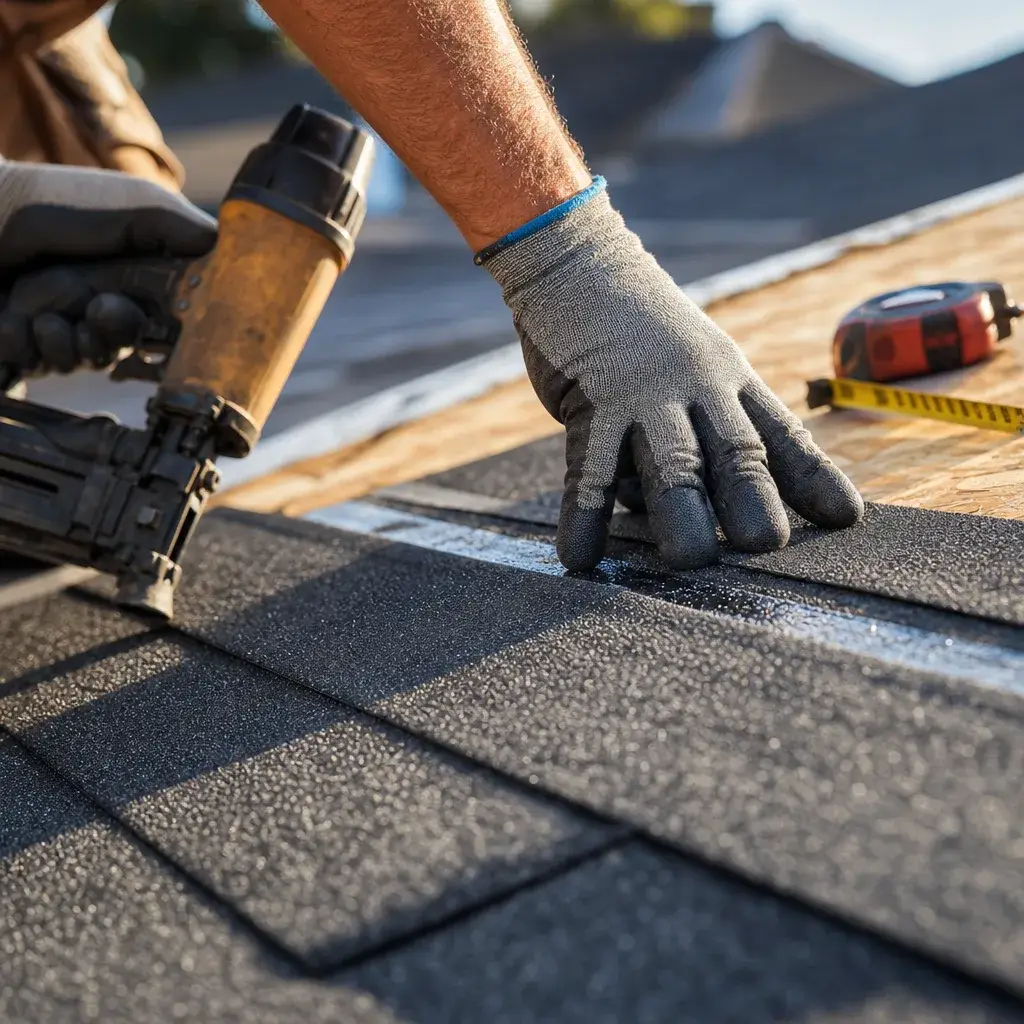
No matter who you hire, a proper installation should include a few things. The old shingles should come off down to the decking, the wood boards under your roof. Any soft or rotted boards should be replaced before new material goes on. Fresh underlayment, a water barrier that goes under the shingles, should come next. New flashing should go around chimneys, vents, and walls, and the roof needs good ventilation so attic heat can escape during a North Texas summer. If a bid skips any of these, ask why.
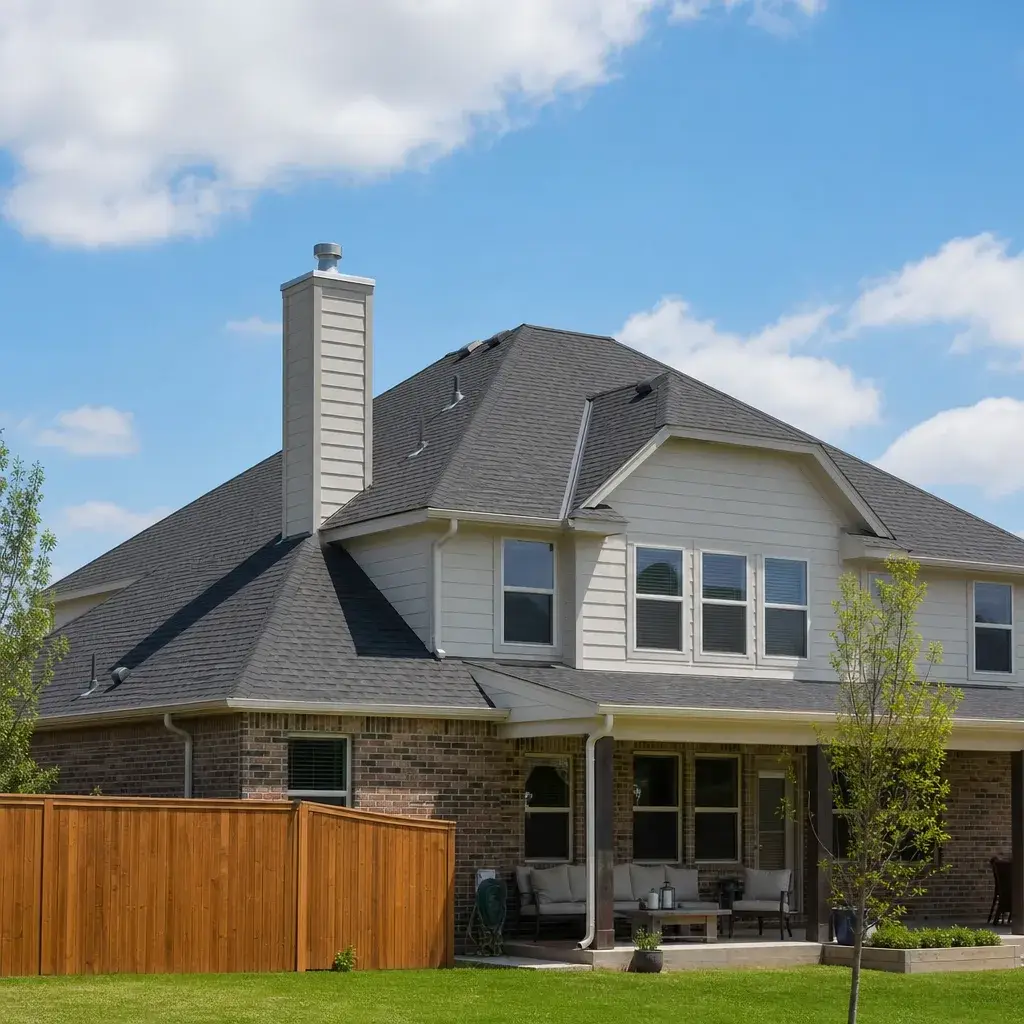
In Sunnyvale, building permits go through the Town of Sunnyvale. If your home is in a neighborhood with an HOA, the HOA may want to approve your shingle color or style first. You don’t have to chase either one down. Getting those approvals is part of your project manager’s job.
There are a few simple ways to get ready for install day. Move your cars out of the garage and driveway so the crew has room to work and your vehicles stay clear of falling debris. Take pictures or mirrors off the walls that touch the attic, because hammering can shake them loose. Keep pets and kids inside or away from the work area. If spring storms push the schedule back, your project manager will tell you, so you’re not left watching the sky and wondering.
This is the part the crew at your door after a storm can’t match. ERO DFW is headquartered right here in Sunnyvale, at 308 U.S. 80 Frontage Road. The people who inspect your roof, schedule it, and walk it with you at the end work for a family-owned company that’s been serving North Texas since 2019. We’ll still be here after the storm, and long after the last shingle goes down.
Ready when you are – get in touch today.
Schedule Your Free Inspection. Exteriors, Roofing & Outdoor Living is ready to help.
What Drives Roof Installation Cost
Your roof’s price comes down to four things: how big and steep it is, what material you pick, what’s hiding under the old shingles, and how much detail work the roof needs. Two houses on the same street can get very different numbers for good reasons. Once you know what moves the price, a fair bid gets much easier to spot.
- Size and pitch. Roofers price by the square, which is a 10-by-10-foot patch of roof. A steep roof takes more time, more safety gear, and more care, so it costs more per square than a low, walkable one. A one-story brick ranch home is usually simpler than a two-story home in a newer HOA neighborhood.
- Material. Standard architectural shingles cost the least. Class 4 impact-resistant shingles cost more up front because they’re built to take harder hail. Metal and tile cost more again, but they can last longer in North Texas sun and storms.
- What’s under the old roof. Nobody knows for sure how much decking needs replacing until the old shingles come off. A second layer of old shingles also adds tear-off time and disposal cost.
- Detail work. Every chimney, skylight, valley, and wall where the roof meets the house needs flashing. A roof with lots of angles and openings takes longer than a simple gable.
- Ventilation. Adding or fixing ridge vents, the vents along the peak that let hot attic air out, adds cost now. It can also help your shingles last through hundred-degree summers.
- Permits and HOA approval. Permit fees and any HOA paperwork are part of the job, and a complete bid should include them.
A good written estimate breaks these out line by line. Look for how many squares, which shingle, whether underlayment and flashing are new or reused, and how decking will be handled if bad boards turn up. A common honest way to do that is a set price per board or per sheet. That way you’re not guessing about surprises. If one bid comes in far lower than the rest, check what’s missing. A low number that leaves out decking, flashing, or the permit often grows later.
Timing can matter too. Right after a big spring storm, every roofer in the Metroplex is busy and materials can run short. A planned roof scheduled outside hail season gives you more room to compare bids without rushing.
If a storm caused the damage, your insurance may pay for much of the job, but you’ll still owe your deductible. In Texas, it’s against the law for a roofer to waive, cover, or rebate your deductible. Anyone who offers to “take care of it” is asking you to break the law along with them. You pay your deductible, nobody else. If you choose Class 4 shingles, ask your insurer whether they offer a premium discount for impact-resistant roofs. Some do, and it can help offset the higher price over time.
For a planned roof that isn’t tied to a claim, financing is available, so you don’t have to pick a lesser roof just to fit this month’s budget.
Watch Our Video
See How We Handle Roof Installation in Sunnyvale, TX
Exteriors, Roofing & Outdoor Living — Serving Sunnyvale, TX and surrounding areas
Insurance Claims for Storm-Related Roof Installation
When hail or wind damages your roof badly enough to need a full roof installation, your homeowner’s policy may pay for much of the work. The claim doesn’t have to feel like a maze. Here’s how it usually goes, one step at a time.
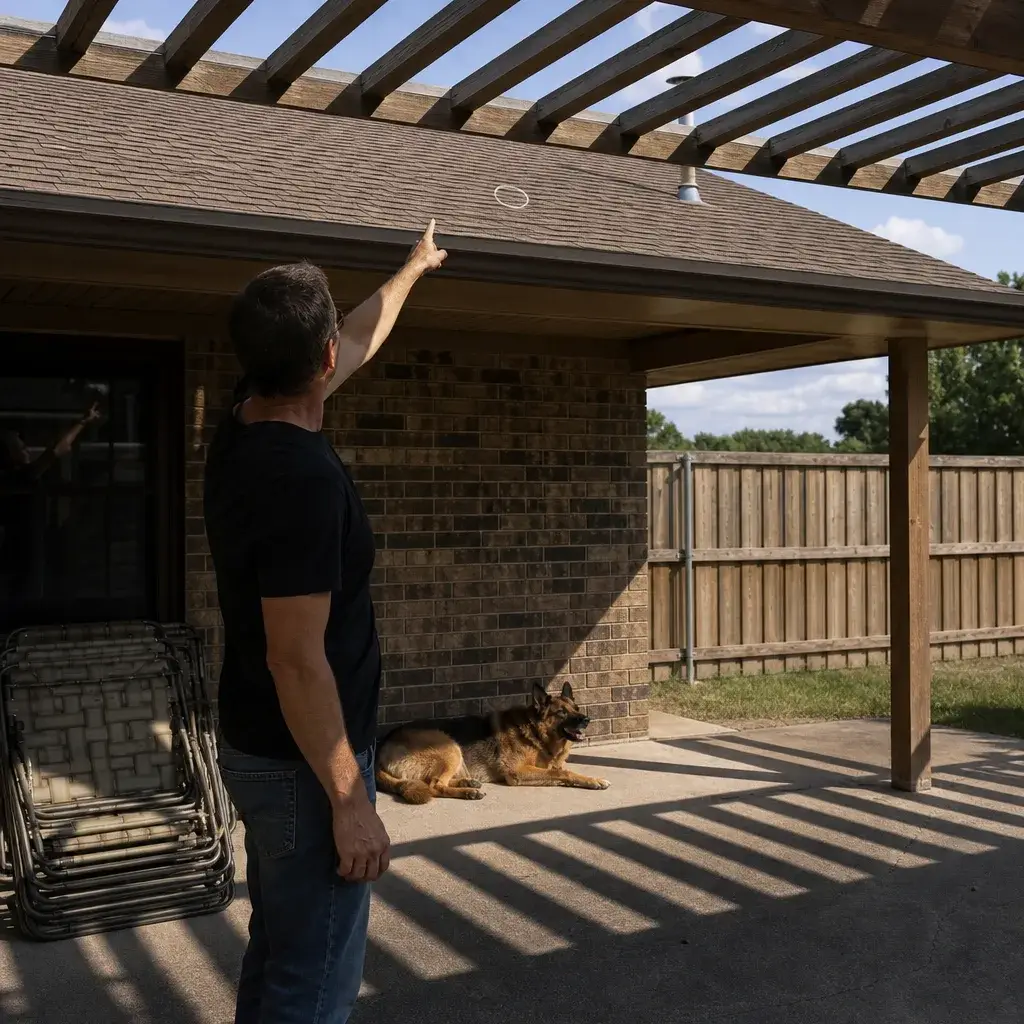
- Stay safe and take photos. From the ground, photograph the roof, dented gutters, hail marks on siding or your car, and any ceiling stains inside. Write down the date of the storm. Don’t climb onto the roof.
- Get a free inspection before you file. A roofer can tell you whether you have real storm damage or just normal wear. That way you’re not filing a claim on a guess. If we don’t find damage worth claiming, we’ll tell you that plainly.
- File the claim yourself. The claim is between you and your insurance company, so you’re the one who opens it. Keep the reporting deadline we mentioned earlier in mind.
- Meet the adjuster. The adjuster is the person your insurer sends to look at your roof. As covered above, your project manager can be there to point out what we found.
- Read the insurer’s estimate. The insurer will send a written list of what it plans to pay for. Hold it next to our written estimate. If something like flashing, underlayment, or ridge vents is missing, ask about it.
- Get paid, often in two parts. The work gets scheduled, the crew installs your roof, and the final payment is released.
That two-part payment confuses a lot of people. Many policies pay actual cash value (ACV) first. ACV is what your old roof was worth after years of wear. Once the new roof is installed, the policy may release the rest, often called recoverable depreciation, up to full replacement cost. Not every policy works this way. Some older-roof policies pay only ACV. Check your declarations page, or ask your agent, so the first check doesn’t surprise you.
Sometimes the old shingles come off and the crew finds rotted decking nobody could see from above. That isn’t a reason to panic. It gets documented with photos and sent to your insurer to review as an added item. Whether they approve it is their call, and we won’t pretend otherwise.
Upgrades work a little differently. Say your claim covers standard architectural shingles but you’d rather have Class 4 impact-resistant shingles for the next hail season. You can usually do that, but you pay the difference in price. Some policies also help with costs when local building codes require something your old roof didn’t have. Others don’t, so it’s worth asking.
After a big storm rolls along U.S. 80, the door knockers aren’t far behind. Watch out for anyone who wants your signature before the adjuster has even looked at your roof, anyone who offers to handle your deductible, which we covered above, and anyone who promises your claim will be approved. No honest roofer can promise that. If you ever have a question about how your claim is being handled, the Texas Department of Insurance is the state agency that oversees insurers, and you can contact them directly.
Frequently Asked Questions
Common questions about roof installation in Sunnyvale, TX
How long does a full roof installation take?
Most roof installations finish in one to three days, depending on the size and pitch of your roof. Steeper roofs or homes with lots of chimneys, skylights, and valleys take longer because each one needs new flashing. Weather matters too, since crews won’t install shingles in the rain. If spring storms push your date back, your project manager will let you know rather than leave you guessing.
Can I get multiple roofing bids before deciding?
Yes, and comparing written bids side by side is a smart move, especially for a planned roof that isn’t tied to storm damage. Look at how many squares each bid covers, which shingle is quoted, and whether flashing and underlayment are new or reused. A bid that’s far lower than the others is often missing something, like decking replacement or permit costs. Taking time to compare is easier when you’re not rushed by storm season.
What if the crew finds rotted wood after tearing off my old roof?
It gets documented with photos and handled before new shingles go down, since soft or rotted decking has to be replaced first. Nobody can see the condition of the decking until the old shingles come off, so this is common on older roofs. If your project is a storm claim, that damage gets sent to your insurer to review as an added item. Either way, your roof won’t get new shingles over bad wood.
Ready to Get Started?
Schedule Your Free Inspection. Call (972) 288-9587 today.